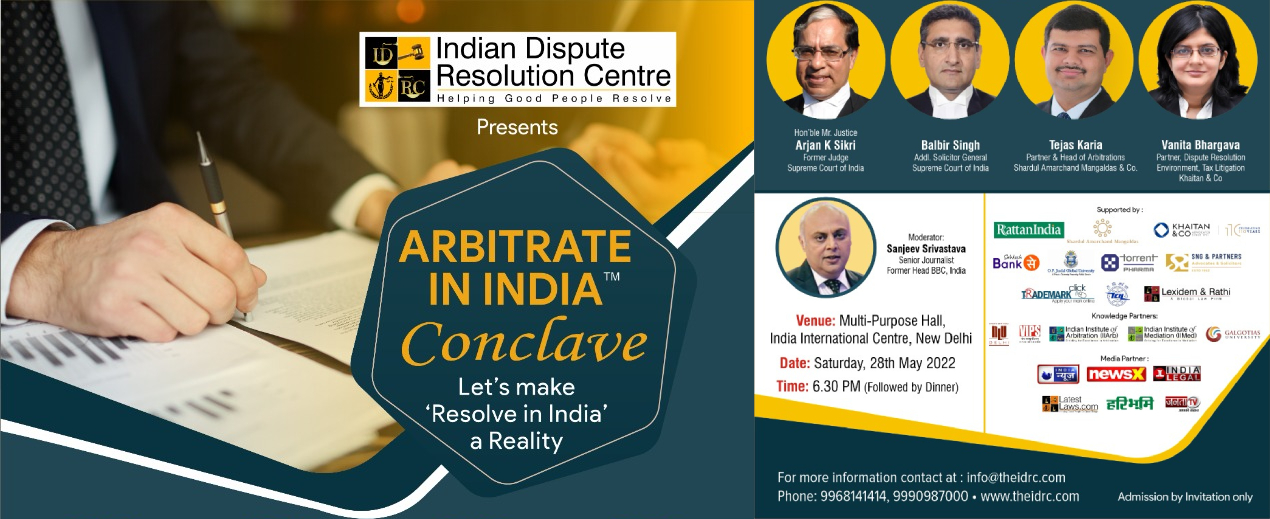
Arbitrate in India Conclave 2022
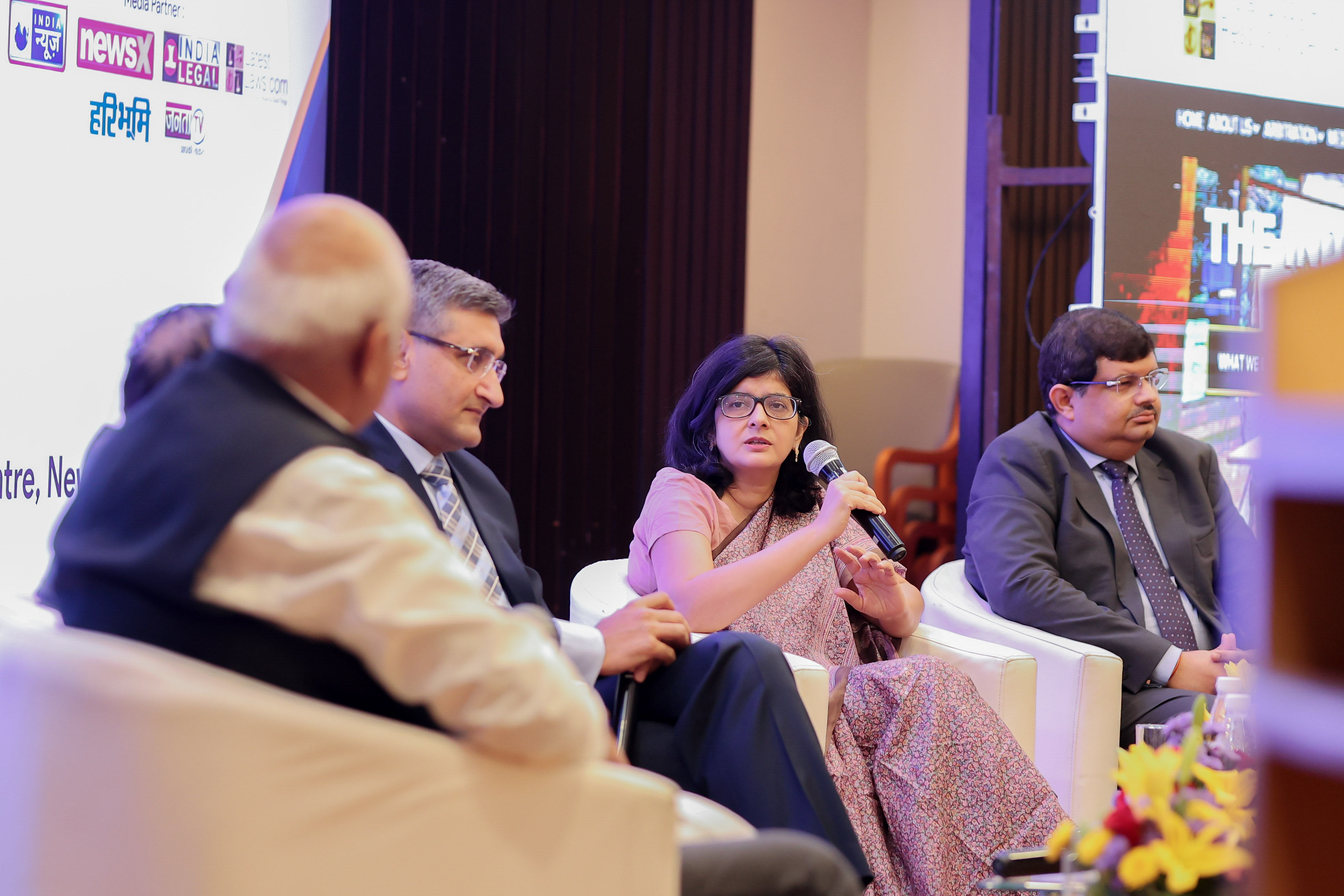
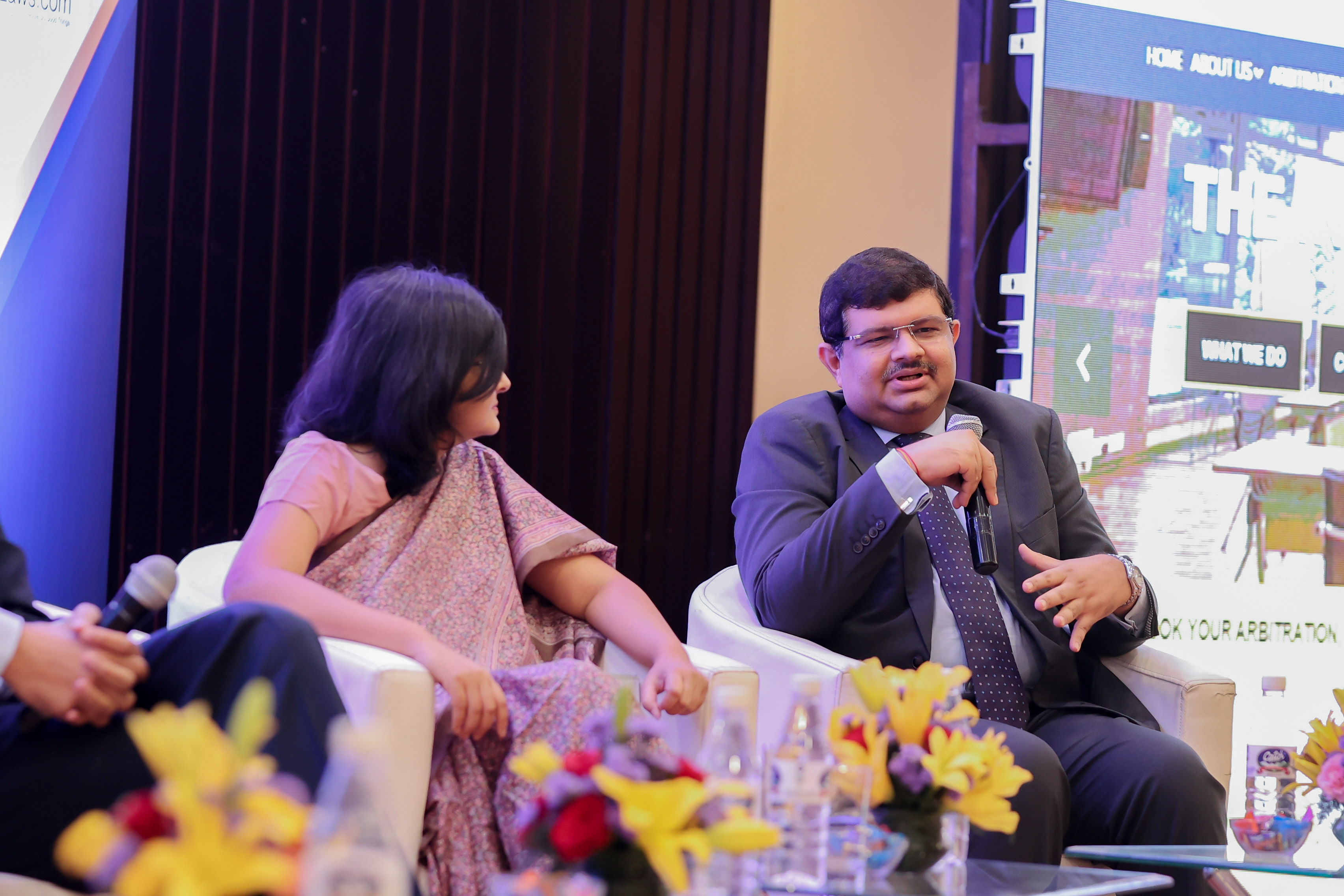
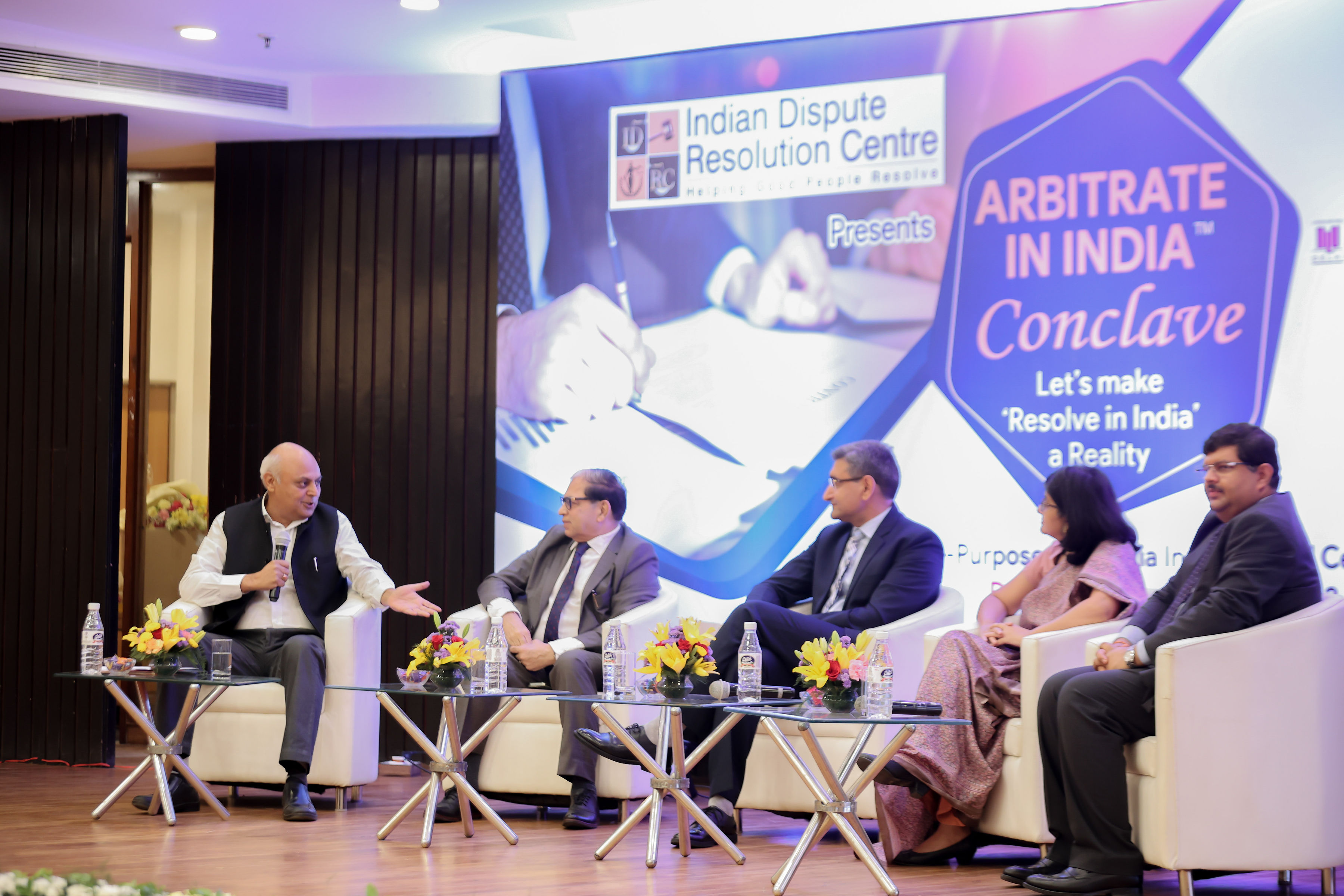
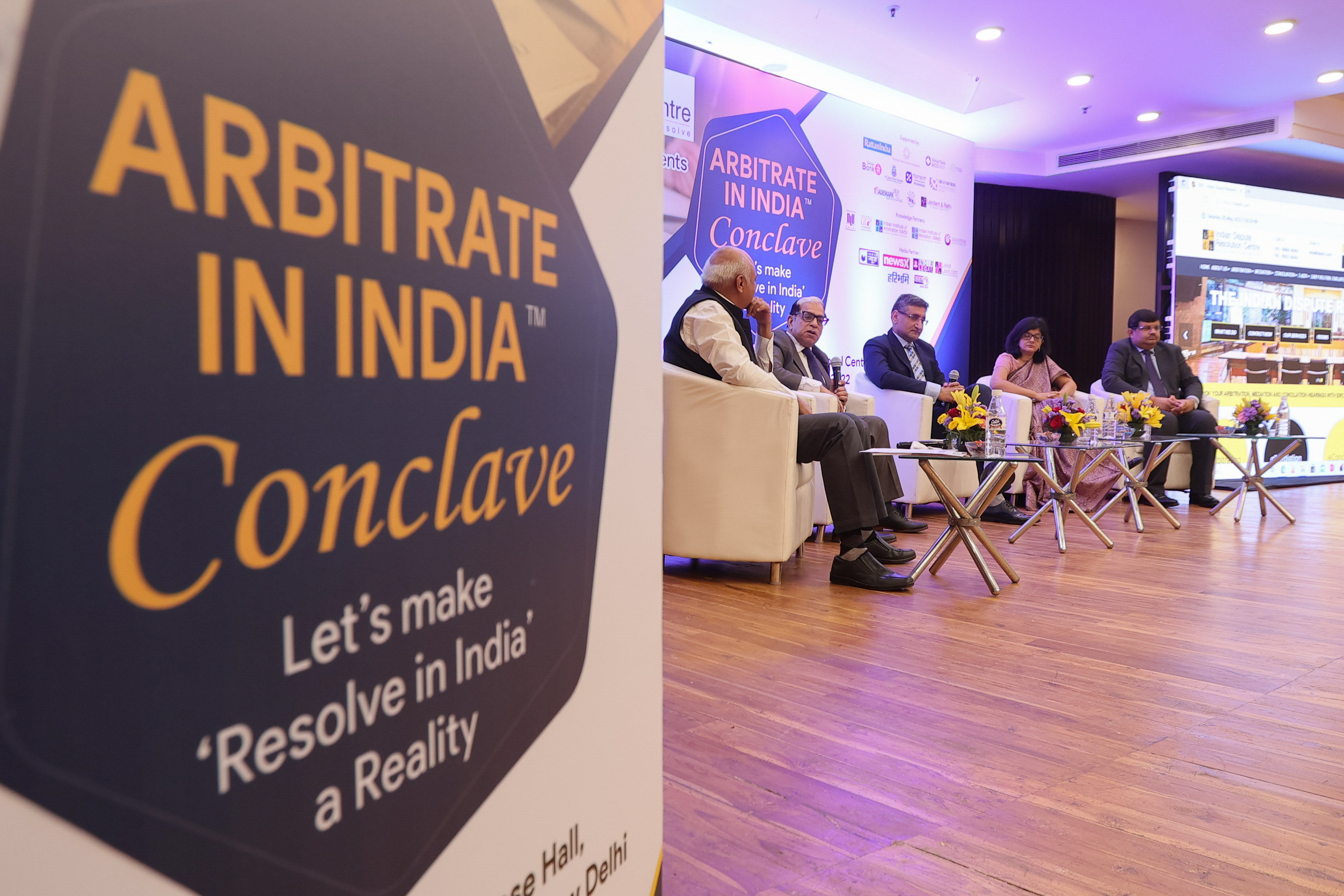
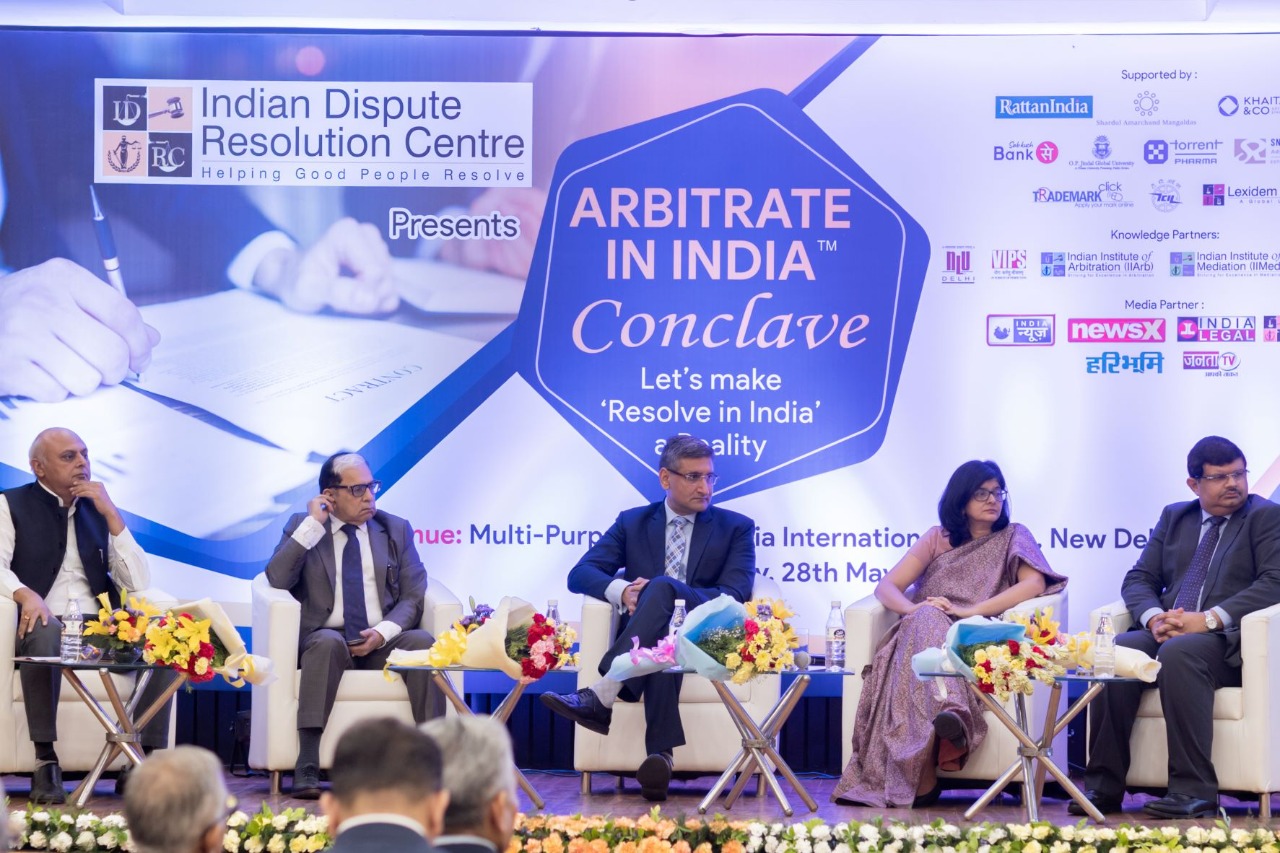 Panellists : (L to R) Mr. Sanjeev Srivastava (Sr. Journalist), HMJ AK Sikri (Ex.SC Judge), Mr. Balbir Singh (ASG), Ms. Vanita Bhargava of Khaitan & Co., Mr. Tejas Karia of SAM
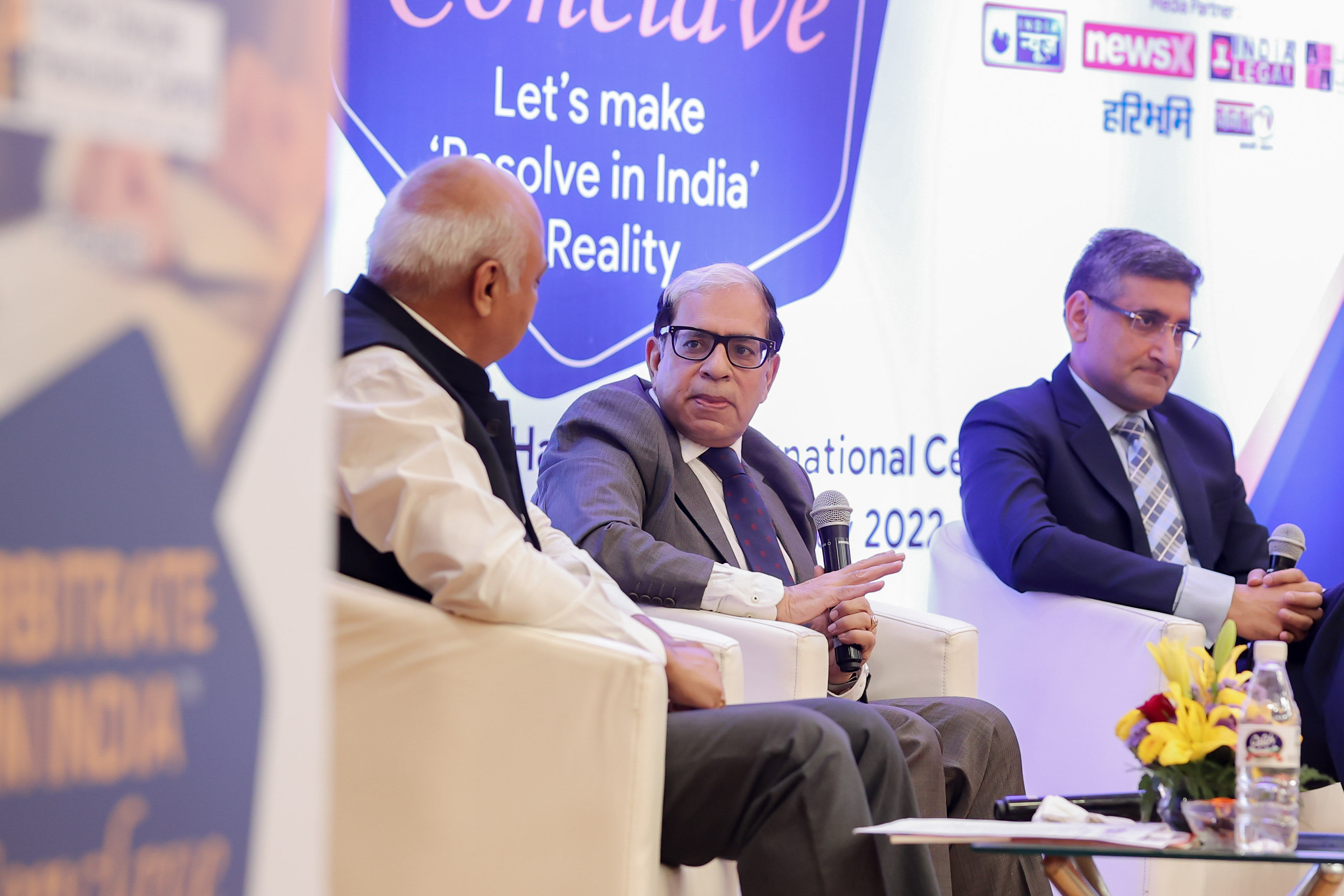
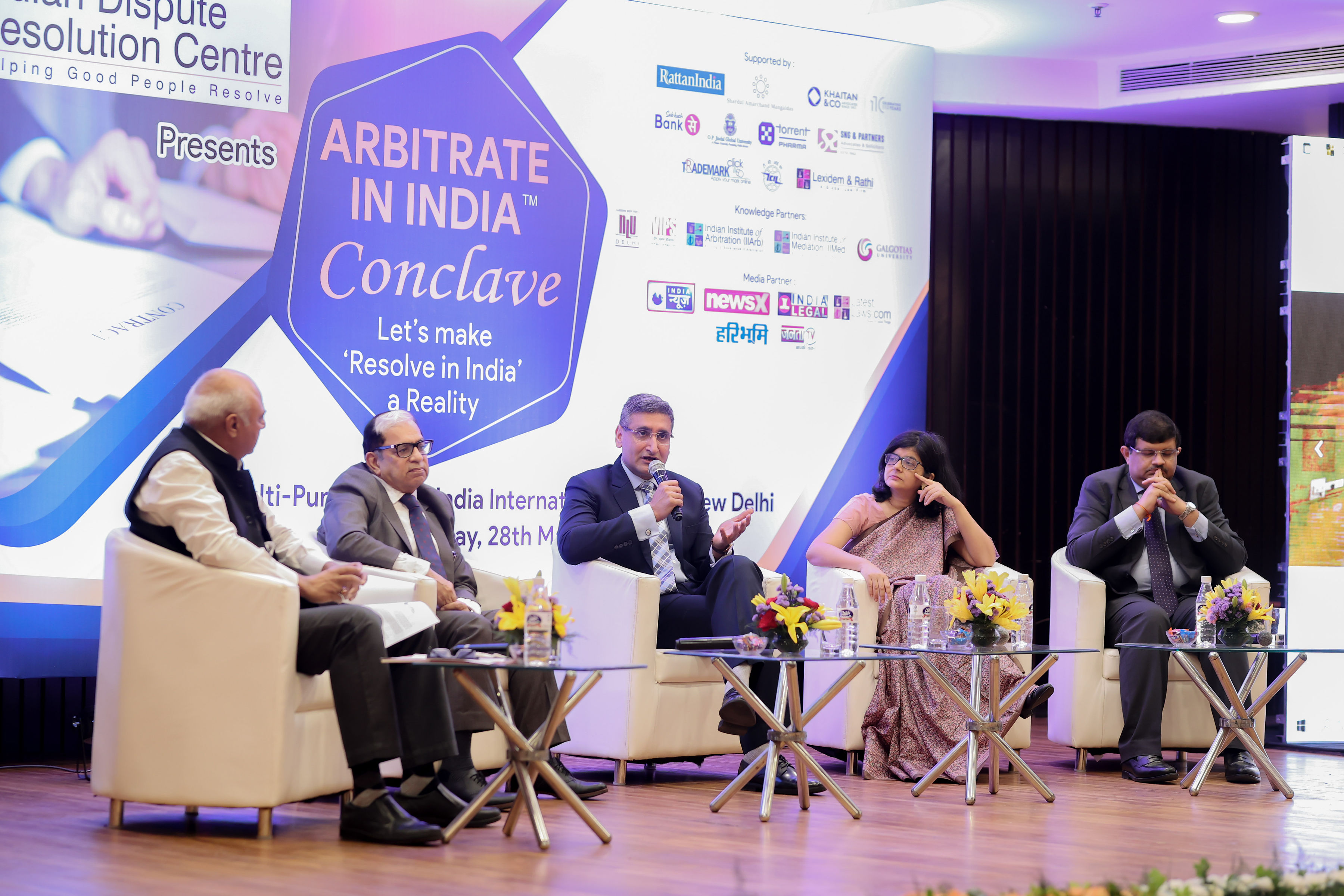
Report on Arbitrate in India Conclave, 2022
Index :- Introduction
- About the Event
- Organiser
- About Arbitration in India
- Programme
- Conclave Highlights
- IDRC's Arbitrate in India Conclave, 2022 Full Video
- IDRC Arbitrate in India Conclave, 2022 - Transcript of Complete Deliberations
- Q & A
- Dignitaries who participated in the Conclave
- Supported by
- Participants
Introduction
On Saturday, 28th May 2022, the Indian Dispute Resolution Centre (IDRC) organized ‘Arbitrate in India Conclave, 2022’ at the India International Centre, New Delhi. This event marked the 2nd anniversary of the IDRC.
Hon’ble Mr. Justice Arjan K. Sikri, Former Judge of the Supreme Court of India & Judge, International Commercial Court, Singapore was among the panellists at the event. Mr. Balbir Singh, Additional Solicitor General; Mr. Tejas Karia, Partner and Arbitrations Head, Shardul Amarchand Mangaldas and Vanita Bhargava, Partner, Khaitan and Co. were the other panellists of the conclave. Mr. Sanjeev Srivastava, former BBC India Head was the Moderator for the conclave.
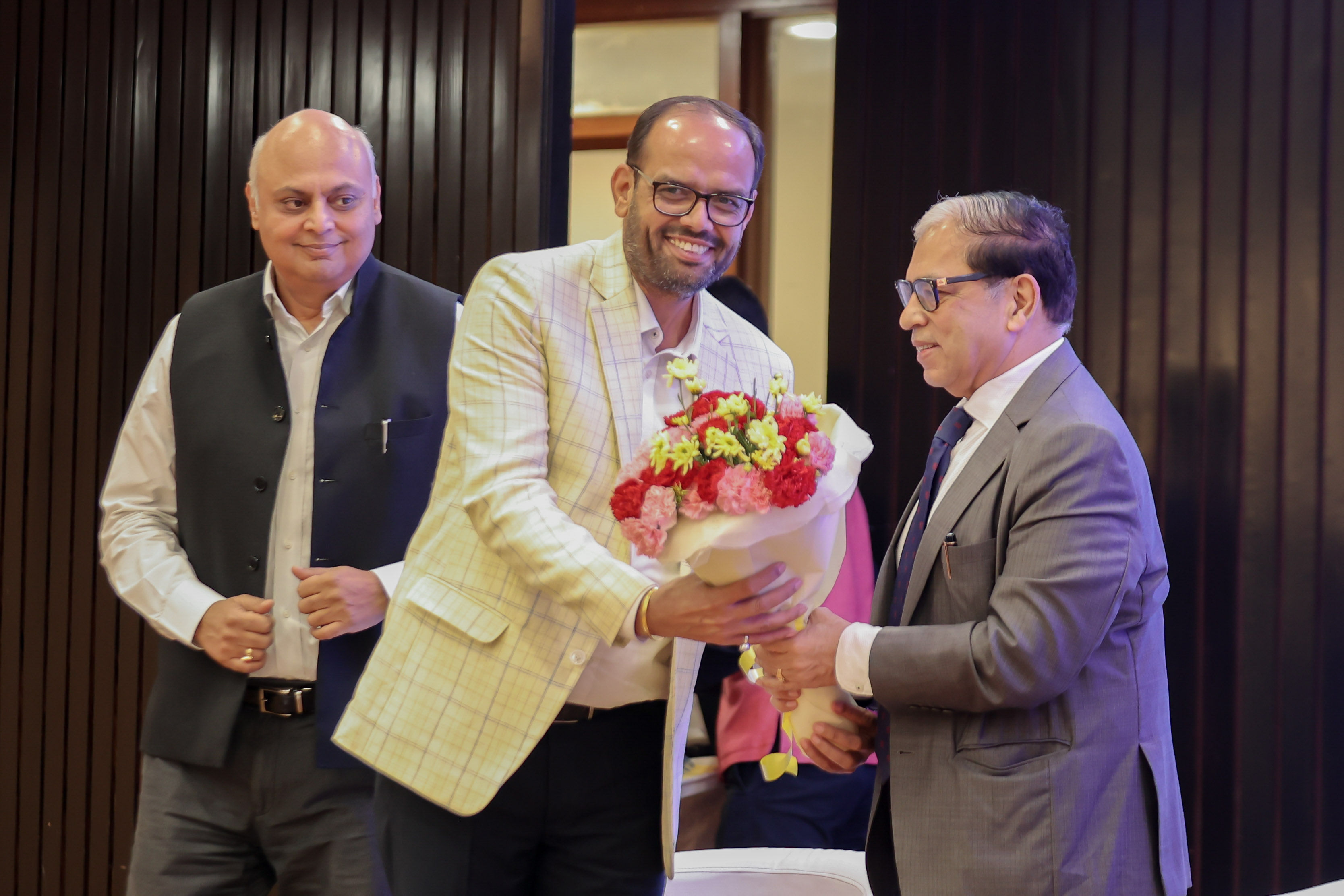
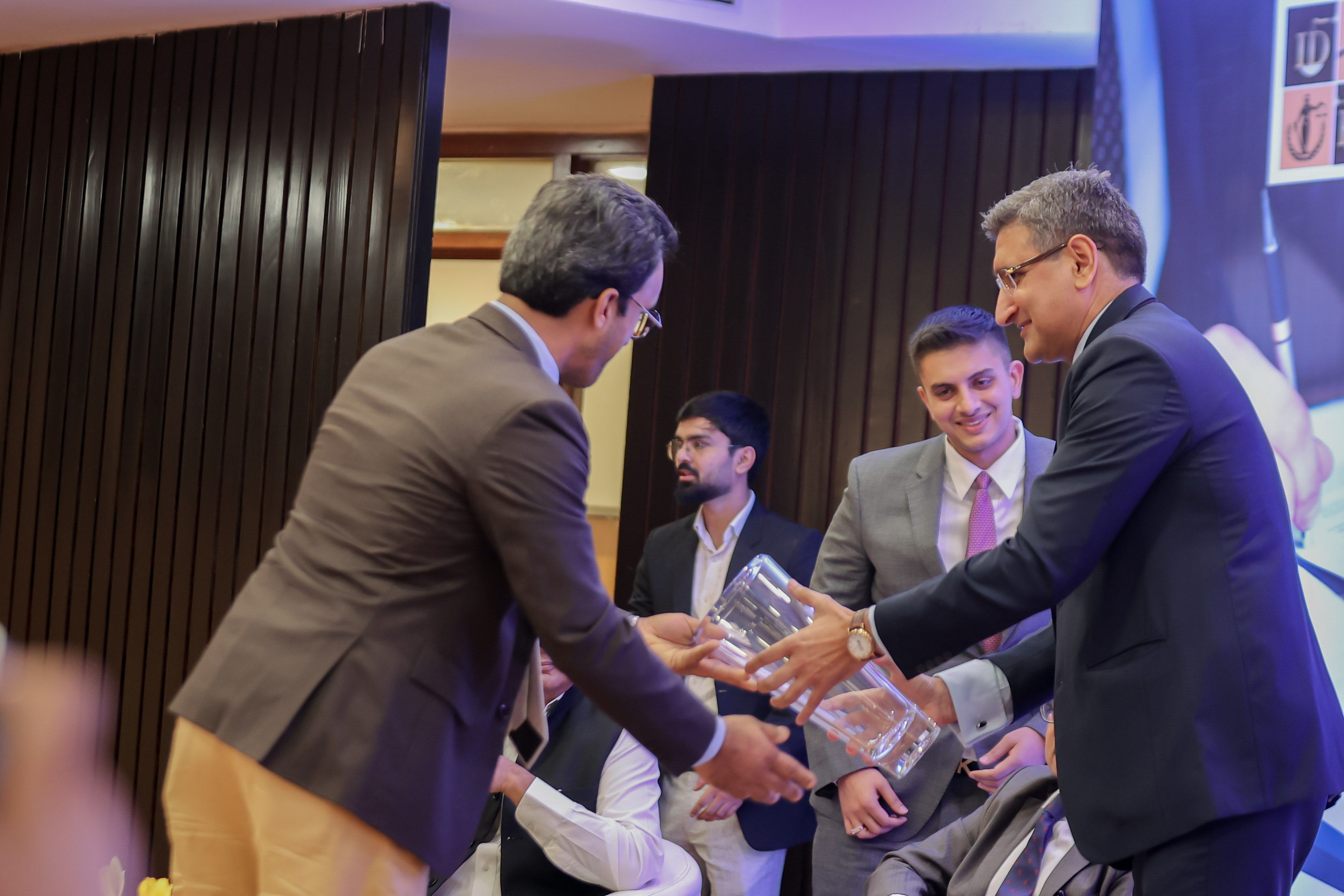
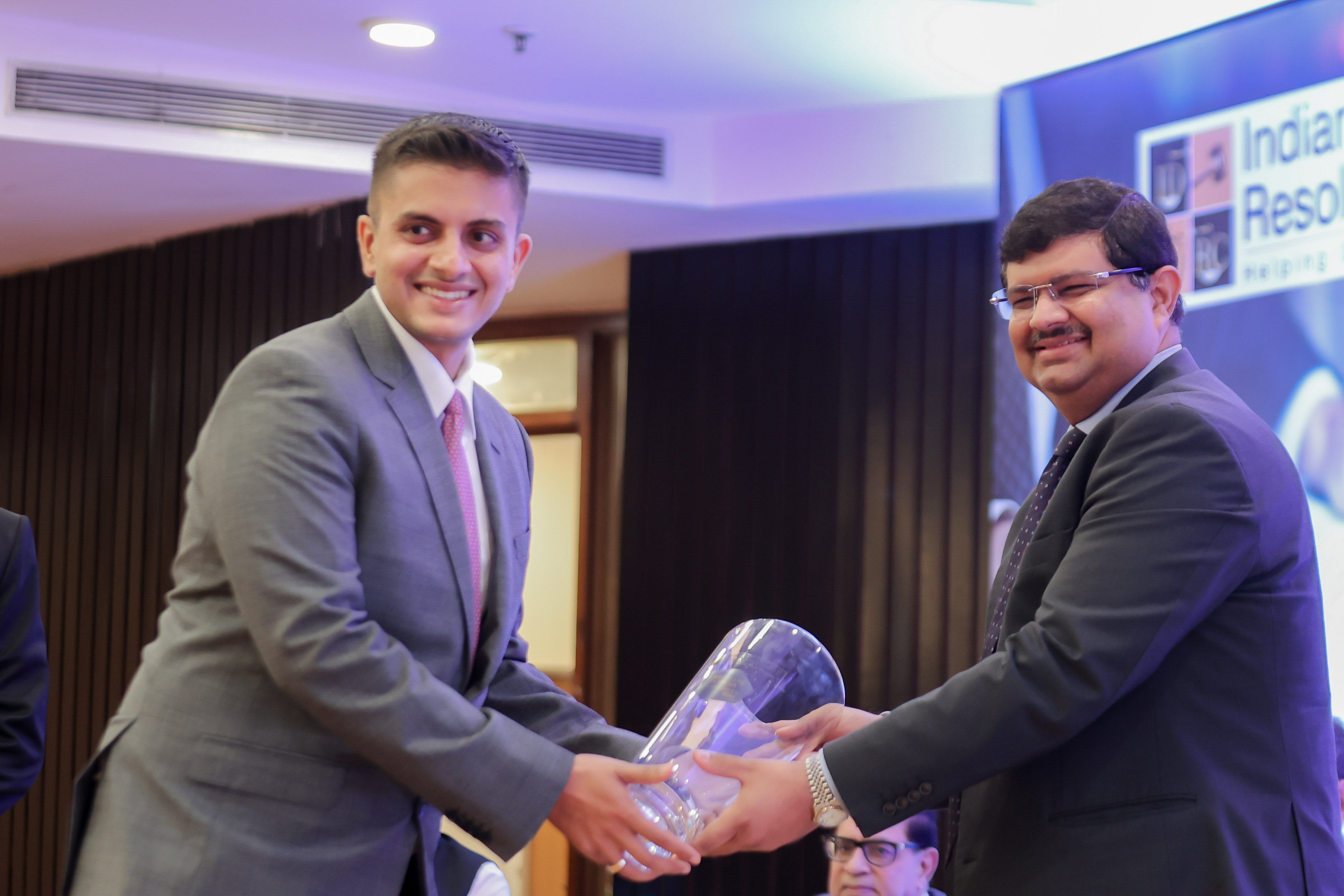
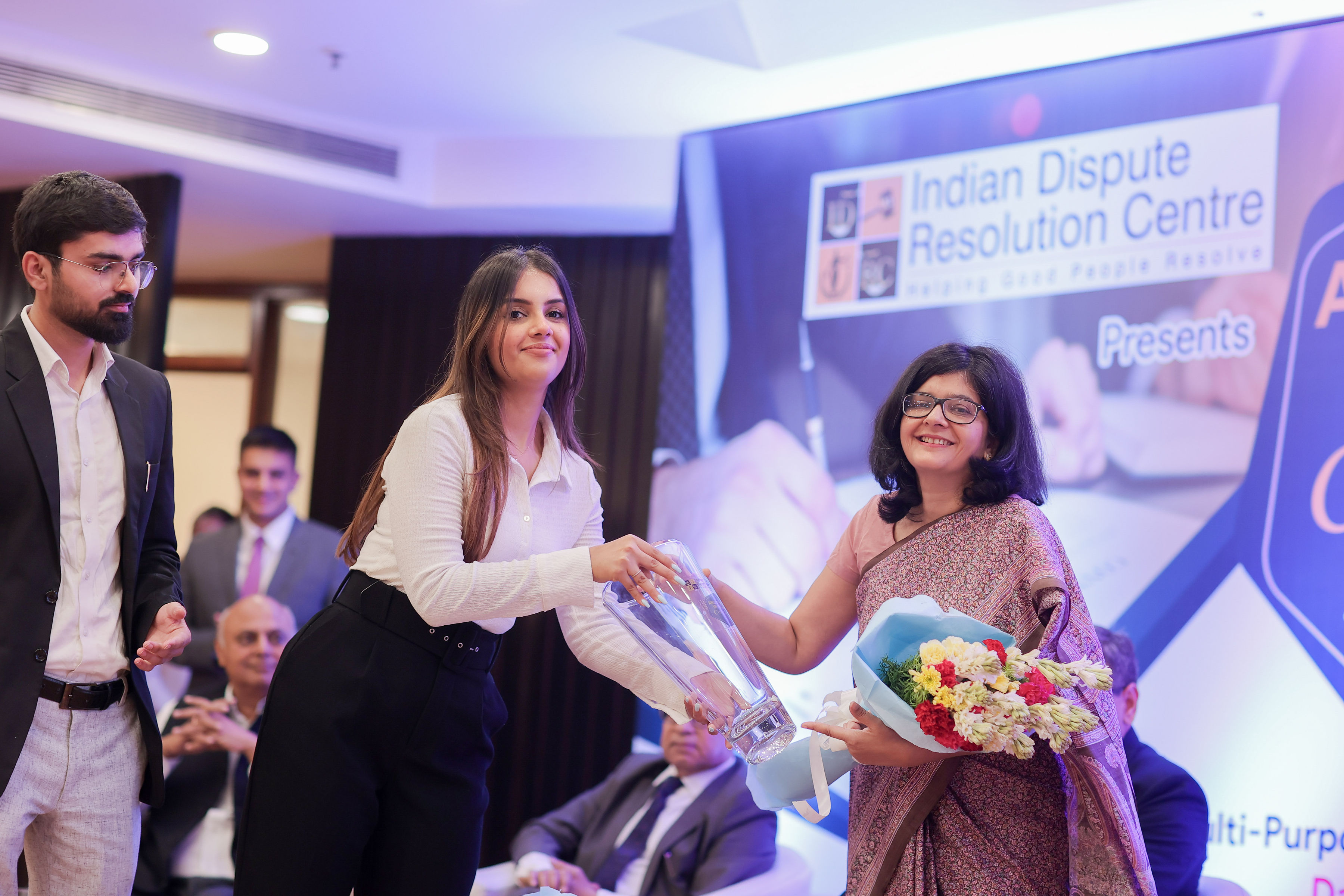
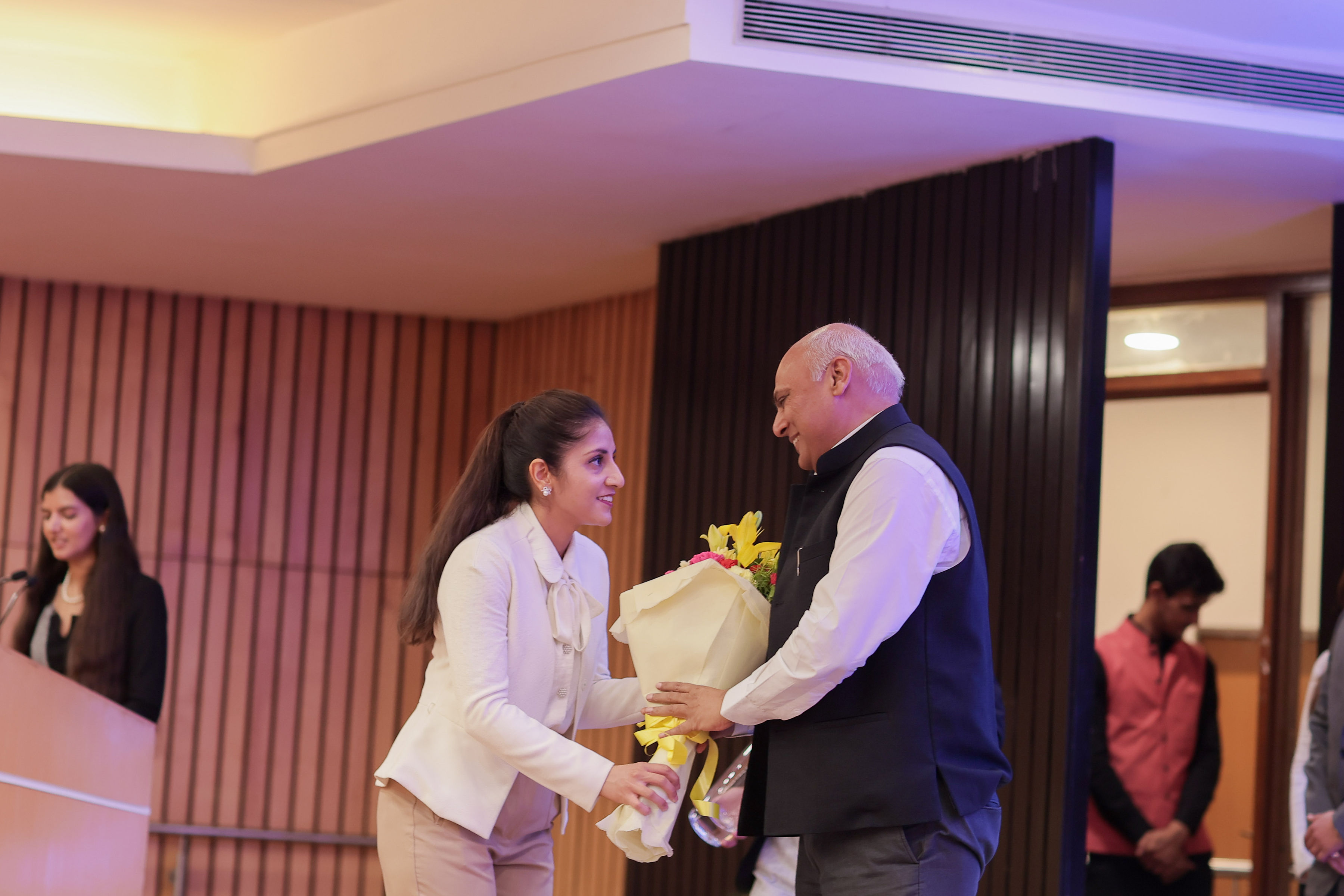
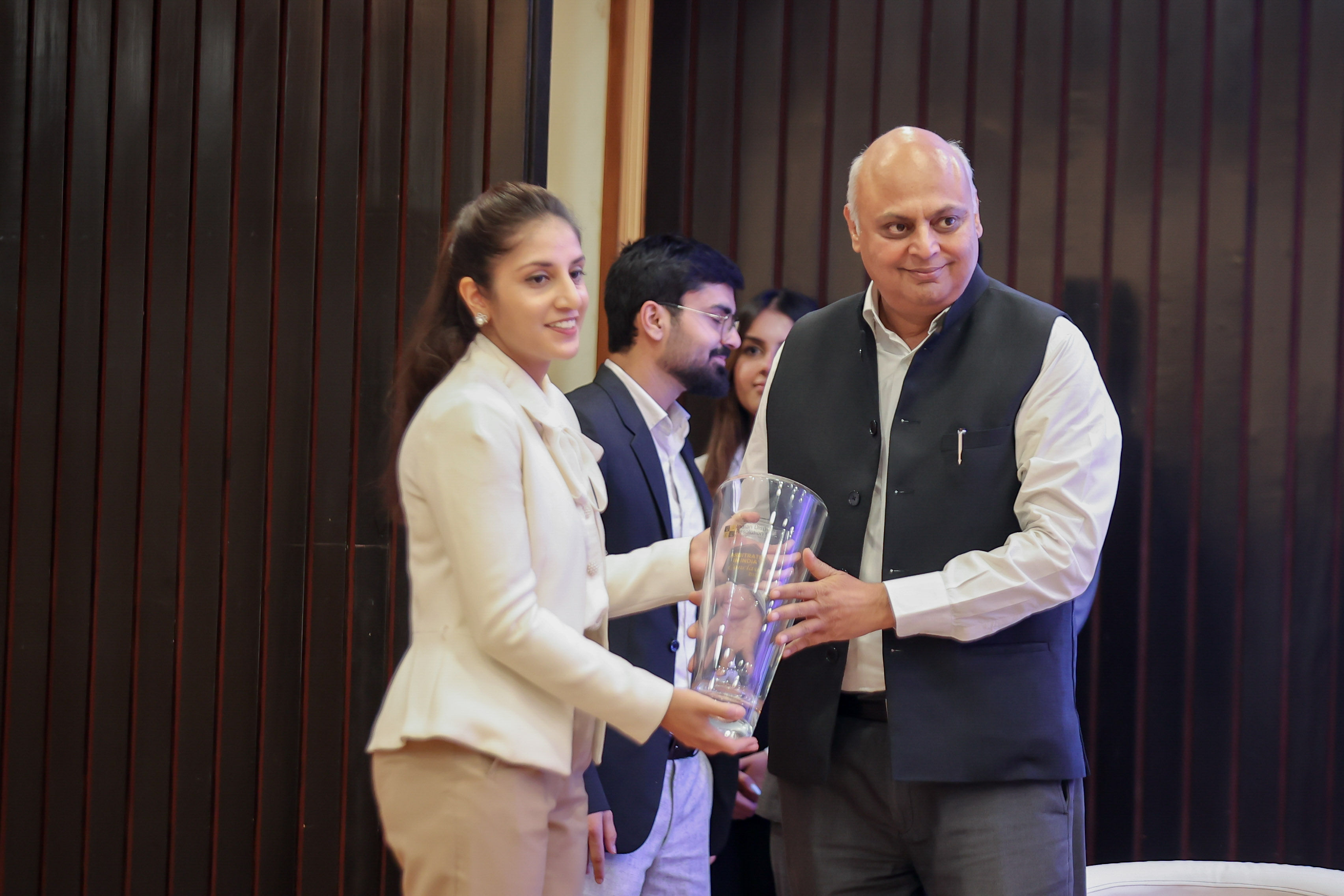
 Divyansh Hanu Rathi, Advocate from IDRC Felicitating Tejas Karia, Advocate, Partner, Shardul Amarchand Mangaldas, SAM
About the Event: Arbitrate in India Conclave: Let’s make ‘Resolve in India’ a Reality
The event marks the Second Anniversary of IDRC. We embarked on this wonderful journey in May 2020. HMJ Arjan K. Sikri, Former Judge, Supreme Court of India did the honours. In a short span of time IDRC has accomplished more than 500+ arbitration proceedings and assisted in numerous International and National Arbitrations presided by Retired Hon’ble Judges of the Supreme Court and High Courts despite pandemic conditions.
To mark the Anniversary, this Conclave is being organised to bring to the fore our Nation’s strengths and challenges in becoming an International Arbitration Hub. The Conclave will ponder over the theme ’Arbitrate in India’ to strengthen the Govt’s call for ’Resolve in India’.
Apart from former judges of Supreme Court and High Courts and senior advocates, the IDRC panel arbitrators, leading law firms, the PSUs and members of the Bar association also attended the conclave. Entire Event was organised professionally by IDRC’s Board of Advisor Members Tanmaya Mehta, Divyansh Hanu Rathi, Sumedha Sindhu Rathi and Riya Rathi.
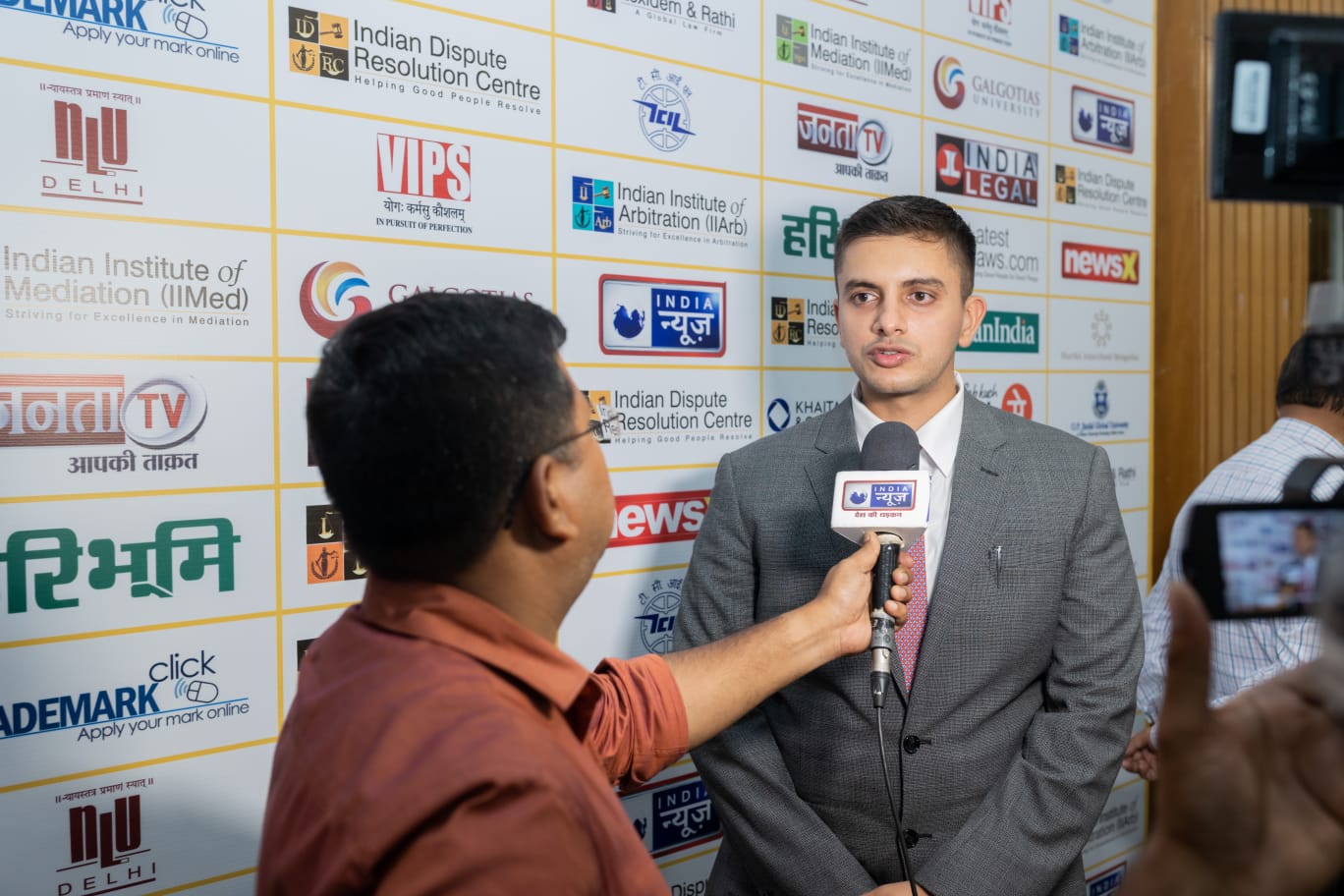 Divyansh H Rathi (Advocate, IDRC Board of Advisor Member) addressing media
 Sumedha Sindhu Rathi (Advocate, IDRC Board of Advisor Member) welcoming Mr. Sanjeev Srivastava
Organiser - Indian Dispute Resolution Centre – IDRC
IDRC is an Institutional Arbitration Centre established by the not-for-profit Organisation ‘International Dispute Resolution Council’. IDRC is registered with the Ministry of Commerce and NITI Aayog and empanelled with the Ministry of Law and Justice, GoI. It provides a state-of-the-art institutional environment for online and offline resolution of disputes through Arbitration, Mediation and Conciliation as well as Expert Determination and Early Neutral Evaluation from its Cloud Based inhouse Digital Platform and through its affiliates in all major Cities in India.
In a short span of time, IDRC has accomplished more than 500+ arbitration proceedings and assisted in numerous International and National Arbitrations presided by retired judges of the Supreme Court and High Courts despite pandemic conditions.
About Arbitration in India:
Arbitration has had its firm roots in Indian Culture for ages in the form of Village Panchayats. The first codification of its modern avatar was the Arbitration Act, 1899. Then came the Indian Arbitration Act, 1940, which was replaced by the current Arbitration & Conciliation Act of 1996, modelled on the UN’s UNCITRAL Model Law on International Commercial Arbitration.
The Act came at the time of India’s economic liberalisation and its latest amendments promise to aid in fulfilling Nation’s aspiration to become a USD 5 Trillion Economy.
India is striving to establish itself as an FDI hub and courtesy statutory initiatives like the Commercial Courts Act, 2015, Insolvency and Bankruptcy Code, 2016 & like we have jumped from Rank 142 in 2014 to Rank 63 in 2020 in the ‘Ease of Doing Business Report’ of World Bank. Powered by Justice BN Srikrishna Report, Arbitration Council of India is expected to lay down standards, make the arbitration process more party - friendly, cost-effective and ensure timely disposal of arbitration cases. New Delhi International Arbitration Centre Act, 2019, has also been introduced.
A lot is happening and a lot more needs to be done.
- 06.30 PM - Arrival of Guests and Welcome Tea/Coffee
- 07.00 PM - Panel Discussion
- 08.00 PM - Cocktail & Dinner
Conclave Highlights

Hon’ble Justice AK Sikri stated that, “we need to take small steps. Just in one day’s time we can’t think that the western countries would come and look forward to India as an International hub. So why not start with South Asian countries. We may have good arbitration centres in Singapore, Hong Kong etc. but there is nothing in the 6-7 countries around India. Once we start, they’ll look forward (to Arbitrate in India). If we are able to show our work, we are able to show our mettle, and we are able demonstrate to the world that we are successful, then it would spread to other countries as well.”

Mr. Balbir Singh, ASG, emphasised on the need for having a trained pool of arbitrators to add value to the Indian system, as well as trained representatives, that not only include the Indian Bar but also foreign lawyers coming to India. He lamented the present scenario wherein “we advocates go to the courts and after the court hours we do arbitration, and we may think that we have a separate Arbitration Bar.” He said that we need more specialists like his co-panellists, Mr. Tejas Karia and Ms. Vanita Bhargava. He also said that, “We need more IDRC like Arbitration Centres across India.”

Mr. Tejas Karia talked about need for institutionalisation of Arbitration, use of technology, reduction of approaching courts in Arbitration, except in extreme cases. Emphasising on one major benefit of Institutional arbitration he said that there is no need to go to the court for appointment of arbitrator. He further said that, “I have been advocating that India can never become a hub of international arbitration because India is a very large country with so many diversities and judicial disciplines, and we are comparing ourselves with Singapore, London, Paris, Hong Kong which are cities or small countries.” He said that in the size of India that can never happen. He suggested that we should rather “identify cities in India that can be hub for International Commercial Arbitration, focusing on the cities in which court system is supportive or are arbitration friendly jurisdictions and judges are trained and experienced to handle arbitration matters.”

Ms. Vanita Bhargava noted that the government has been really proactive in making amendments to try to control mischief, and should continue this endeavour. She also mooted the need for having specialised courts dealing specifically with Arbitration cases, as the commercial courts handle other matters as well which take away the time.
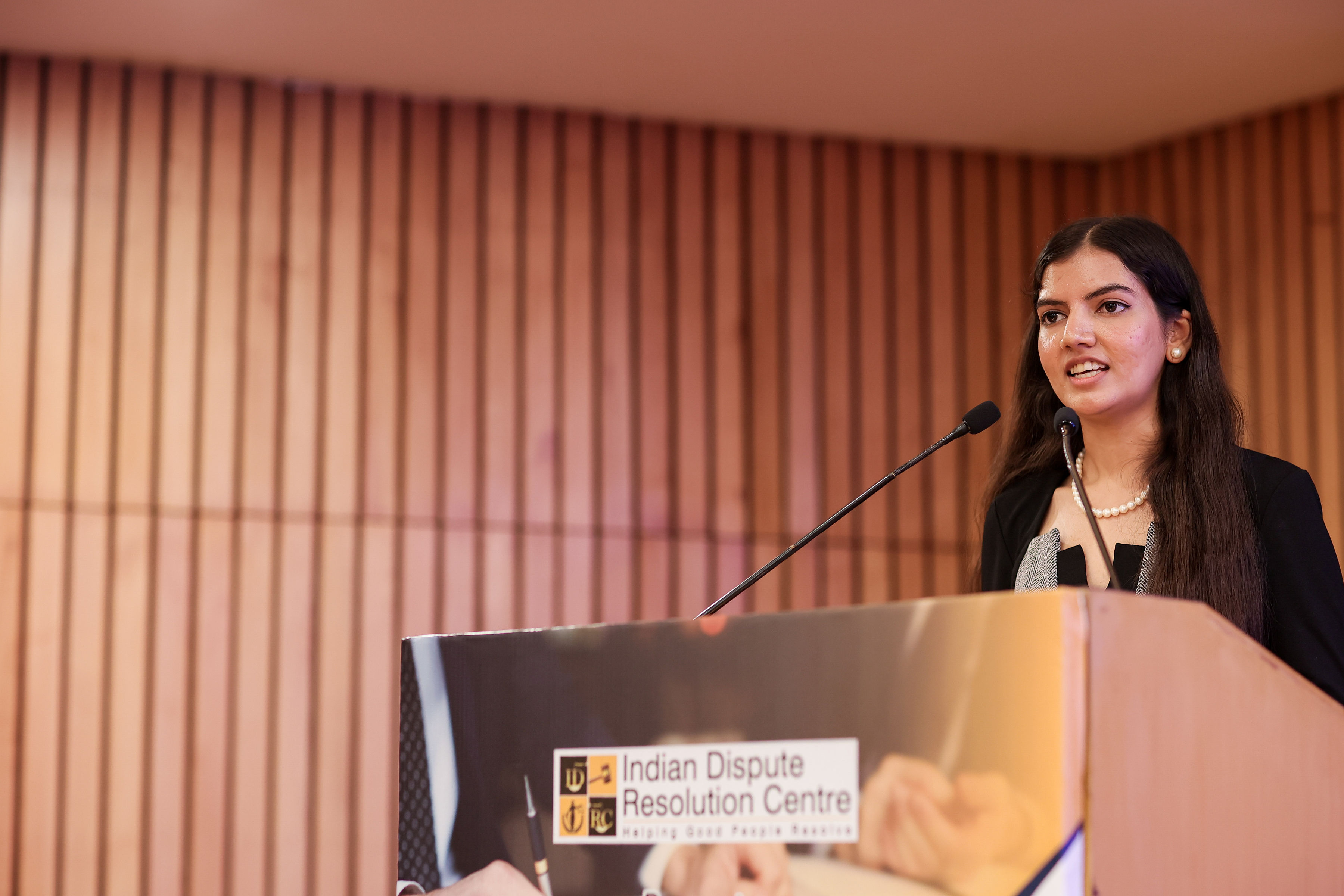 Riya Rathi (Advocate, IDRC Board of Advisor Member) introducing the IDRC and delivering the Welcome Address
IDRC's Arbitrate in India Conclave, 2022 Full Video :
IDRC Arbitrate in India Conclave, 2022 - Transcript of Complete Deliberations

Shri Sanjeev Srivastava (Moderator): What’s the India Story? We have talked about how India has stepped up in the ease of doing business. One of the key things in ease of doing business is enforcement of contract and legal issues, however, there are so many cases pending before the Indian Courts. Justice Sikri, how and where do you see India’s and our situation right now in the world of ADR? How do we go forward?
Justice AK Sikri: I think that’s the central theme of this discussion today and the topic is ‘Resolve in India’. In so far as domestic arbitrations are concerned, they have to be necessarily resolved within the country. Therefore, I presume that when we talk about ‘Resolve in India’, we are talking in terms of international arbitrations. In domestic arbitrations, both the parties are Indian parties and normally, the arbitrators are also Indian.
So, resolution takes place within India. Now, this question is being discussed particularly in the last 7-10 years that how to make India a hub of international arbitration and it is not limited to only arbitration but all ADR tools including mediation and conciliation as well. In limited words, when we talk of international arbitration, we seek to invite parties not belonging to India or one of the parties being Indian while the other party is a foreign one. They must resolve their disputes by coming to India. The IDRC has also been established with the same motive. It is somewhat like legal tourism.
We have helped tourism. For instance, many persons from other countries come to India on account of health issues, however, when they realize that there are certain others things to do as well, they stay for longer or visit again. This is known as ‘Health Tourism’. So, the question is Whether we will be able to create a kind of an environment to nurture ‘Legal Tourism’? As of now, many countries have been able to achieve it and Singapore is one of the examples if we talk in the context of Asia. So, what does it take to go there? Going by the example of Singapore or previously, Hongkong or Malaysia and Dubai, the success is achievable (only Asian Countries are being talked about over here).
The main requirement is to create a kind of an environment in India which is ADR friendly. That is how we will be able to achieve success. We know about the significance of ADR. It has to be cost friendly and speedy. Contract enforcement is the third requirement. In the context of arbitration, contract enforcement is the enforcement of arbitral awards. So, whether in these fields we have been able to create that kind of an environment where people from other countries come? As per my opinion, we are lacking behind. That is what we need to do and step up. For instance, Singapore has created this institutional trinity:
- Singapore International Commercial Courts (SICC): For international commercial dispute where courts decide the cases. In India, we have commercial courts as well but those commercial courts decide only domestic disputes,
- Singapore International Arbitration Centre (SIAC): It deals with international disputes and hopefully, IDRC will be able to come up to that expectation in a couple of years, and,
- Singapore International Mediation Centre (SIMC)
Arbitration is a hybrid system. The parties have the autonomy to appoint an arbitrator of their choice and not the court’s. In the courts, parties cannot decide who the judge will be. At the same time, even when there is party autonomy, the court’s function is also there at three stages:
- During the appointment of an arbitrator: If the arbitration agreement doesn’t say that you have to go to the court and file an application under Section 11.
- During Arbitration: Many times, one has to go to the courts for their assistance, like summoning of witnesses.
- After Arbitration: When the award is given, for enforcement of that award or challenge that award.
But, what kind of role it should be? The courts’ role should only be assistive and supportive and that is something which has to be considered while going forward. So, we have to create an environment where the stakeholders are comfortable and there is a conducive environment which attracts them to get their issues resolved in India.
Shri Sanjeev Srivastava (Moderator): That is the world of utopia we all are aiming of. So, Justice Sikri just mentioned the example of Singapore, a country which has successfully proved that Small is not just beautiful but it can usually be successful as well. So, how do we make our dispute resolution system more powerful, effective and meaningful with good interventions? In Medical Tourism we are doing quite well and, in any industry, you see, Indians really outshine everybody across the courts. Similarly, in arbitration. It’s not just in Software industry or banking.
Even in arbitration, Indians tend to do superb and the best cases in the worlds are decided by Indian arbitrators but in India there is no such institution and India also has a not very happy distinction in losing a number of high-profile arbitration cases off late. So, Mr. Balbir Singh, what in your opinion should we do? Why this happens? How do we address this problem?
Mr. Balbir Singh: With respect to medical tourism, I had a conversation with Justice Sundaresh Menon, Chief Justice of the Singapore High Court and during the conversation, the context of Justice A.K. Sikri came in who is considered as an ‘Arbitration Doctor’, not only in the Indian scenario but also the international setup. There is a no. of cases lined up for him. It’s not that the only Indian doctors are respected, but our judges and arbitrators are also respected. In a broad spectrum, India wants to be a $ 5 trillion economy and I think dispute resolution is one of the components of that economic activity which would finally result in achieving this kind of number the government is looking at.
The basic premise of this is that India is a foreign capital dependent country for a lot of developments which are being anticipated which would finally may result into a $ 5 trillion economy. Today the capital is very clear that it is going to that part of the world which is going to earn that capital a further number. If the capital is stuck in any country, I think the capital which is flowing in the world is not going to go to that destination. If India wants to achieve that $ 5 trillion economy, the resolution of disputes in India at any level is a primary objective which is going to contribute to this and the government is very conscious of this part. So, coming to how do we do it? So far as the international arbitrations are concerned, I think Singapore is a small country and their focus is to make fair and transparent institutions for dispute resolutions.
In Singapore, the arbitrators are trusted and participation by the people who are highly respected around the world in the pool of arbitrators is something which attracts most of the people. When we go to international arbitration centres besides the physical facilities like Maxwell Chambers, we find a list of internationally recognized arbitrators and Justice Sikri’s name is there. For any institution, until and unless it earns a name for itself in the form of a people-chasing institution, the stakeholders are very important and people around the globe are free to participate in these arbitral proceedings so if the QC from London come and appear in the arbitration proceedings in India, there would be no impediment from the residency or tax standpoint. So, there should be a facilitation to allow these kinds of stakeholders to come in. So, the environment has to be conducive. Lastly, more facilities have to be created.
I hope we have more IDRCs and which are larger in terms of the facilities which are to be created across India which are offered to the foreign participants investing in India. I think, broadly if we look at these 3-4 aforementioned parameters, then the interplay of courts matters. The courts need to play a positive role. In the last 10 years, we have seen some progressive amendments in the arbitration act and several commercial courts have been established for speedy trial. The interference in the final award has certainly reduced to a great extent.
The issue came up in Section 11, which means that one needs to go to the court to appoint an arbitrator and often in this first step only, if the matter gets stuck and is pending for around 6 years, then the dispute renders meaningless in terms of the idea of achieving a shorter period of time. Justice MR Shah acknowledged the issue. The court is also conscious and High Courts have been specifically instructed to take care of these kind of things. I think, broadly, interplay of these stakeholders, the institutions being created and our courts being sort of aligning themselves with the process we are trying to achieve – is the way forward. Even the government is seeing that it will help to make India a $ 5 trillion economy.
Shri Sanjeev Srivastava (Moderator): Why is India consistently losing high profile cases, is there something lacking in the government decision making or maybe on the lawyer’s side?
Shri Tejas Karia- In India, things have changed after the 2015 amendment and the loopholes have been plugged, so as far as commercial arbitration is concerned, we are not far behind the other countries. However, India can never become the hub of commercial arbitration, as the country is very large, we have so many diversities and different judicial disciplines, in different parts of the country. What we are comparing ourselves is with Singapore, London, Paris, Hong Kong, which are all cities. So, we need 3 things, first we need the law, second is the support from the court and the third is the arbitral institutions.
If we have to compare ourselves with Singapore, we have all three, but in the size of India, it can never happen. So, what we need to do is identify cities in India which can be the hub of international commercial arbitration. We need to focus on cities where the court is supporting the arbitration and the arbitration friendly jurisdictions are there. What we need is have judges who are trained in arbitration to handle those kinds of matters. We don’t have to go to court for appointment if you have institutional arbitration. The appointment is done by the institution. For interim relief, you go to emergency arbitrator who is appointed within 48 hours, not even including Saturdays and Sundays and within 14 days, you get the final order and those orders are enforceable.
Further the fee is fixed. So, we need a change of mindset and rather than aspiring to make India as the hub, we need to take smaller steps. GIFT is one example where we can have the court, the institution and the infrastructure. So, we need to imbibe the culture where we have seen the success. Coming to investment treaty arbitration, India has signed so many BITs which was to give protection to investors coming to India and also give protection to Indian investors investing in those countries.
What happened is that somewhere we were not able to anticipate that we would have claims for the different things like in the white industries case, where there was a delay by the India courts. Now we could not have imagined that we could be sued for BIT delays. So, all of us, including the Government have learned from those examples. We have to ensure that we don’t have so many delays. Of course, there is a vicious circle that we do not have enough judges in the court and further there are so many other issues that the commercial issues take a backseat.
When I went the National Judicial Academy (NJA), Bhopal and talked to judges from every part of the country about arbitration, everyone listened to me very patiently but after a point they got impatient and said, why should we give priority to arbitration, there are people who are jail, so why is a person who has invested in India and who is a foreigner who can wait for 5 years should be given priority over someone who is languishing in jail. I did not have an answer to that
Shri Sanjeev Srivastava (Moderator): The process of appointing arbitrators can also take years, so the point of having arbitration instead of litigation to hasten the process gets defeated. Further there are some confusing terms like Ad hoc vs institutional arbitration, So Miss Vanita can you throw some light on this?
Vanita Bhargava: Traditionally, we have been plagued with many issues in arbitration such as timely disposal of the arbitration proceedings and the cost of arbitration, which have however been addressed with various amendments. These two issues distinguished Ad Hoc with institutional arbitration i.e., why somebody would choose to save costs and timely disposal. The amendments show that the government is trying to promote institutional arbitration and there are many advantages of the same.
For instance, in commercial arbitration, technology is catching up and institutional arbitration can help in dealing with these issues which require experts as institutions like IDRC can have a large panel of arbitrators and with the removal of the 8th amendment, even the foreign arbitrators can be appointed.
Shri Sanjeev Srivastava (Moderator): Why do foreign companies and firm would like to engage overseas firm and companies only, what is lacking in India?
Vanita Bhargava: In an arbitration, where an international party is involved, these parties have been working with those firms and those firms must be in several jurisdictions and as such Indian firms have not spread so far. It’s just the comfort of the parties. But if we bring out changes and expedite in different areas, then the situation will surely get better.
Shri Sanjeev Srivastava (Moderator): What is the way forward as far as judicial intervention is concerned and the role of judges is concerned?
Justice A.K. Sikri: As far as BIT arbitration is concerned, 4 days ago, we had won one case. But even in white industries, the arbitral award was in favour of white industries and this award was challenged and was pending before the court and since it was taking time, they challenged it under BIT. Although the matter was pending for quite some time and this was one of grounds for raising dispute under BIT, that the matter is pending and languishing for so many years and the Indian courts are not that efficient. Interestingly this ground was shot down but still under MFN clause, they went ahead and claimed the jurisdiction.
This raised another kind of issue. On the one hand, there is an arbitration award given in white industries which is under challenge, now what would have happened if that award would have been set aside by the Indian courts. So could you scuttle the process which has already been initiated and the matter is pending and you go under BIT.
That was one of the main reasons for the government to have a rethinking and the government scrapped all BITs, the sunset period is too large so of course the disputes which are arising even now, will still have to go under BIT and be resolved. The Government has come up with another BIT regime and many countries have signed it others have not. But we need to acknowledge that in India, there is a problem of arrears, 44 million are there in total and 75000 are there in the SC and this figure has gone up in 2 years from 50, 000 so 1.5 times more. As far as district courts are concerned, the figure was 30 million and 6-7 million were in the HCs.
The courts are supposed to deal with all kinds of cases; therefore, the problem has to be tackled in that way. On one hand, we are talking about ease of doing business, we are talking about FDIs. So, we have to create that ecosystem as the 5 trillion economies cannot happen unless contract enforcement it there. But otherwise also, the other kinds of cases like family disputes and criminal cases are also very important. In India, every judge is supposed to decide every kind of case but if we want to create commercial courts in other cities apart from Delhi and Mumbai, we need judges who are dedicated, to this and we are able to spare judges for this. So, in order to have this, the overall number of judges will have to be increased.
There needs to be some kind of balance. Many judges are of a perception that “these are rich people, these are person from outside who have come and invested the amount here, why they should be prioritized” But since these disputes affect everyone including the not so rich, so we need specialist judges who are having a proper outlook. Commercial disputes have an impact on the economy. I have said in one of my judgments that there is a deep connect between the law and economics and even when judges decide those issues which have bearing on the national economy, they have to be careful how to decide. So that kind of mindset and expertise has to be there.
Shri Sanjeev Srivastava (Mediator): Why does the government hesitate in getting arbitrators more often than going to courts for litigation? Why isn’t the government more proactive and is there a way out of this?
Shri Balbir Singh: The choice of adopting a mechanism to resolve a dispute is between 2 contracting parties. So, if we particularly talk about the government companies like PSUs have adopted a dispute resolution mechanism of not going to court and to arbitration, then that is the starting point of an arbitration. If that option is not in the private contract, that means we go back to the court. So, the demarcation is very clear that the arbitration is a choice between the two parties that we don’t want to go to court and we want to resolve a dispute through an alternate mechanism.
Justice A.K. Sikri: Almost 100% of the PSUs have an arbitration clause as far as commercial disputes are concerned, so the government that way is preferring arbitration and mediation.
Shri Balbir Singh: But the issue is of institutional arbitration. As Justice Sikri said, every commercial contract has an arbitration clause. But coming to this question of institutional Ad-hoc arbitration. If it is not specified that they are opting for an institution to step in a resolution of the dispute then, anyone who has the authority to appoint an arbitrator can appoint and if they fail to appoint then the court can appoint. This is a random or Ad-hoc arbitration or dispute resolution mechanism of a person who has been appointed. This is one area where the courts have stepped in. further the government is also trying to do things, as they have formed a committee for PSUs to review these contracts that at least for the future contracts, we should have certainty of 3 or 4 things in a dispute resolution clause:
- Are we opting for Ad-hoc or institutional arbitration? And we should not go for ad hoc arbitration. Once this part is made clear, then this is taken care as to how we are going to appoint, who is going to appoint, the controversy of section 11 and the courts appointing the arbitrator and that further being challenged is being addressed. Hopefully very soon we will have a model clause regarding the same. Like, NHAI is the largest litigating party arising out of the arbitrations in courts. That is the first step which is being taken where rehauling of the arbitration clause for NHAI.
- Second is to prescribe the certain pool of arbitrators to resolve these construction contracts or infrastructure contracts and that is where the government is current working.
- The third is that a very big concern is that if there is an adverse award against government entity, then whether to pay or not to pay. There have been cases where the government has lost and the matter is going to the SC for the next 10 years, and thus the interest amount is much more than the original awards. So, the govt has come up that even if there is a legal that has been taken that there is a merit in the challenge to the award, then also 75% needs to be paid.
- Another aspect which the government has added is that before going to arbitration in these large infrastructure contract, you should have a broad to resolve a dispute and if the board is also deciding against the government, then 75% needs to be paid even if you want to go ahead for an arbitration award.
So, the Government is conscious and certain processes are being taken care of by it.
Justice A.K. Sikri: As far as these boards are concerned, if the decision is against the contractor, the contractor will not accept the decision and to will go for arbitration but most of the time, even governments and PSU do accept the decision of the board. So, what is the use of that board?
Shri Tejas Karia: The problem is of who will bell the cat, so the suggestion is that the government can consider forming an advisory board or who takes the decision on part of the government organization, rather than making the officials to take a decision as we have seen that there is an initiation of arbitration, a 34 challenge, a 37 appeal and SLP, so there are 4 decision points and we have seen that nobody wants to take decision because they have fear of CVC and corruption. So, we should take away that power or obligation from the officials and law officers who are taking the decision and give it to former SC judges.
Shri Sanjeev Srivastava (Moderator): What do you think is the best model for India?
Vanita Bhargava: We should start with the cities though it is not just one aspect of having an institution. Courts are also pro-active. We can start with the metro cities. Once you develop model in 4 big cities, you can take it to other cities. Where there is more investment, such cities can be targeted to develop robust institutions and courts for the training of judges. Trained judges must be posted there.
Justice A.K. Sikri: Why not develop Delhi as a model like Singapore and have legal tourism like this? Justice Sundresh Menon called couple of other countries like Malaysia, India Singapore and 2-3 other Asian nations. They wanted to create a common court so that a domestic dispute can go to this. Singapore said that you can even outsource your domestic disputes in the Singapore courts.
Shri Sanjeev Srivastava (Moderator): What would be the top no. 1 takeaway for you as to how do we go forward?
Shri Tejas Karia: Institutionalization of arbitration, use of technology and reduction of court usage for arbitration and going to court only in the extreme cases are the essential things that have to be kept in mind
Vanita Bhargava: How the government has been so quick in making the amendments and seeing the problem, the same should continue and also less judicial intervention and specialized commercial arbitration courts must be there.
Shri Balbir Singh: There must be a trained pool of arbitrators, domestic as well as foreign arbitrators. We must have trained representatives and foreign lawyers coming to India. We must go to the court and thereafter go for arbitration. So, a pool of arbitrators and representatives are required.
Justice A.K. Sikri: We need to take small steps and just in one day’s time you can’t think that the western countries will look India as an international hub. We should start with the south Asian countries. We may have good arbitration centres in Hong Kong, Singapore, but once we start with it in India, we should be able to do it. If we’re able to show our work and demonstrate the world that we’re successful, then it will spread to other countries as well.
Questions & Answers
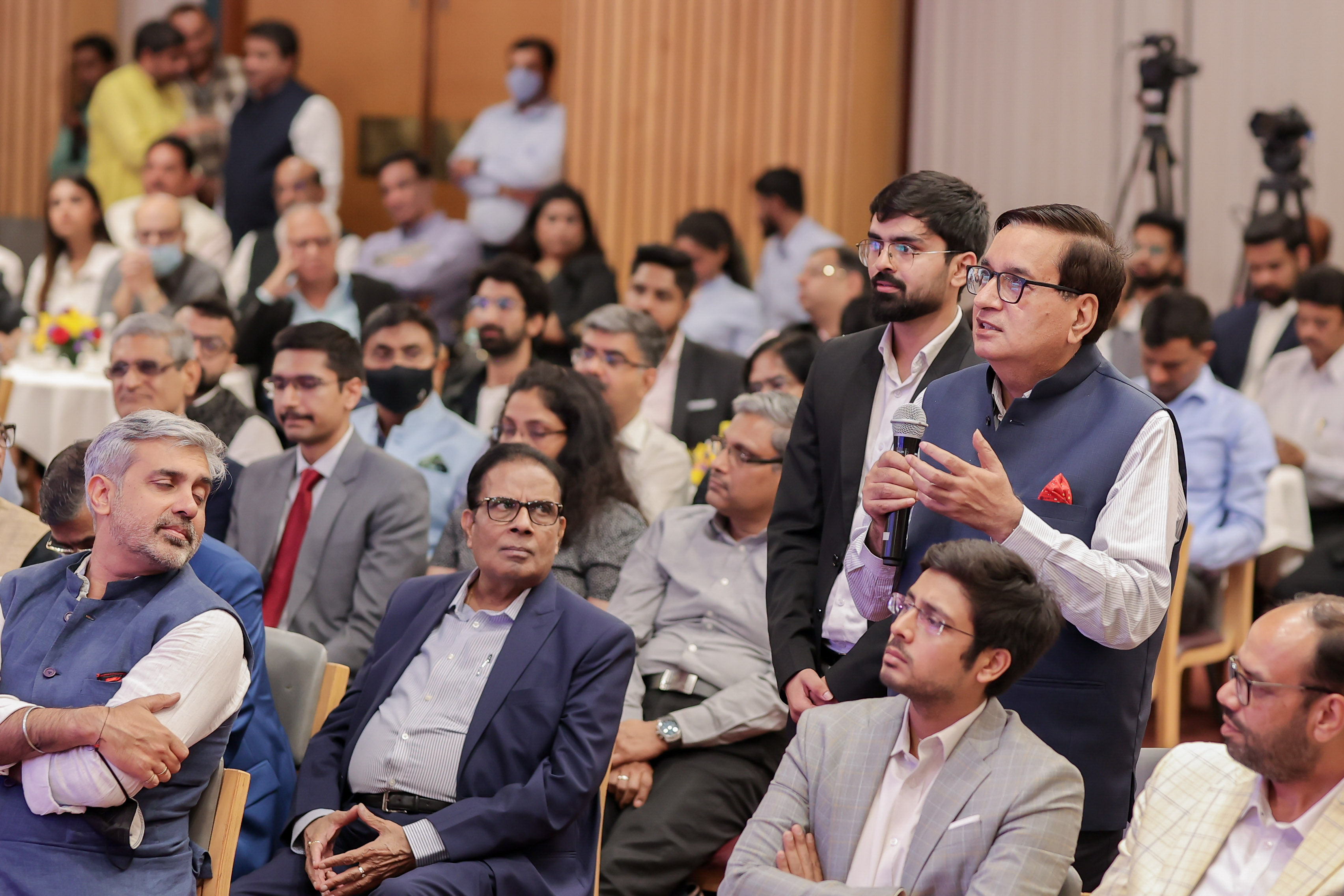
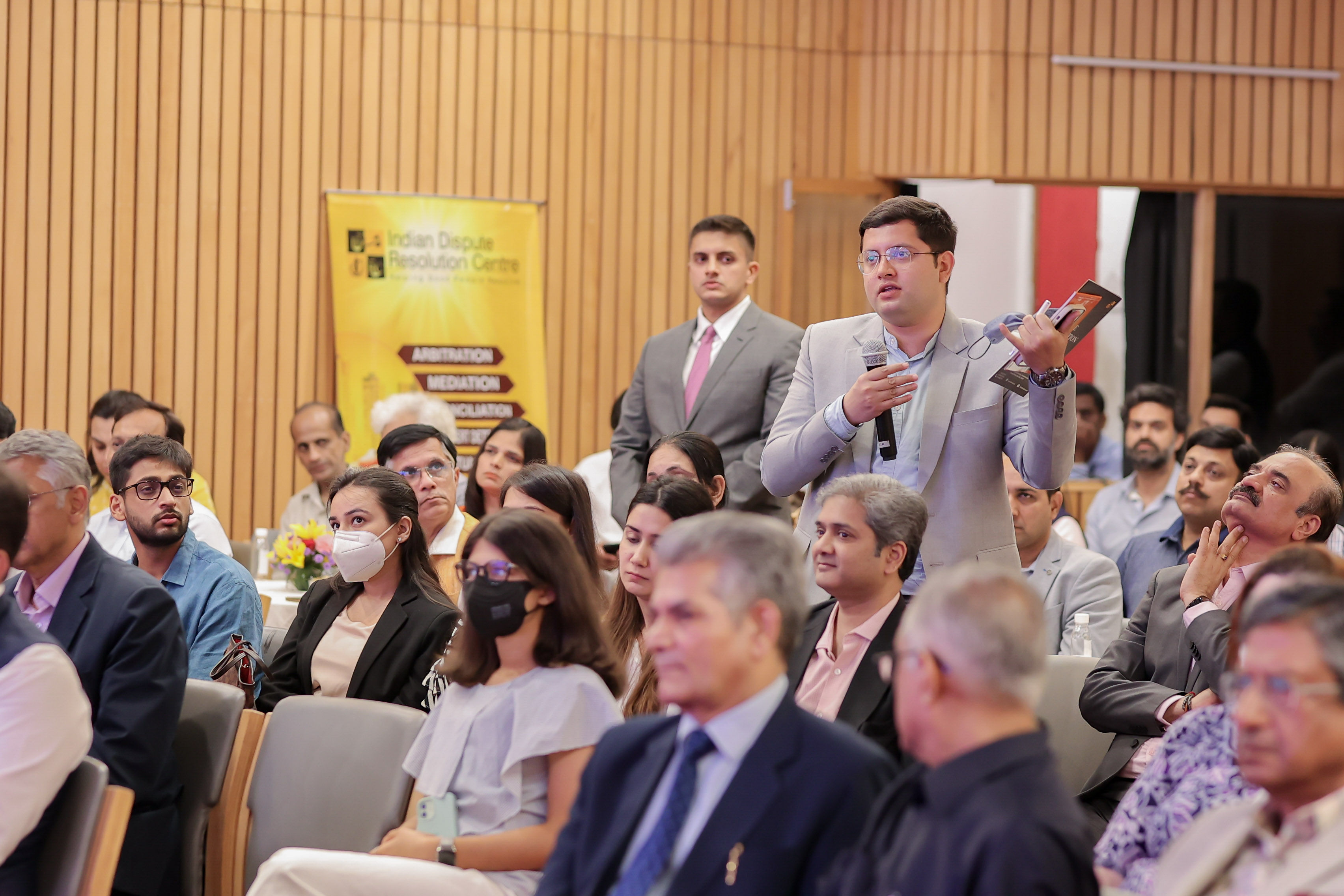
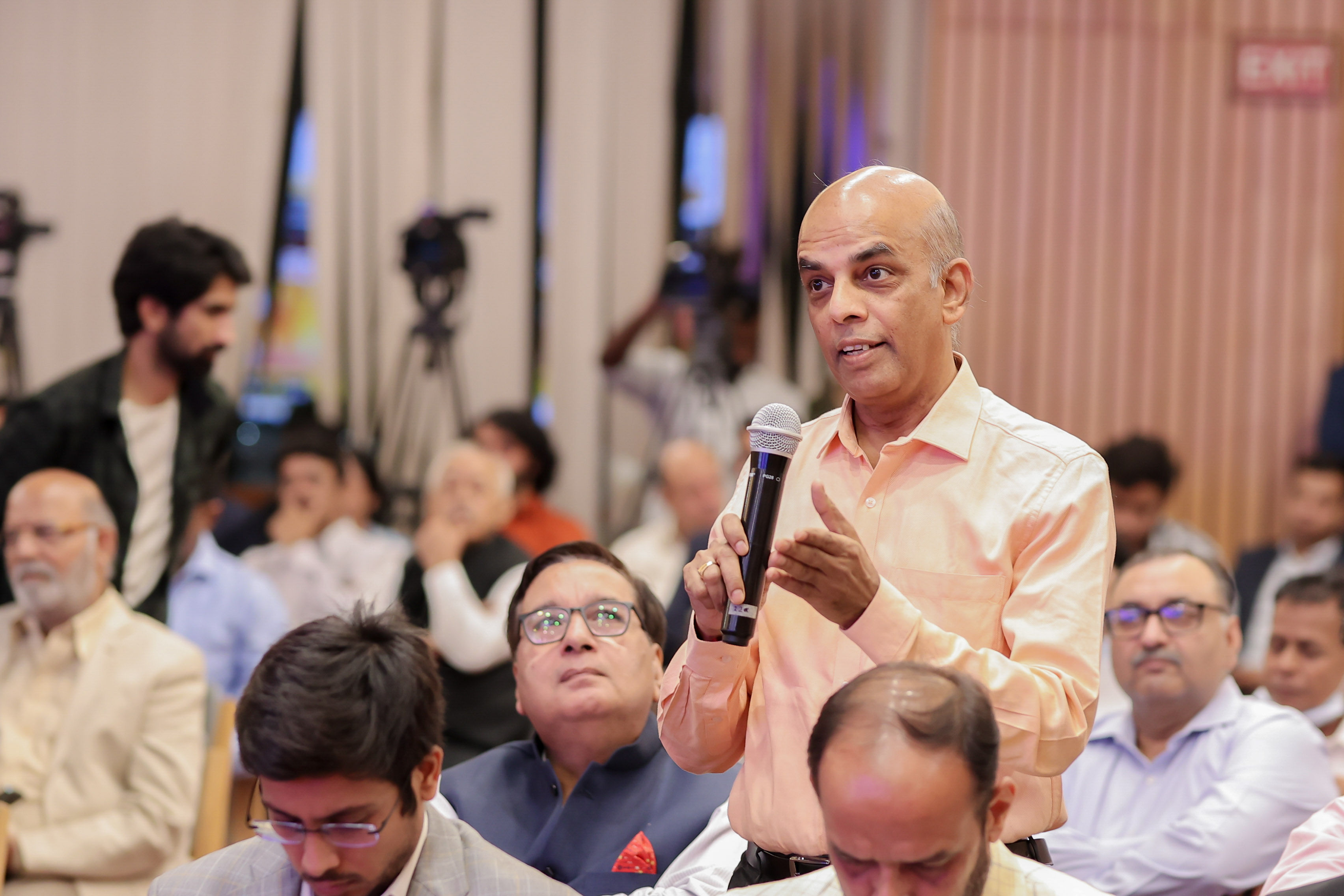
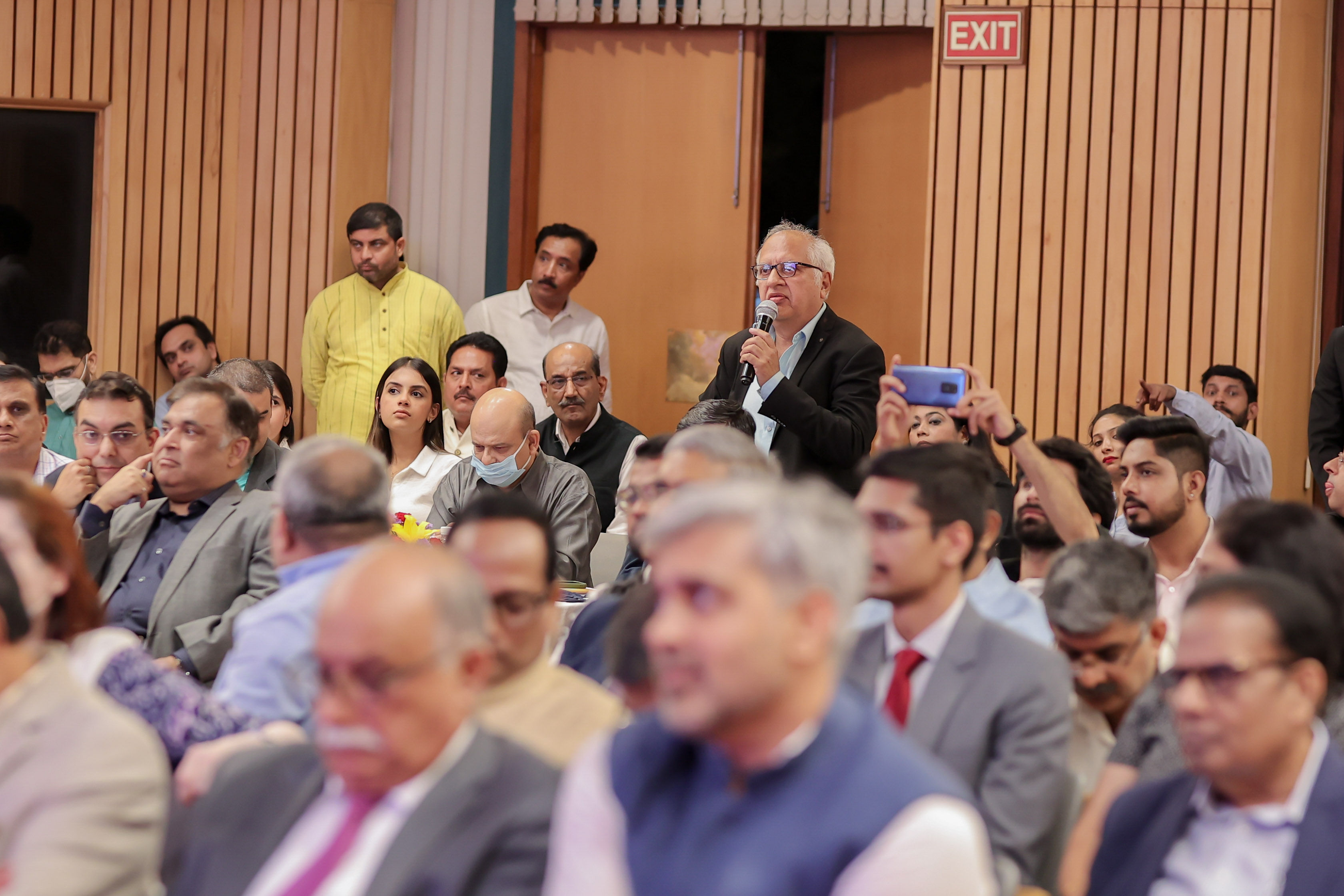
Question from audience- With respect to the AI system for decision support system in judiciary there was a lot of resistance form SC because in the sentencing part of the judgments in the lower courts, there were a lot of variations, so they wanted some consistency. In the cases you are mentioning, there were 30 million cases, now there are 44 million cases, so why not AI and other such things are taking over?
Justice A.K. Sikri: As far as introduction of AI in judiciary is concerned, this doesn’t deal with today’s topic. But having said so, it’s becoming a challenge. It’s projected in America that 70% of work will be taken by AI. Today the challenge is that it should not substitute the lawyers’ fraternity or judicial system but should be supportive. There are great debates over this not only in India but everywhere. When Justice S.A. Bobde was elevated as CJI, he said that we would like to have AI in our system as far as it is possible. To decide some of the cases you mentioned like traffic challan, sentencing would not be that easy. There are certain disputes like MSMEs where decisions through AI can be used.
In China in 2018, in international conference, I’d seen their AI in certain types of cases. Let’s take there are two persons have committed same crime for e.g., theft, murder, or dacoity. But when it comes to awarding sentencing, even in both the cases, the punishment may be different because it depends on a lot of factors, extenuating factors, mitigating factors. When it comes to America, the sentencing policy is arithmetic. If you’ve committed this offence for the first time, this is the punishment, second time it will go up and so on. There’s a lot of criticism of Indian practices as well as foreign practices because here it becomes the whims of the judge. So, it can be discussed at different levels.
Question from the audience: Considering that a lot of panellists discussed, how are commercial matters affecting the economy. Do you think a law successful in Singapore may not be successful in America? Do you think in India we can have private courts so that it will lower down the pressure on judiciary?
Shri Tejas Karia: The idea of arbitration is that you go for private dispute resolution which is the alternative resolution system. There’s no sense in coming back to the courts. We can have international judges, or the former judges of the other courts, coming and presiding over the courts and you won’t have to go to the ordinary courts. This is not very difficult. However, you can’t go through writ jurisdiction. That cannot be amended also since it’s the part of the basic structure. You can delegate through other jurisdictions.
Justice A.K. Sikri: There have been interesting development. In arbitration, when there was 1 foreign party you could choose even other jurisdiction. Now the SC has held that even two Indian parties can choose other jurisdictions. A very good suggestion is that a system must be created.
Question from Audience: Good evening. I’m Milind from Khaitan & Co. Sir, for the panel in general, there’s a two-part question. One is what you talked about- having two Indian parties. If you meet the criteria of the 3 pillars- court, laws and institutions, then also the two Indian parties may choose a seat outside India, so how can we counter that? Secondly, when it comes to institutional or ad-hoc arbitration, isn’t the court lagging a bit when it comes to, for e.g., a group of companies. We have just referred it to a larger bench so how do we move forward with it?
Vanita Bhargava: That is why we can’t do away completely as far as two-company doctrine is concerned, now it’s been referred to a larger bench. To that extent it is party autonomy also- choosing a seat outside.
Shri Sanjeev Srivastava (Moderator): You’ll find that there are always elements of something where examination is always required by court- fraud, matrimonial disputes- certain identified types of disputes- complete elimination of courts may not be possible in such cases. In the beginning how do you identify, in the layers of the company, who is involved? That is why at the 11, 9 or 14 stage somewhere the court needs to look into aspects that the arbitral tribunal cannot.
Vanita Bhargava: Where we are here today is because of the proactive judgements of the court which have led to these amendments.
Question from Audience: My name is Atul Shivpuri. We are on the panel of PSUs. The main question is why do we keep going to courts, we should dispense with the idea of going to courts when we have an arbitral tribunal constituted. When we have section 17 for interim measures of protection and you are unable to enforce that order, so by force you have to approach under section 9 for seeking interim reliefs. Why can’t the government or legislature confer powers on a tribunal equivalent to that of the court.
When you go for the enforcement of the interim order, the state police or other institutions do not accept the order, so we are forced to approach under section under section 9. Similarly, when you have the power of the tribunal and there is difference of opinion among different claimants and defendants, you are forced to approach the court
Shri Balbir Singh: I agree and it is more of a structural issue that when the PSUs are operating, there is a certain element of certain considerations in mind that decision making is to come from people within that particular organisation or there should be a central body that can take decisions where there is no threat to the person making the decisions. That is one fundamental issue which I completely agree with and possibly that decision making can take care of the decision being protected and not questioned.
That can eliminate a lot of these areas where you need to go to the court. In my experience I have seen that there are certain processes being created right now like one committee being formed and in case of PSUs certain decision making qua the arbitration clause- how it is to be drafted, what pool of arbitrators is there.
I think there are some steps in that direction but to say that these legacy issues are to be completely eliminated where historically it has been going on- the decision making when it comes to section 9, let’s say a property is to be attached, nobody would like not going to court and accepting before that the interim award given by the arbitrator, that issue will remain, I think. That’s what my viewpoint on this is.
Question from Audience: Justice Sikri very rightly said law and economics go together and especially in infrastructure projects there is a need because it is going to affect the public very largely. In that context, there is a suggestion being made that we should bring in international arbitrators because that will enhance the reputation.
If India being a diverse country, we all know with social, economic problems etc, if outsiders haver to come and without having any understanding of the socio-economic problems of this country, how effective are the international players going to be in arbitration, because ultimately the money has to pull back.
Shri Sanjeev Srivastava (Moderator): I think this apprehension is ill-founded because when we are talking about international arbitration, at the same time we are taking about international commercial disputes, so where the question of Indian socio-economic things comes? One thing, even under Arbitration Act Section 28(2) or (3) is very clear, the case is not to be decided on the basis of equity. It is a commercial dispute or contractual and in terms of the contract and of course along with that trade user this is. So therefore, international arbitrations in fact are decided on that basis only, so the contract entered into both parties which are bound by the terms of the contract, what are their rights n obligations under the contract, so on that basis where the claims of one party against the other are maintainable, so on that basis international people coming from other countries decide, I don’t think there’s a problem.
Event also saw participation of:
- HMJ Sunil Ambwani, former Chief Justice Rajasthan High Court;
- HMJ JR Midha and HMJ Vinod Goyal former judges of Delhi High Court;
- HMJ Rameshwar Malik former judge of Punjab & Haryana High Court;
- Ms. Pinky Anand, Additional Solicitor General of India;
- Mr. PK Malhotra, former Secretary, Ministry of Law and Justice;
- Sh. Sanjay Rathi, Hony. Secretary, Bar Council of Delhi;
- Shri SS Rana, former Director General, Excise and Customs.
- Entire litigation team of Khaitan & Co. led by Mr. Ajay Bhargawa
- Entire litigation team of SNG & Partners
- Senior Advocates: Mr. P. Nagesh, Mr. Sushil Salwan, Mr. Ratan Kumar Singh, Col. R. Bala, Ms. Geeta Luthra, Mr. DN Goverdhan, Mr. Ramesh Gupta and ors.
- Ms. Anju Rathi Rana and Mr. K Biswal, Additional Secretary, Ministry of Law and Justice, Government of India
- Mr. Mahavir Singh, Judicial Member ITAT
- Mr. SS Sirohi, former member Telecom Board
- Shri. Ajit Pandey, Member Judicial, PNGRB
- Shri. Anil Kapoor, Former Director, ‘Make in India’, PMO
- Dr. OP Yadav, Chairman, National Heart Institute
- Host of media persons, Senior Bureaucrats and officers of Public Sector Undertakings
- And many other dignitaries.
Event was supported by -
Knowledge Partners to the Event were:
- National Law University, Delhi
- O.P Jindal Global University
- Vivekanada Institute of Professional Studies, Delhi
- Galgotia’s University
- Indian Institute of Arbitration, IIArb
- Indian Institute of Mediation, IIMed
- Latestlaws.com
- Lexidem & Rathi, A Global Law Firm
HEAD OFFICE OF IDRC:
703-704, Indraprakash Building, Barakhamba Road, Connaught Place, New Delhi - 110001
CORPORATE OFFICE OF IDRC:
10, Third Floor, Poddar House, A Lane, Marine Drive, Mumbai - 400020
CONTACT IDRC:
Email : info@theidrc.com Mobile : +91 - 9968 141414 / +91 - 9563 141414 Land : 011 - 46521414
Conclave 2022 Media Coverage













IDRC e-Arbitration
Business Friendly
Helps the parties resolve disputes without sacrificing the business relationship
Cost-efficient
By a speedy resolution the parties can focus on profitable business activities rather than spending time and money on litigation
Enforceable
The arbitral award is enforceable as a decree
Fast
A IDRC e-Arbitration is completed within prescribed time.
Paperless
The entire arbitration process is completed without a piece of paper being used.
IDRC e-Mediation
Business Friendly
Helps the parties resolve disputes without sacrificing the business relationship
Cost-efficient
By a speedy resolution the parties can focus on profitable business activities rather than spending time and money on dispute resolution
Fast
A IDRC e-Mediation is usually completed within a prescribed time.
Flexible
The parties are actively in control of the dispute resolution process.
Paperless
The entire mediation process is completed without a piece of paper being used.