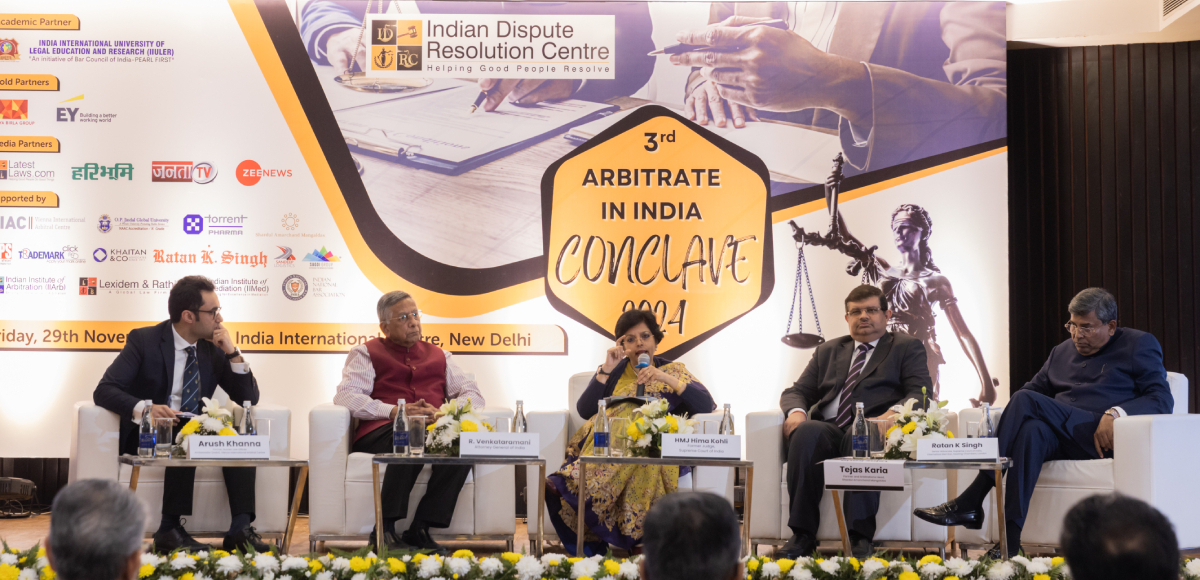
 (L-R) Mr. Arush Khanna, Partner, Numen Law Offices, Mr. R. Venkataramani, Attorney General for India, Hon’ble Ms. Justice (Retd). Hema Kohli, Former Judge, Supreme Court of India, Hon’ble Mr. Tejas Karia, Head of Arbitration at Shardul Amarchand Mangaldas, Mr. Ratan K Singh, Senior Advocate, Supreme Court of India
3rd Arbitrate in India Conclave, 2024
Introduction
On Friday, 29th November, 2024, the Indian Dispute Resolution Centre (IDRC), one of the leading institutional arbitration center in India and Asia-Pacific, organised ‘3rd Arbitrate in India Conclave, 2024’ at the India International Center, Lodhi Estate, New Delhi. The event was held in collaboration with the India International University of Legal Education and Research, (IIULER) Goa, an initiative of the Bar Council of India Trust and further supported by the Vienna International Arbitration Center, Austria.
Report on Arbitrate in India Conclave, 2024
The conclave commenced with an opening address by Mr. Manan Kumar Mishra, Senior Advocate, Chairman of the Bar Council of India, and Member of the Rajya Sabha, followed by two insightful panel discussions beginning with the first panel chaired by Hon’ble Ms. Justice Hema Kohli, Former Judge of the Supreme Court of India, and co-chaired by Mr. R. Venkataramani, Attorney General of India. The panel included Mr. Tejas Karia, Head of Arbitration at Shardul Amarchand Mangaldas, and Mr. Ratan Singh, Senior Advocate & International Member at Keating Chambers, London, with Mr. Aarush Khanna, Partner at Human Law Offices, who moderated the discussion.
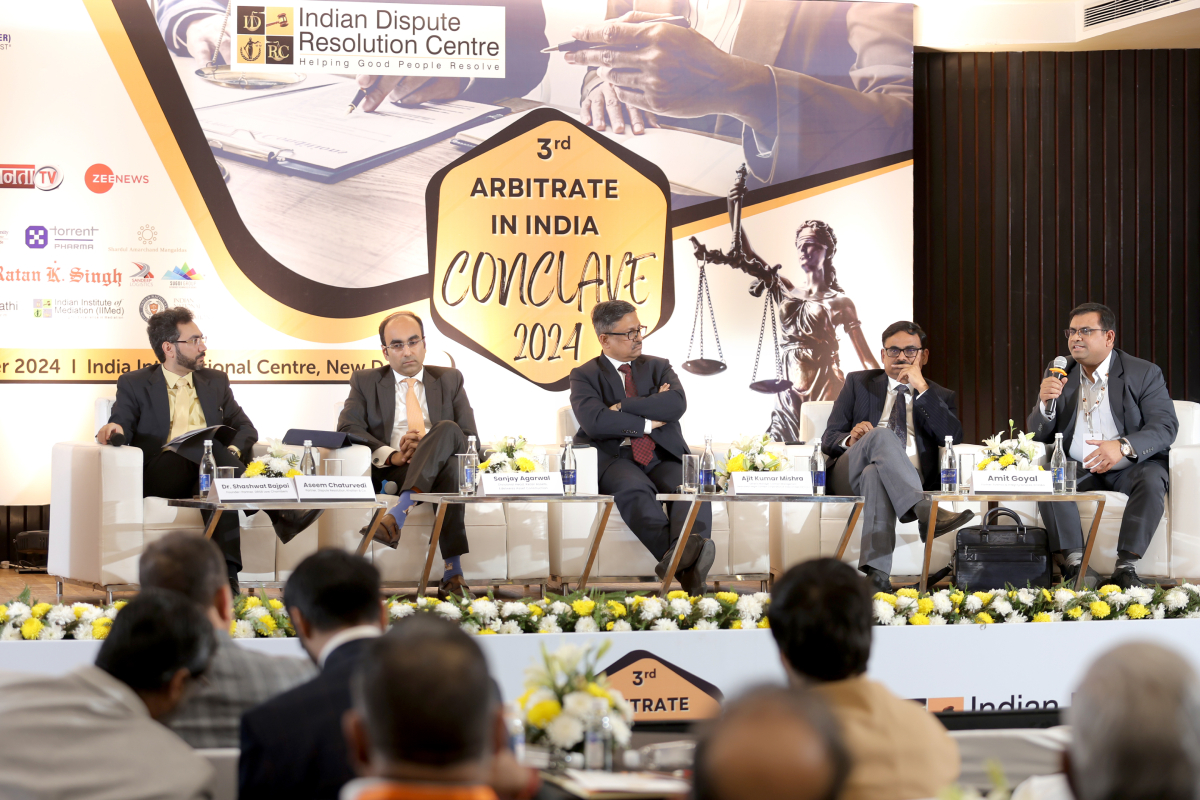 (L-R) Dr. Shashwat Bajpai, Founder-Partner, DRSB Law Chambers, Mr. Asim Chaturvedi, Partner in Dispute Resolution at Khaitan & Co., Mr. Sanjay Agarwal, Divisional Head of Retail Assets at Edelweiss Asset Construction, Mr. Ajit Kumar Mishra, General Manager of Contract Management at DFCCIL and Mr. Amit Goyal, Partner in Forensic and Integrity Services at EY India
The second panel featured Mr. Sanjay Agarwal, Divisional Head of Retail Assets at Edelweiss Asset Construction; Mr. Ajit Kumar Mishra, General Manager of Contract Management at DFCCIL; Mr. Amit Goyal, Partner in Forensic and Integrity Services at EY India; and Mr. Asim Chaturvedi, Partner in Dispute Resolution at Khaitan & Co. The session was moderated by Dr. Shashwat Bajpai, Founding Partner of DRSP Chambers.
The event concluded with the Valedictory Session, delivered by Hon’ble Shri Harsh Malhotra, Union Minister of State for Corporate Affairs and Road Transport. The formal proceedings ended with closing remarks and a vote of thanks by Mr. Divyanshu Hanu Rathi, Honorary Secretary of the Indian Dispute Resolution Centre.
Third Arbitrate in India Conclave, 2024: India as a Hub for Institutional Arbitration - Ad Hoc vs. Institutional Arbitration and the Future of Arbitration in Banking and Finance Disputes
The event marked the Fourth Anniversary of the Indian Dispute Resolution Centre. IDRC was inaugurated by Hon’ble Mr. Justice Arjan K. Sikri, Former Judge, Supreme Court of India in May 2020. In a short span of time IDRC has accomplished more than 2000+ arbitration proceedings and assisted in numerous International and Domestic Arbitrations presided by Retired Hon’ble Judges of the Supreme Court and High Courts. The Conclave brought together esteemed legal luminaries, arbitration practitioners, industry experts, and academicians who successfully contributed to the ongoing discourse on arbitration reforms in India. Apart from former Judges of Supreme Court and High Courts and Senior Advocates, the event saw participation of IDRC’s Panel Arbitrators, including Heads of leading law firms, the PSUs and Members of the Bar. The Entire Event was organised professionally by IDRC’s Board of Advisor Members Mr. Divyansh Hanu Rathi, Ms. Sumedha Sindhu Rathi and Ms. Riya Rathi along with officials of IIULER of Bar Council of India.
The two panel discussions pondered over the importance of institutional arbitration, digital transformation in dispute resolution, and the need for legislative clarity in financial arbitration. The first panel discussion, titled “India as a Hub for Institutional Arbitration: Ad Hoc vs. Institutional Arbitration,” brought together distinguished experts to examine the evolving landscape of arbitration in India. The panel explored the comparative advantages of institutional arbitration over ad hoc arbitration, highlighting how leading arbitral institutions worldwide have established credibility through efficient administration and robust procedural rules. The discussion revolved around India’s ongoing transition from a predominantly ad hoc arbitration landscape to an institutional arbitration framework, with emphasis on the role of institutions like IDRC in facilitating streamlined arbitration proceedings.
The second panel discussion, titled “Arbitration in Banking and Finance: The Way Forward,” brought together leading experts to explore the evolving role of arbitration in financial disputes and on key challenges and opportunities in banking and financial arbitration. The panel delved into the complexities of arbitration in banking and financial disputes, addressing concerns related to financial expert testimony, tribunal independence, and the interplay between financial regulations and arbitration.
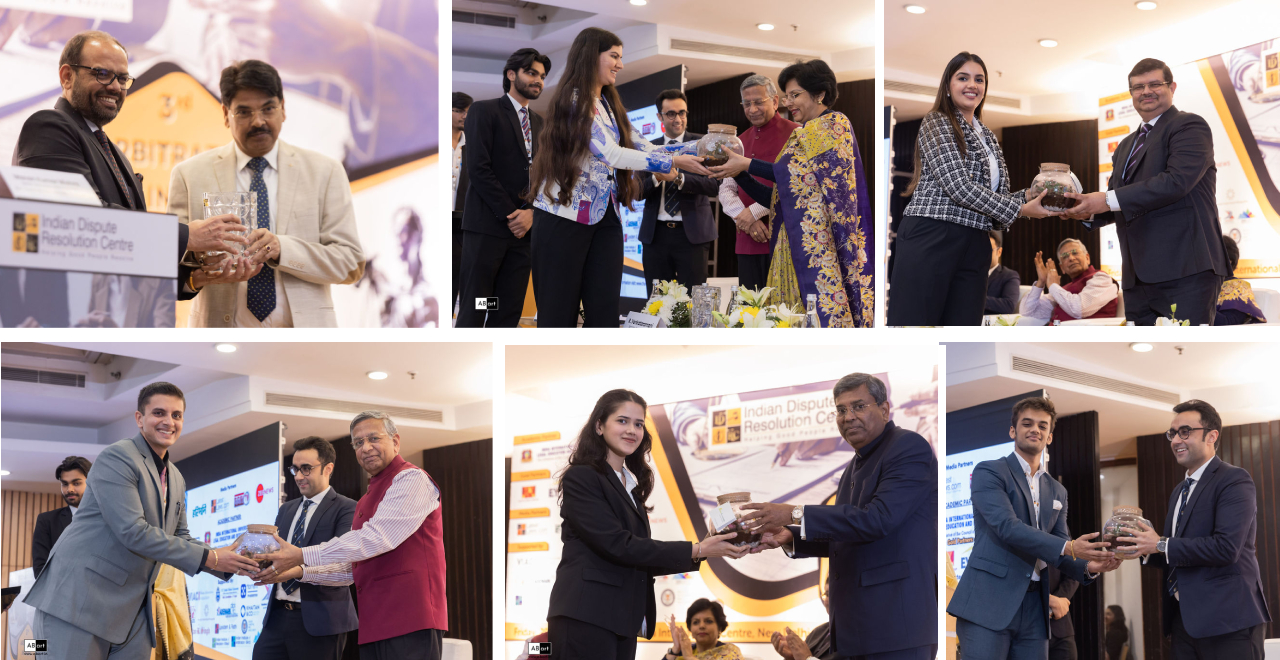
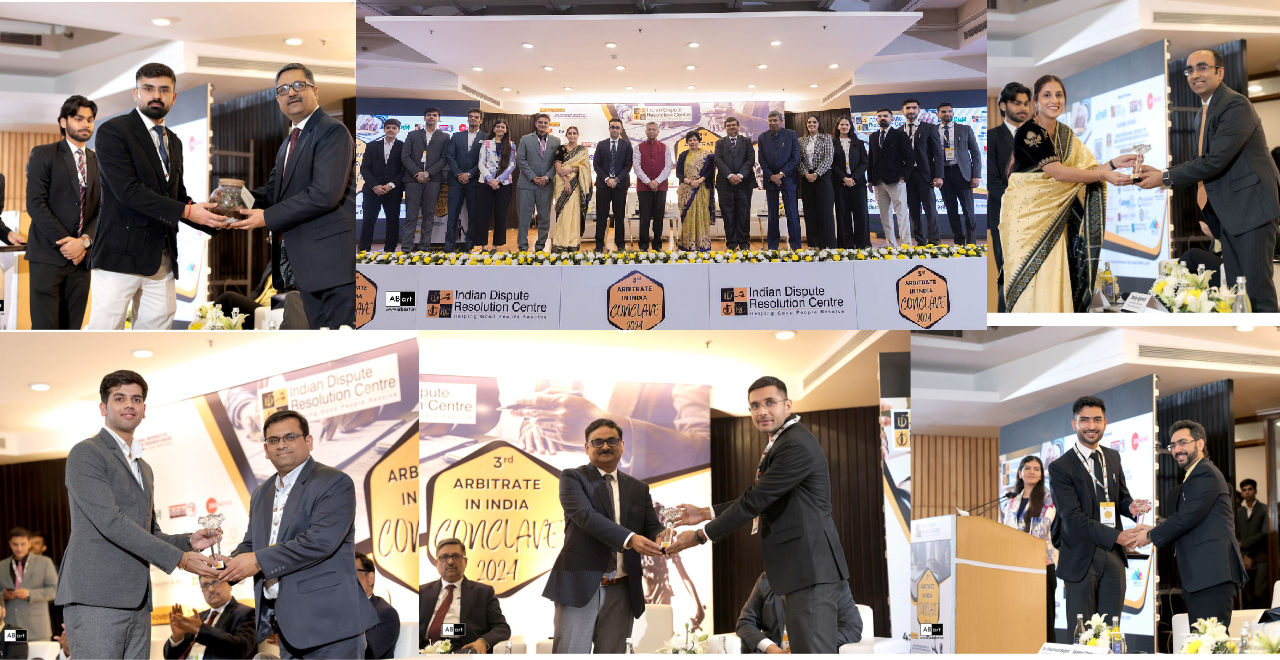
 Ms. Riya Rathi, Founder- IDRC and LatestLaws.com felicitating Hon’ble Ms. Justice (Retd). Hema Kohli, Former Judge, Supreme Court of India
 Ms. Jaanvi Rathi, Advocate felicitating Hon’ble Mr. Tejas Karia, Head of Arbitration at Shardul Amarchand Mangaldas
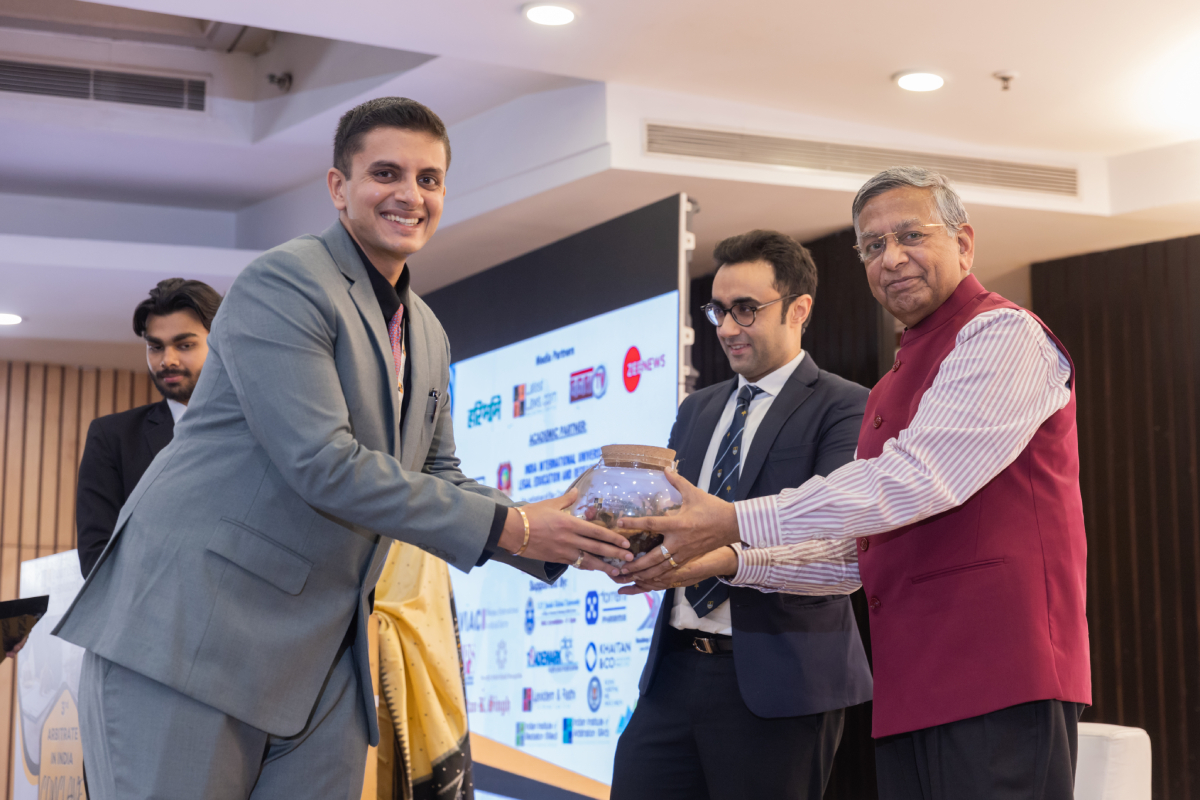 Mr. Divyansh H Rathi, Hony. Secretary, IDRC, felicitating Mr. R. Venkataramani, Attorney General of India
 Ms. Bhavika Rathi, Advocate felicitating Mr. Ratan K Singh, Senior Advocate, Supreme Court of India
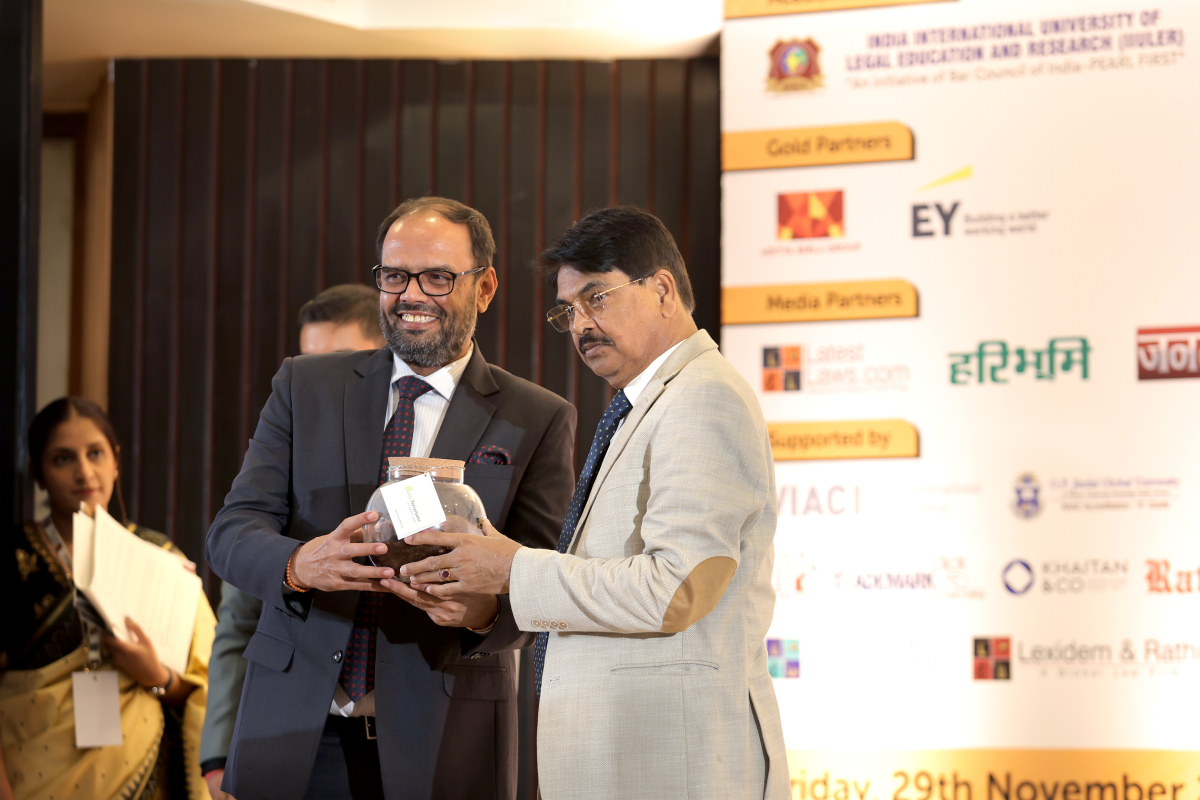 Mr. Sanjay Rathi, Advocate and Member, Bar Council of Delhi felicitating Mr. Manan Kumar Mishra, Senior Advocate and Chairman, Bar Council of India and Member, Rajya Sabha
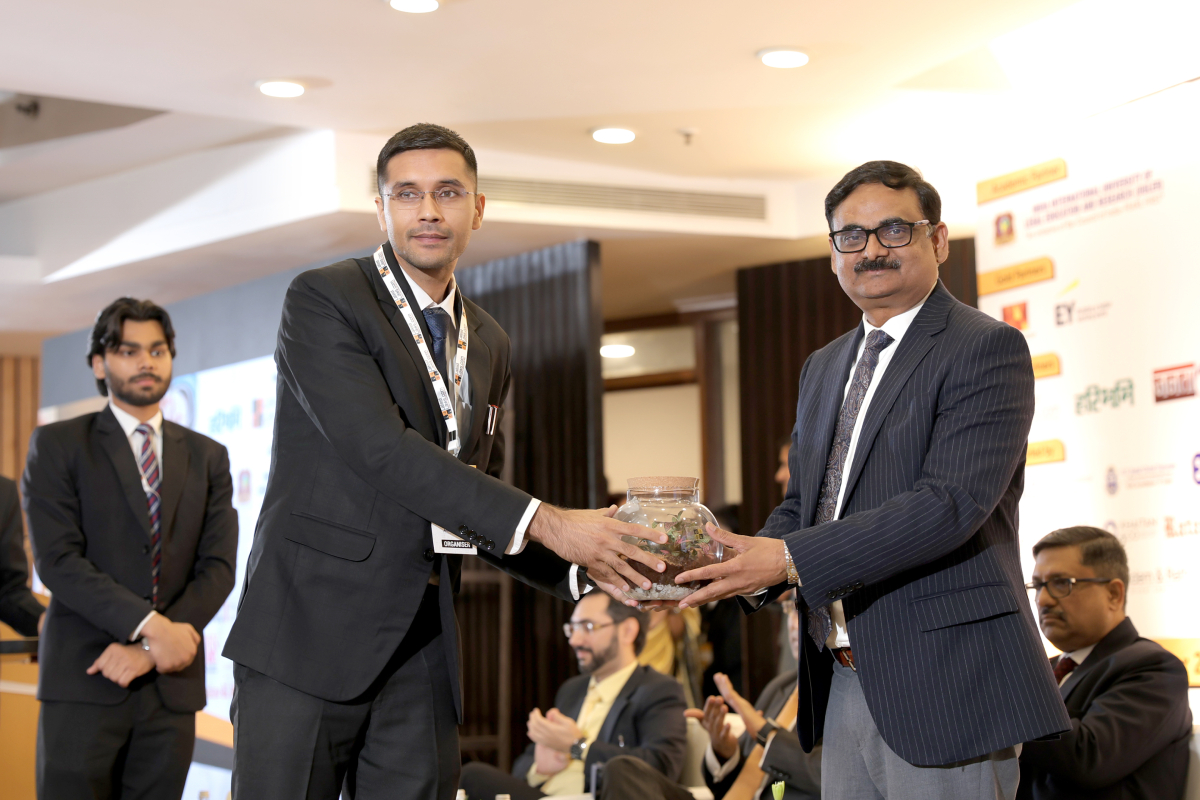 Mr. Ankit Kumar, Advocate felicitating Mr. Ajit Kumar Mishra, Head, Contract Management, DFCCIL
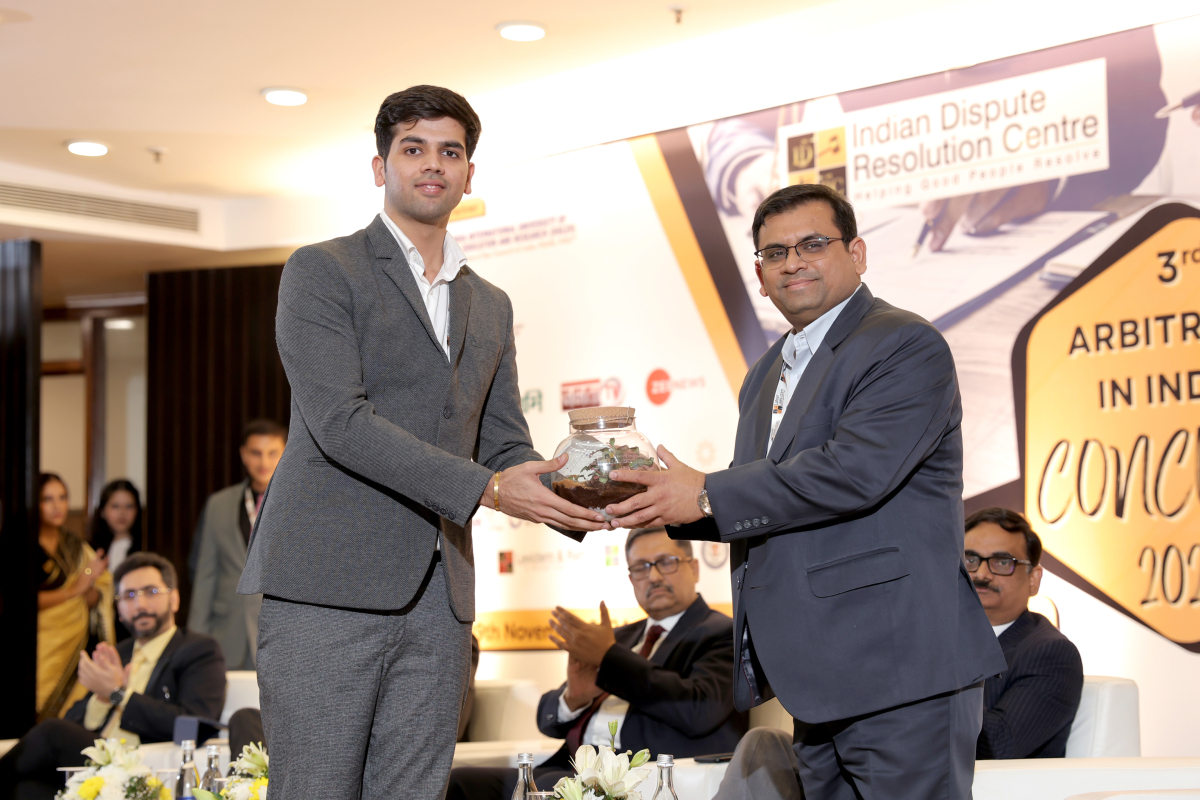 Mr. Tanvir Rathi felicitating Mr. Amit Goyal Partner, Forensic & Integrity Services, EY India
 Ms. Sumedha Sindhu, Head of Operations, IDRC felicitating Mr. Aseem Chaturvedi, Partner,
Dispute Resolution, Khaitan & Co.
Ms. Sumedha Sindhu, Head of Operations, IDRC felicitating Mr. Aseem Chaturvedi, Partner,
Dispute Resolution, Khaitan & Co.
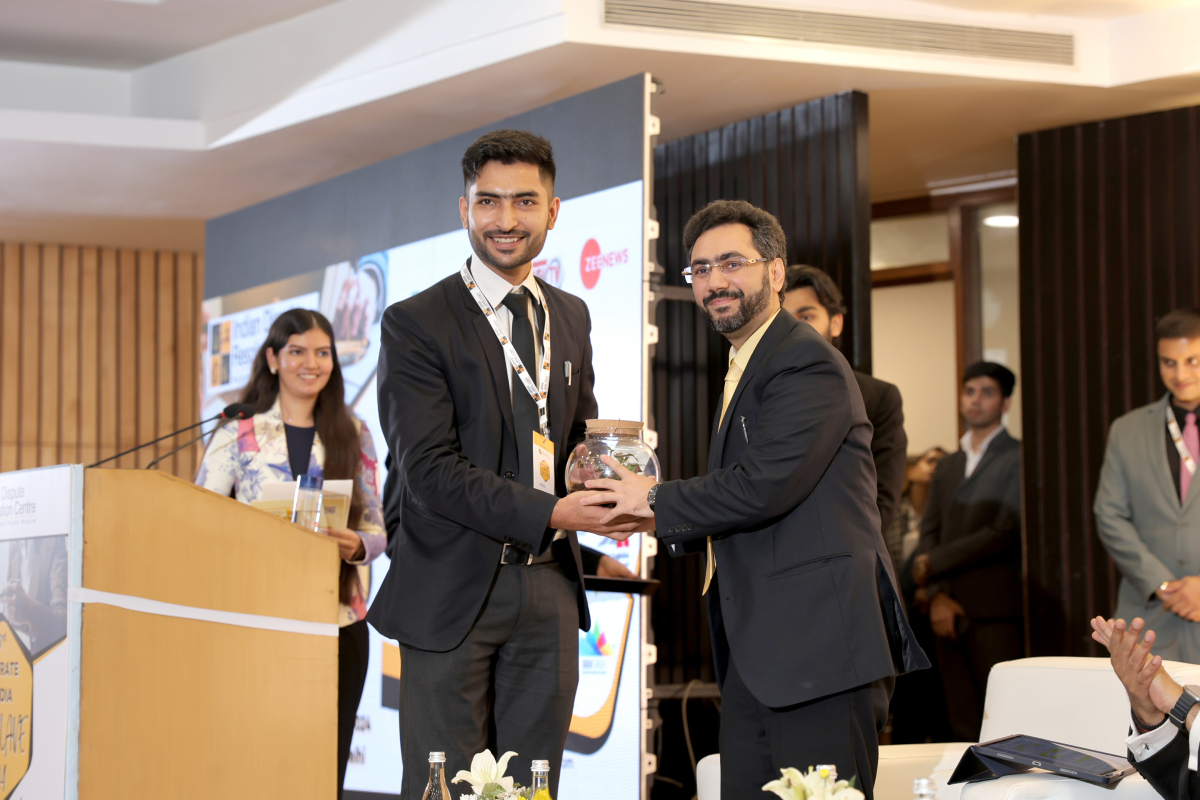 Mr. Vikram Dagar, Advocate felicitating Mr. Shashwat Bajpai, Founder-Partner, DRSB Law
Chambers
Mr. Vikram Dagar, Advocate felicitating Mr. Shashwat Bajpai, Founder-Partner, DRSB Law
Chambers
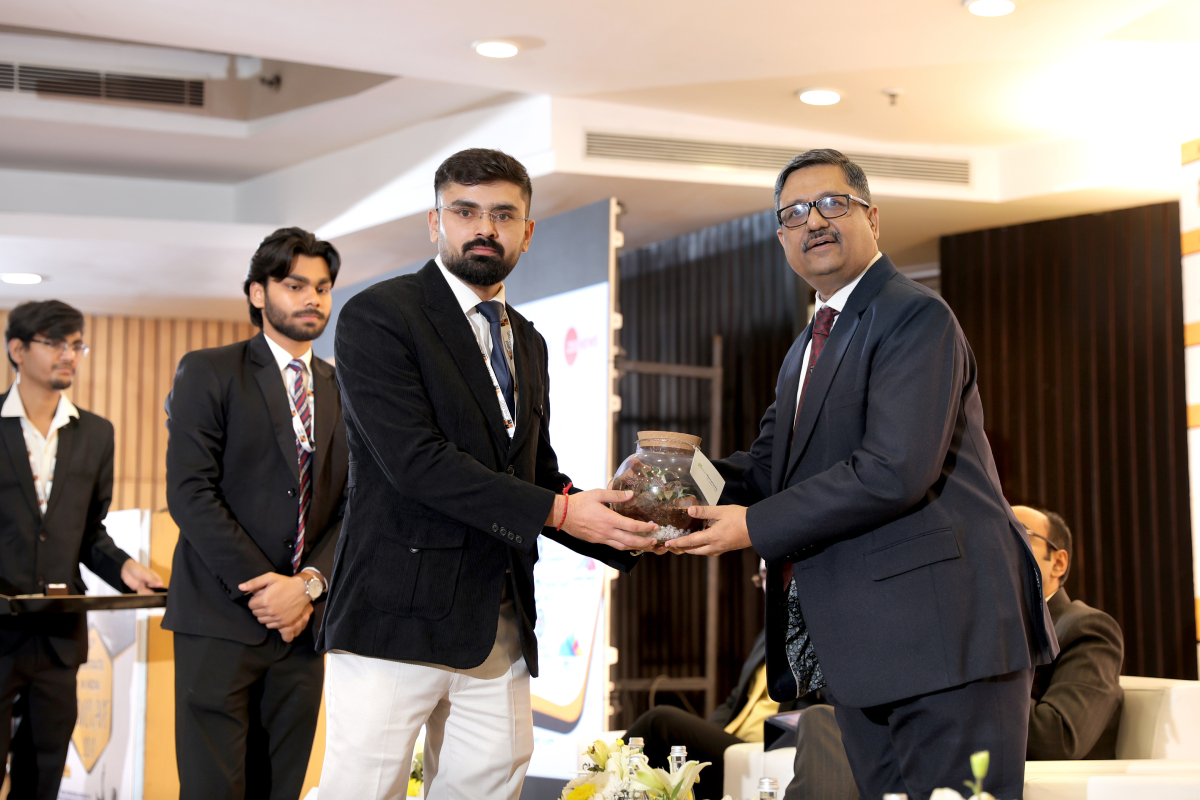 Mr. Chitragupt Dagar, Advocate felicitating Mr. Sanjay Aggarwal, Divisional Head, Retail Assets,
Edelweiss Asset Reconstruction
Mr. Chitragupt Dagar, Advocate felicitating Mr. Sanjay Aggarwal, Divisional Head, Retail Assets,
Edelweiss Asset Reconstruction
Organiser - Indian Dispute Resolution Centre – IDRC alongwith of IIULER of Bar Council of India
IDRC is India’s leading Institutional Arbitration Centre established by the not-for-profit Organisation ‘International Dispute Resolution Council’. IDRC is registered with the Ministry of Corporate Affairs, NITI Aayog and empanelled with the Ministry of Law and Justice, Government of India. It provides a state-of-the-art institutional environment for online and offline resolution of disputes through Arbitration, Mediation and Conciliation with facility of Expert Determination and Early Neutral Evaluation from its Cloud-Based inhouse Digital Platform and through its affiliates in all the major cities in India and overseas.
About Arbitration in India
Arbitration has been an integral part of India’s dispute resolution culture for centuries, dating back to traditional mechanisms like village panchayats. The first formal arbitration law was the Arbitration Act, 1899, followed by the Indian Arbitration Act, 1940, which governed arbitration for decades. However, recognizing the need for a modern and internationally aligned legal framework, India enacted the Arbitration & Conciliation Act, 1996, based on the UNCITRAL Model Law. Introduced alongside India’s economic liberalization, the 1996 Act aimed to streamline arbitration proceedings, reduce delays, and enhance investor confidence.
Despite its initial promise, arbitration in India faced challenges, particularly due to excessive judicial intervention and inefficiencies that discouraged foreign investors. To address these issues, the government introduced significant amendments in 2015 and 2018, focusing on reducing court interference, improving enforceability, and promoting institutional arbitration. A major outcome of these reforms was the establishment of the Arbitration Council of India (ACI), tasked with accrediting arbitrators and institutions while ensuring professional standards. Additionally, the New Delhi International Arbitration Centre (NDIAC) was created to serve as a premier institution for arbitration. These measures align with India’s broader economic vision of becoming a USD 5 trillion economy and have significantly improved its global ease of doing business rankings.
Another landmark development was the Supreme Court’s ruling in Bar Council of India v. A.K. Balaji, which clarified the role of foreign lawyers in international commercial arbitration in India. While they cannot practice law regularly, they are permitted to advise and participate in arbitration cases on a "fly-in and fly-out" basis. Additionally, emerging trends such as third-party funding, artificial intelligence for arbitrator selection, and blockchain for document security are reshaping the arbitration landscape. Legal reforms, along with the Commercial Courts Act, 2015, and the Insolvency and Bankruptcy Code, 2016, have further strengthened India’s dispute resolution framework.
While these reforms have positioned India as an arbitration-friendly jurisdiction, challenges remain in ensuring efficiency and widespread adoption of institutional arbitration. The success of these initiatives will depend on their implementation, judicial cooperation, and the willingness of businesses to embrace alternative dispute resolution mechanisms. With continued reforms and technological advancements, India is well on its way to becoming a preferred global arbitration hub.
Highlights of the Inaugural Address by Manan Kumar Mishra, Senior Advocate, Chairman of the Bar Council of India, and Member of the Rajya Sabha
- The Bar Council of India (BCI) has always been at the forefront of efforts to enhance the quality of legal education, practice, and professional standards in India. Through this partnership, BCI has worked closely with IDRC to ensure that the best standards are maintained in our proceedings. We have strived to create a platform for the exchange of knowledge, experiences, and insights between arbitration professionals, legal practitioners, and academic institutions. This collaboration has allowed us to advance arbitration practices while also enhancing the training and education of the next generation of arbitration practitioners in India.
- The Vedic texts mention dispute resolution mechanisms resembling arbitration, with panchayats resolving disputes. Over time, India formalized arbitration laws, with the Arbitration and Conciliation Act, 1996, aligning with the UNCITRAL Model Law. This legislation reduced court interventions and ensured finality in arbitration awards. Amendments such as the 2015 reforms further streamlined the process by introducing time limits for arbitration proceedings.
- India’s potential to be a hub of institutional arbitration is rooted in our robust legal framework, rich tradition of dispute resolution, and growing cadre of highly skilled professionals.
- The recent reforms in the legal landscape, particularly the Arbitration and Conciliation (Amendment) Act, 2019, were landmark developments. The amendment introduced several notable changes, such as reducing the scope of judicial intervention, ensuring quicker timelines, and setting up the Arbitration Council of India. The Bar Council of India has, on its part, always led from the front by aligning its policies with these advancements. BCI introduced rules and regulations for foreign law firms and lawyers in India, in line with global practices. Furthermore, the Government of India has proposed a draft Arbitration and Conciliation (Amendment) Bill, 2024, to further streamline the arbitration process.
- Recently, on November 8, 2024, the Supreme Court of India delivered a momentous judgment in the case of Central Organization for Railway Electrification. The five-judge bench addressed a pivotal question: whether an arbitration clause allowing one party to curate a list of arbitrators from which the other party selects adheres to the principles of impartiality and fairness under the Arbitration and Conciliation Act, 1996. This decision has significant implications for arbitration agreements and the broader legal framework governing impartiality in arbitral proceedings.
- In the context of banking and finance, where the stakes are high and the issues complex, the arbitration process allows for quicker and more expert-driven resolutions than traditional court litigation. Institutional arbitration centres such as IDRC provide the perfect platform to ensure that disputes in these sectors are resolved by experts who understand the complexities of financial regulations, contractual obligations, and international financial norms. It is essential that our legal framework continues to promote arbitration clauses in financial contracts, and that the industry as a whole embraces arbitration as a tool for maintaining the smooth operation of the banking and financial system in India.
- India International University of Legal Education and Research (IIULER), Goa, which is part of the Bar Council of India’s broader mission to advance legal education and research. IIULER is a forward-thinking institution dedicated to providing world-class education that aligns with global best practices in the field of law. The university focuses on delivering specialized courses in areas including arbitration, international trade, and dispute resolution. Through its academic programs, IIULER is cultivating a new generation of legal experts who will lead the way in promoting institutional arbitration and resolving disputes effectively.
- This is a unique opportunity for all of us—legal professionals, academicians, business leaders, and arbitrators—to come together and collaborate on building a more robust and effective arbitration ecosystem in India. Let us make the most of this occasion to share ideas, forge new connections, and work together to ensure that India not only becomes a leader in institutional arbitration but also remains a backbone of fair, transparent, and efficient dispute resolution.
Highlights of 1st Panel Discussion on Ad Hoc vs. Institutional Arbitration and India’s Position as a Global Arbitration Hub
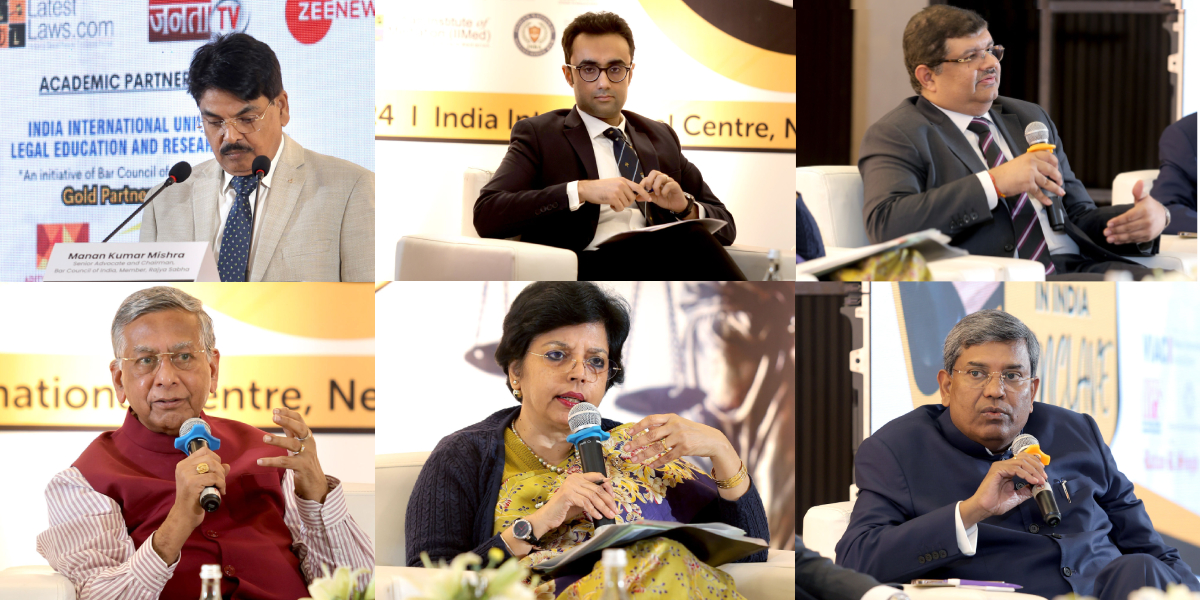
Panellists:
- Hon’ble Ms. Justice Hima Kohli, Former Judge, Supreme Court of India
- Mr. R. Venkataramani, Attorney General of India
- Mr. Manan Kumar Mishra, Senior Advocate, Chairman, Bar Council of India and Member, Rajya Sabha
- Mr. Tejas Karia, Partner and Head of Arbitration, Shardul Amarchand Mangaldas
- Mr. Ratan K Singh, Senior Advocate, Supreme Court of India and International Member, Keating Chambers, London
- Mr. Arush Khanna, Partner, Numen Law Offices and Ambassador (India) Vienna International Arbitral Centre (Moderator)
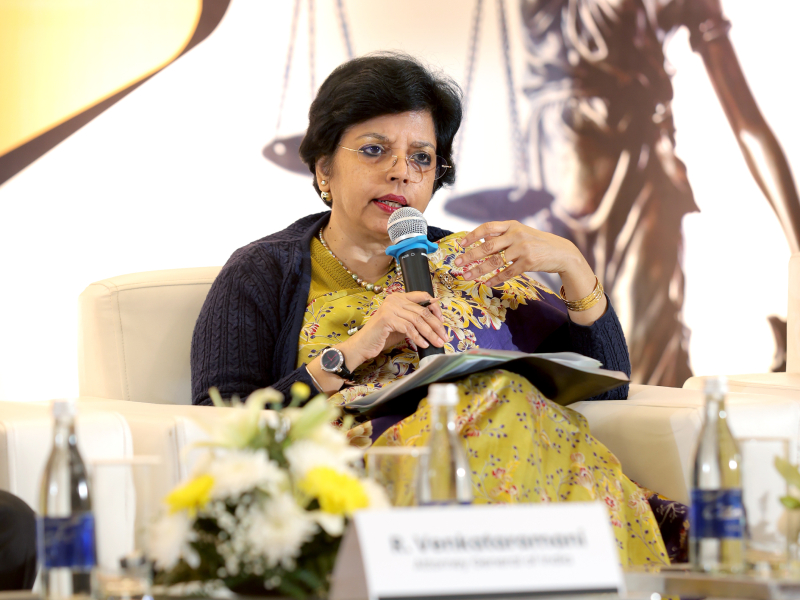
Justice (Retd.) Ms. Hima Kohli, Supreme Court of India
Justice Hima Kohli emphasized the principle of minimum judicial interference in arbitration, advocating that courts should step in only in "exceptional circumstances for obvious reasons." She stressed that once parties have agreed to arbitration as their dispute resolution mechanism, courts should not interfere in "the appointment of arbitrators, the arbitration proceedings, or even after the award is delivered, unless the issue goes to the root of the matter, raises a fundamental issue, or conflicts with public policy."
She also highlighted the concerns surrounding the two-tier appellate tribunal system proposed in the latest arbitration amendments. While acknowledging that Supreme Court judgments have upheld party autonomy in opting for such a system, she pointed out that "every amendment, for one reason or another, is challenged in the court of law, traveling right from the High Court to the Supreme Court, with benches ranging from three to five to seven judges." She foresaw that the proposed two-tier arbitration system could also face legal scrutiny.
Justice Kohli underscored the importance of ethics in arbitration, particularly at the institutional level. She asserted that "the ethics of the arbitrator should be squeaky clean," particularly in international arbitration, where neutrality is paramount. She also criticized the common practice of scheduling arbitration hearings at 4:30 p.m., after a full day in court, stating that "nowhere else would any lawyer request a tribunal to fix a hearing at such a late hour." She called for a "time-bound approach" where arbitration sessions are treated like court proceedings, running through the day to maintain continuity and reduce delays.
Speaking on the historical roots of arbitration in India, she pointed to the legacy of trader guilds, which resolved disputes within specialized industries. She noted that similar expertise is now needed in modern fields like oil, solar energy, and wind power. Justice Kohli emphasized the need for arbitrators to embrace continuous learning, stating that "it’s not just about proceeding in arbitration as if one were wearing the mantle of a judge. Sometimes, you have to step back and learn."
She delivered a call to action, urging India to prove its readiness to compete as a global arbitration hub. "The proof of the pudding is always in the eating. We should be able to demonstrate that we are ready in every way to compete with the best international institutions, with the best arbitrators, a neutral field, and, of course, the best bar." She warned that if India does not take swift and decisive action, "we may miss the bus" on becoming a preferred global arbitration destination.
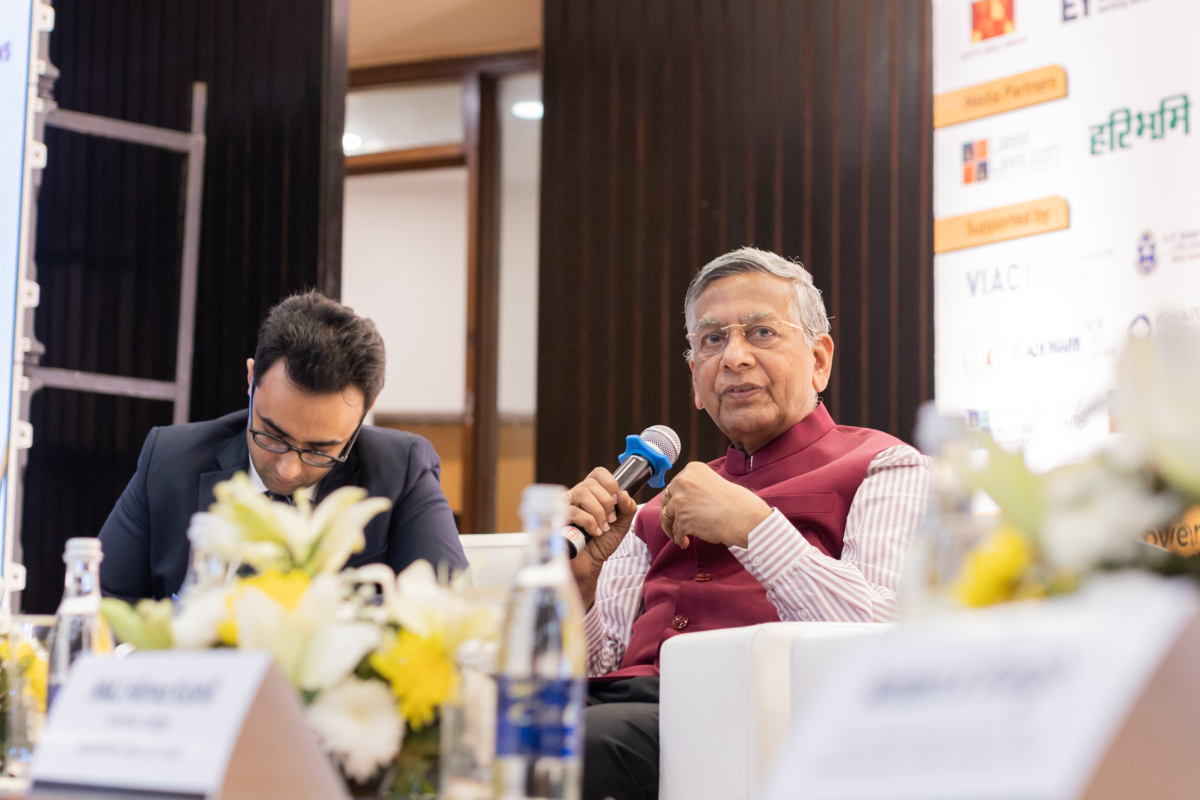
Shri. R. Venkataramani, Attorney General of India
Shri. R. Venkataramani addressed the need for the Arbitration Bar of India, explaining that it was conceived not merely as a collective of arbitration practitioners but as a transformative force aimed at institutionalizing arbitration in India. He acknowledged India's slow transition from the 1940 Act to the 1996 Act, attributing it to deeply ingrained legal principles that persisted even after reforms. "Our transition was fairly slow, for good and bad reasons. The culture of the 1940 Act somehow got embedded, even under the 1996 Act." He emphasized that ad-hoc arbitration, despite its inefficiencies, provided lessons that are crucial in shaping a more structured, institutionalized arbitration framework.
Discussing the ethical challenges in arbitration, Shri. Venkataramani stressed that ethics, procedures, and institutionalization are interconnected and must evolve together. He noted that ethical concerns often emerge due to lack of clear institutional frameworks and pointed out that superior courts frequently intervene in cases where procedural gaps exist. "With better institutionalization and more accountabilities built into party autonomy, ethical questions can be addressed effectively. This, in turn, reduces the need for court intervention." He also highlighted the cultural aspects of arbitration, citing instances where language differences in international cases had significantly impacted proceedings.
On the issue of arbitration-related amendments, he dismissed skepticism, arguing that legal evolution is necessary for arbitration to thrive in India. He compared India’s frequent amendments with the 135+ amendments to the Constitution, contrasting it with the United States, which has fewer amendments but "too many problems there." He also underscored the importance of balancing "firm external regulation with the flexibility needed for arbitrators and lawyers to innovate within the broader regulatory framework."
Referring to the DMRC arbitration case, which had drawn widespread attention, Mr. Venkataramani noted that it should not be generalized as a precedent for all arbitration matters. "DMRC is like a pole star hanging somewhere in the sky, guiding us on what will not happen when something goes seriously wrong." He acknowledged that despite reluctance, the legal team had to see the case through to its logical conclusion.
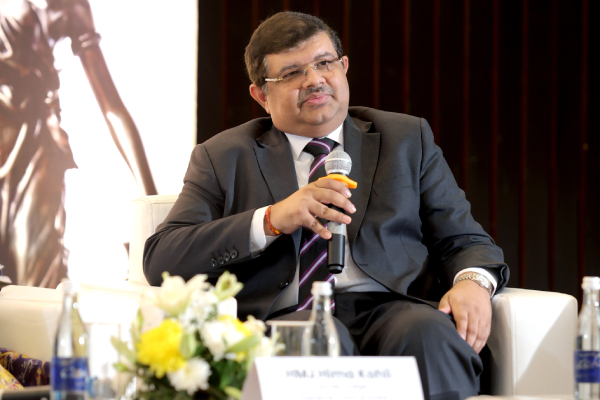
Hon’ble Justice Tejas Karia, Judge, High Court of Delhi
Justice Tejas Karia highlighted India’s progress in institutionalizing arbitration, noting that the 2024 proposed amendments are another step forward. He emphasized that while ad hoc arbitration remains prevalent, institutional arbitration brings greater efficiency and certainty. “The biggest advantage of institutional arbitration is its set of standardized rules, which provide uniformity and align with global best practices.”
He discussed the Vishwanathan Committee’s recommendations, particularly the introduction of model rules for ad hoc arbitration under Section 19(3). However, Justice Karia raised concerns about party autonomy, stating, “This approach raises concerns about whether parties can be compelled to adopt these rules.” He also pointed out the challenges with fee structures, stressing that arbitrators and institutions should have the flexibility to determine fees transparently.
A significant development in the amendments is the recognition of emergency arbitrators, which, as he noted, “drastically reduces the burden on courts when we use institutional arbitration.” The proposed Section 9A will now formally recognize emergency arbitrators' orders as tribunal orders, ensuring consistency in practice.
Addressing concerns about frequent amendments to arbitration laws, he remarked, "Actually speaking, there is no need to amend the Act if we amend the way we conduct our arbitrations." He advocated for better case management, expert arbitrators, and strict procedural timelines instead of constant legal revisions. He also questioned the role of the Arbitration Council of India (ACI), warning that excessive regulation could interfere with arbitration’s flexibility.
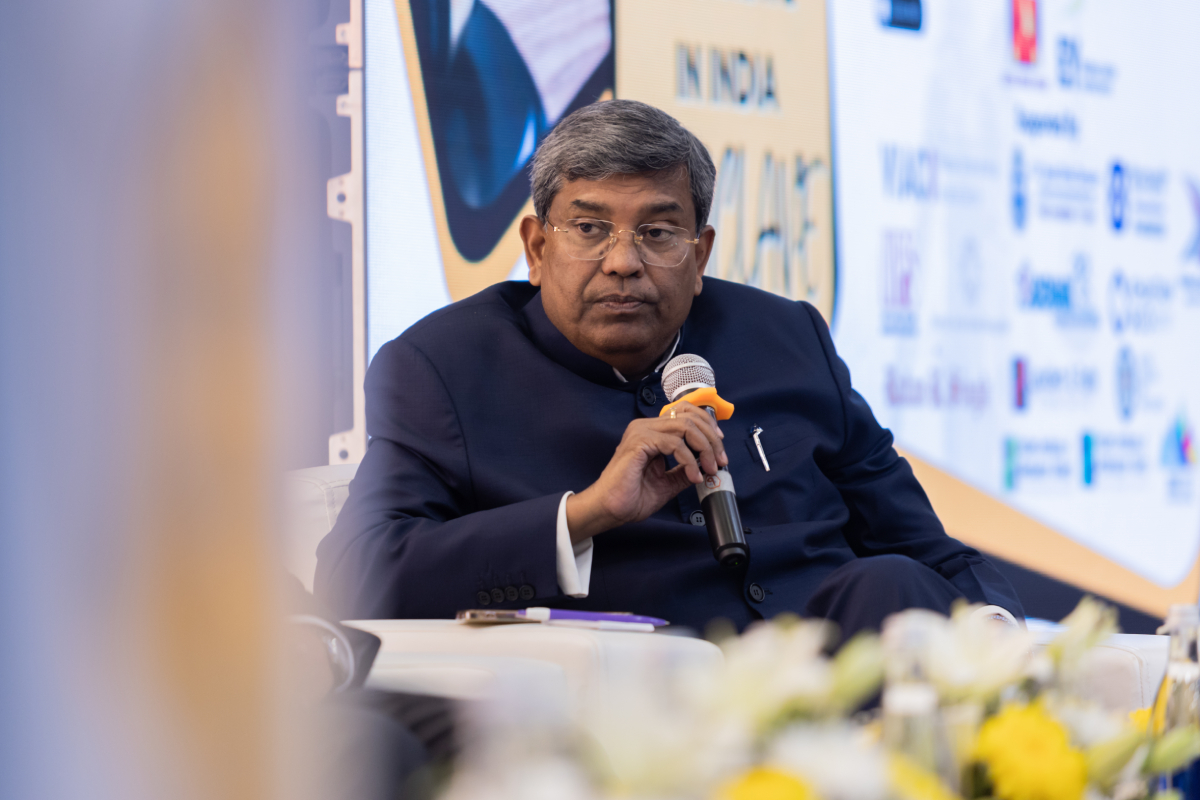
Shri. Ratan K. Singh, Senior Advocate, Supreme Court of India
Mr. Ratan K. Singh emphasized the need for high-quality arbitral awards, the role of arbitrators, and the importance of efficiency in arbitration proceedings. He strongly advocated for continuous hearings to ensure focused decision-making, stating, “If we create a culture in India where arbitrators start a case and finish it on the same day, in a fixed timeline, uninterrupted, their full attention will be on that case. The quality of the award is bound to improve.”
He also stressed the significance of appointing arbitrators with subject-matter expertise, noting that historically, arbitrators were domain experts. Referring to the challenge of substandard awards, he remarked, “Even big names in Indian arbitration sometimes produce awards that make you think twice about the decision.” He attributed this to arbitrators juggling multiple cases without sufficient time for deliberation.
Regarding arbitration fees, Mr. Singh cautioned against setting arbitrator fees too low, remarking, “If you throw peanuts, you get monkeys.” He urged the Arbitration Council of India to ensure that fee structures do not deter experienced arbitrators, especially international experts, from participating in India’s arbitration landscape.
In discussing procedural improvements, he highlighted the effectiveness of the chess clock method for time management and proposed adopting the CL Bank settlement model, stating, “These practices can work very effectively to encourage fair settlements and efficient proceedings.”
On emergency arbitration, he strongly supported its inclusion in the legislative framework, drawing from personal experience: “In the last one and a half months, I sat as an emergency arbitrator in two matters with foreign parties. I wrote a 90-page award in one case and another of about 87 pages till 10 p.m. Both sides were completely satisfied, and the timeline was respected.” He concluded by asserting that if arbitration is accepted as a fair and efficient dispute resolution mechanism, emergency arbitration must also be embraced.
Mr. Arush Khanna (Moderator): Speaking of ad hoc arbitration, a part of our topic today also includes a debate on institutional versus ad hoc arbitration. I am particularly intrigued by the use of the term versus. Are institutional and ad hoc arbitrations actually adversaries? In a massive economic landscape like India, do we need to do away with one to encourage the other? What may be too informal for an organized economy may be too prescriptive and costly for the informal economy, including our MSMEs.
On that curious note, I would like to ask my first question to the Honorable Chair, Ma’am (Justice Hima Kohli). At a recent conference, you advocated for minimum judicial interference in arbitration, restricted to only exceptional circumstances. You also alluded to the fact that, in a modern, progressive arbitration regime, both courts and tribunals ought to have clearly demarcated responsibilities. Keeping with that chain of thought, what are your views on the prospect of having an appellate arbitral tribunal to hear challenges to awards, using the same yardstick as courts—for example, public policy? Do you feel that broader issues like the policy of Indian law should be confined to our state courts instead of contractually agreed appellate tribunals? Once you go to the court of your seat, you can’t choose a judge, but you can still choose an arbitrator. Choice is often a privilege, but at times, it can be a problem. Will this reduce court interference in the long run?
Justice (Retd.) Hima Kohli: Recently when I had gone to Dubai to attend the Dubai Arbitration Week 2024 in November, I did say that minimum judicial interference in arbitration should be the focus of the courts, and that it should be limited to exceptional circumstances for obvious reasons. The whole purpose of having this enactment in place was to ensure that if parties have agreed to a particular forum for dispute adjudication, then courts should be the last body to interfere — whether at the stage of appointment of arbitrators, during the arbitration proceedings, or even when the award is delivered.
Unless and until those minimum parameters — which, as we all know, have been pared down over a period of time since 1996 to now — are met, judicial interference should not occur. These parameters include going to the root of the matter, addressing something fundamental, or dealing with issues against public policy. Nothing on merit should engage an appellate court. When we say “appellate” as it stands today (before the amendments come in, as they are still a work in progress), the appellate stage would mean under Section 34 or Section 37.
However, if there is an appellate tribunal within the arbitration setup, as proposed, then that will also be guided by the same parameters laid down for courts. This means adhering to minimum interference, unless it goes to the root of the problem, addresses a fundamental issue, or deals with something against public policy. Again, there should be no interference on merits. If one view is possible, then adhere to that view. Simply because the appellate tribunal thinks another view is possible does not mean it should interfere, just as a court refrain from doing so under Section 34 and beyond. The higher we go in the judicial or arbitral hierarchy, the narrower the scope of interference becomes. That is a primary principle to keep in mind.
Coming to another question that Arush has asked — do I feel broader issues, such as public policy, should be confined to state courts? Well, public policy’s interpretation differs from country to country; it can’t be uniform across jurisdictions. When he refers to public policy being confined to state courts, he is obviously talking about domestic arbitrations. But there can also be instances in international arbitration where an award goes completely against the public policy of a particular country. In such cases, that window will have to be kept open for courts to examine — not necessarily to interfere, but to examine.
Courts are generally careful when dealing with international arbitration awards. We all know that unless it is imperative, courts rarely interfere. It is typically a matter of enforcing the award when a party approaches the court after it is made. I think the conservative approach that courts have adopted in this regard is well-founded. A similar procedure, if implemented and legislated as proposed in the draft amendments, would need to be adopted by any appellate tribunal within the arbitration regime, should such a tier be opted for by the parties. Let’s put it like that.
Mr. Arush Khanna (Moderator): I think the broader object and purport of what you're saying is essentially that clarity in circumstances where judicial interference — or perhaps prospectively, interference by the appellate tribunal — is warranted, has to be ensured. I think clarity of circumstances is essential for harboring any aspirations of becoming a hub for international arbitration. I mean, we all know of the recent ruling that happened in the DMRC case, wherein an award was interfered with at a curative stage. Now, whether that is right or wrong is a topic for perhaps another day, but I think clarity regarding the scope of interference is quintessential for us to be a hub.
Now, I have the honor of addressing my first question to the Honorable Attorney General for India, who's also our co-chair for today's panel. Sir, apart from being the leader of our Bar, you're also the patron-in-chief of the Arbitration Bar of India. On behalf of the young arbitration practitioners' community, I can say with some level of responsibility that the launch of the Arbitration Bar has evoked a great sense of excitement among practitioners, students, scholars, etc. That said, sir, a few weeks into the launch of the ABI, we saw a circular issued by the Ministry of Finance, which called upon PSUs and other government bodies to refrain from taking recourse to arbitration in procurement contracts. Following soon after, sir, there were the draft amendments which, as we see them today, have raised a few eyebrows on issues like the lack of clarity regarding the arbitrability of fraud and the reintegration of patent illegality as a ground for interference in awards in international commercial arbitration. Sir, do you think these moves stand as obstacles in our march toward becoming a hub for international arbitration or, in your words, a global trendsetter in institutional arbitration? And my last question: how does the Arbitration Bar of India plan to address these issues, if at all they are required to be addressed?
Mr. R. Venkataramani: Let me start with the last question — better to start with the last. When the idea of an Arbitration Bar of India came to mind, the question was: why do we need another Bar? If it’s going to merely bring together practitioners in a certain field, then, of course, it could be just a name or a grouping of people. But my idea was something beyond that.
For a long time, we’ve been discussing the ad hoc vs. institutionalization debate in the arbitration process in India. Our transition from the 1940 Act to the 1996 Act was fairly slow, for good and bad reasons. The culture of the 1940 Act somehow got embedded, even under the 1996 Act. For a long time, we were unable to liberate ourselves from some of the deeply ingrained principles of the 1940 Act.
We then faced a situation where, in both government and private contracts, the process of choosing arbitrators was left to the much-glorified principle of party autonomy, which ran into some difficulties in recent times. This situation led to ad-hocism becoming a byproduct of the lack of attention to certain important fundamentals. However, ad-hocism also provided lessons — lessons that have helped us understand how we can better transition to an institutionalized arbitration process. Without these lessons, we might not have gained the rich insights necessary to trigger such a transition.
In this context, I envisioned a dedicated Bar that would influence ideas, practices, and procedures in all areas of arbitration, enabling us to move away from ad-hocism. I see the Arbitration Bar of India as an effective tool for institutionalization. While other players, like the government and private entities, also have roles, this Bar can strengthen and lend importance to the process.
Now, moving to the other question: what has troubled me for a long time is the ethics aspect. Various international models have laid the foundations for arbitration, yet certain questions persist. These narrow, dragging questions, particularly around ethics, often involve the IAL component. While some issues, like those arising from the MC scenario, do not constitute the mainstream of arbitral practice, they highlight areas where superior courts intervene.
As someone who has observed arbitration both as a practitioner and in a different capacity, I’ve come to understand the factors that influence tribunal constitution and the conduct of proceedings. There are unfortunate occurrences even in government arbitration that shed light on what makes the arbitration process less ideal. Addressing these insights is crucial. Ethics, procedures, and institutionalization are interconnected.
With better institutionalization and more accountabilities built into party autonomy, ethical questions can be addressed effectively. This, in turn, reduces the need for court intervention.
Regarding patent illegality, I don’t see it as a major issue, but public policy questions, as Justice Hima Kohli rightly pointed out, can vary significantly across legal systems. Practitioners are often tempted to overanalyze because they are answerable to clients. This reflects a broader challenge in arbitration ethics.
On a related note, cultural questions also play a role. For example, a book on the culture of international arbitration discusses a case from Africa where language differences created significant challenges. Such cultural nuances impact how arbitration is perceived and conducted.
The Arbitration Bar of India aims to address these issues, drawing from global practices while fostering an Indian arbitration culture. While the government circular may seem like a challenge, I don’t think it’s significant. It’s an unfortunate coincidence that the Arbitration Bar of India emerged around the same time.
Having discussed this with the government, I understand there are reasons behind the circular. However, as institutionalization progresses, the circular will likely fade away naturally. It’s better to allow this natural progression than to force an artificial engagement with it. Over time, with the Bar’s growth and the institutionalization of arbitration, I am confident the circular will become irrelevant.
Mr. Arush Khanna (Moderator): I think your views are most reassuring and reaffirm the sense of excitement and anticipation about the role of the Arbitration Bar of India in fueling India's growing aspirations to be an arbitration-friendly seat. Sir, I think you rightly spoke about the question of ethics and culture in arbitration. Ordinarily speaking, and by the law of averages, questionable ethics are more likely to be exposed or come to the forefront in ad hoc arbitrations. Speaking of ad-hoc arbitrations, I will move on from one leader of the Arbitration Bar of India to another.
Mr. Karia, you have been one of India's leading figures in our march toward becoming a hub for international arbitration. Now, of course, we have aspirations to institutionalize the arbitration process and the entire regime in India, but numerically speaking, the ground reality is that ad hoc arbitrations still dominate the landscape. The draft amendments propose to actually institutionalize even the concept of ad hoc arbitration. They empower the council to frame model rules and guidelines for the conduct of ad hoc arbitrations. Even the fees of the tribunal are now to be regulated by the council as opposed to Schedule IV of the Act. Do you think this is a move in the right direction, sir, or do you think it will increase surveillance, thereby curtailing the cardinal principle of party autonomy?
Mr. Tejas Karia: This is almost the fourth round of amendments to our Arbitration Act in the last decade. We have come a long way in the journey of institutionalizing arbitration in India.
Traditionally, there has been a preference for ad hoc arbitration, and even today, many new contracts still rely on it. The reasons are multifold, including party autonomy, flexibility, and perceived cost-effectiveness. However, these preferences often arise from a lack of familiarity or experience with institutional arbitration among users and drafters of arbitration clauses.
The approach has been to introduce institutional arbitration as an integral part of our legislation. The 2015 amendments marked the first significant step since the statute was enacted in 1996, promoting institutional arbitration. The 2019 amendments continued these efforts, but institutionalization remains a work in progress.
At the same time, ad hoc arbitration needs to be addressed, particularly concerning two aspects: time and cost. As the learned Attorney General for India noted, these are genuine concerns that neither the arbitration community nor stakeholders in the government and private sector can ignore. Effective measures are required to address these issues, and the Arbitration Bar of India is one solution.
Further amendments to streamline and standardize arbitration processes, particularly to bring certainty to time and cost, are another. As a member of the Vishwanathan Committee, we discussed these issues extensively. One proposal was to introduce model rules for ad hoc arbitration, drawing from time-tested rules of leading arbitral institutions.
The biggest advantage of institutional arbitration is its set of standardized rules, which provide uniformity and align with global best practices. The Vishwanathan Committee recommended incorporating these model rules into the statute as part of a schedule, with the power for periodic amendments vested in the central government.
The 2024 proposed amendment introduces Section 19(3), which empowers the Arbitration Council of India (ACI), once established, to create these rules. Arbitral tribunals will be required to give 'due regard' to the rules, though they will not be binding.
This approach raises concerns about party autonomy and whether parties can be compelled to adopt these rules. While this is similar to soft laws like the IBA Rules on Taking Evidence, it introduces a unique element by legislatively empowering the ACI to frame such rules.
Another critical issue is fees. Schedule IV, introduced in 2015, was criticized for inadequacy across various arbitration types. The Supreme Court’s judgment in Econ’s Case highlighted these issues. The Vishwanathan Committee recommended omitting Schedule IV altogether and Section 11(a), which allows the central government to amend the schedule.
The 2024 amendment proposes that the ACI determine fees when not fixed by institutions or parties. While this fills a vacuum, it introduces uncertainty, as the ACI’s parameters for fees might not align with parties’ expectations.
For ad-hoc arbitration, the best approach is to allow arbitrators to fix fees if parties agree, while empowering the ACI to provide broad guidelines. Institutional arbitration, on the other hand, benefits from pre-determined cost structures, often available as cost calculators on institutional websites. This transparency ensures that parties know the cost of arbitration beforehand.
The 2024 amendments attempt to address these concerns by enabling the ACI to create model rules and prescribe fees. However, much depends on how the ACI executes these powers. A consultative process involving stakeholders will be crucial to framing effective rules and fee structures.
Overall, this is a positive development. The twin aspects of time and cost are being addressed, and the amendments mark a significant step forward in institutionalizing arbitration in India.
Mr. Arush Khanna (Moderator): Well, I think those views are most useful, and I believe there is a thin line between reducing the ad hoc nature of arbitration and institutionalizing the process of ad-hoc arbitration. One can only hope that the Arbitration Council of India, through the rules regarding fees and the model code of conduct, brings clarity and genuinely improves the quality of arbitrators. I think accreditation is important — not only for accrediting arbitral institutions but also for accrediting arbitrators. Issues of ethics often surface when institutions like the government opt out of arbitrations. Genuine accreditation will go a long way in addressing these concerns.
Now, from one very seasoned expert to another, we have Ratan Sir with us, who has been a stalwart in this field for over 30 years. Sir, I have again two and a half questions to ask you. I won’t ask you three, as I’ve asked the others, but the question that now arises is this: there are no two views on the fact that institutional arbitration is the way forward. Yes, streamlining ad hoc arbitration is very laudable, but for institutional arbitration to become the mainstream option in India, it will need to spread across the country. It cannot be restricted to traditional commercial hubs like the NCR region, Bombay, Hyderabad, etc., where, of course, the shift is more prominent. What challenges do you foresee in making this a reality? Do you think costs will play a factor? There is a school of thought that stakeholders feel institutional arbitration, as I alluded to earlier, is too prescriptive and too costly. A lot of our MSME clients prefer ad hoc arbitrations. Could you address some of these challenges we currently face in India in making institutional arbitration the norm rather than the exception?
Mr. Ratan K. Singh: You very conclusively said that institutional arbitration is the way forward, and this is a statement coming from all quarters. I agree with it, but ad hoc arbitration is the purest form of arbitration. Culturally, we have always had ad hoc arbitration. Subsequently, with the complexities of transactions and the requirement for more and more neutral decision-makers, and because of transborder transactions, we had institutional arbitrations coming into the issue today.
So far as India is concerned, I strongly believe that arbitration is as good as the arbitrator, whether it is institutional arbitration or ad hoc arbitration. Even if tomorrow, you have all arbitrations going to institutions, will that really bring the changes we are looking for? The answer is no.
First things first, and you hinted at that: the quality of awards and the decisions we see today, and we have been seeing for quite some time, is really a worrying thing. A couple of years back, I was speaking at a conference in Calcutta, and I was saying that India is the place to go to and so on and so forth, and a lot of senior partners from law firms and sitting judges were in the audience.
Mr. Sundra Raju, who is a very popular name in India, also got up and said, Ratan, you have to tell us why it is that in India almost all arbitration awards are challenged in courts. I gave my defense, stating that we now have a new regime in which you must deposit the awarded sum in court before you can challenge it, and so on and so forth. But that is like shying away from the reality.
Justice Kohli talked about minimalistic judicial intervention. Why is it that almost every award is challenged, and why is it that a good number of awards are set aside? If you ask me, one reason is the quality of awards, and this happens for two reasons.
One reason is the appointment of arbitrators, either by the parties or by the courts in default, under Section 11, etc. Very little attention is given to the expertise of the arbitrator for that particular arbitration before the court. We have a fantastic pool of arbitrators, a fantastic pool of retired judges, and a good number of lawyers, but the question is: Every dispute is not meant for every arbitrator. Historically, arbitrators used to be domain experts, and unless we do this, the quality of the award will suffer.
That’s one. Second, even big names in Indian arbitration sometimes produce awards that make you think twice about the decision. One reason I strongly feel is that the amount of time required for writing that particular award in that dispute was not available to the arbitrator.
Professor Duck Johns, one of the finest arbitrators, particularly for the construction industry, my very old friend and co-fellow in the International Academy of Construction Laws, recently visited India. We were having dinner together, and I asked him how many arbitrations he was handling. He told me he was currently doing 87 arbitrations. Duck said, Ratan, I can't believe it. Why is it?
I am not against arbitrators taking up matters that keep them occupied, but the problem is the culture we have in India for deciding arbitral disputes. Cross-examination goes on for years. It does not happen in one stretch.
Final arguments, or oral arguments, as we call them here (otherwise known internationally as trial, which includes both examination-in-chief, cross-examination, and oral submissions), all of this happens in one go internationally.
If we create a culture in India where arbitrators start a case and finish it on the same day, in a fixed timeline, uninterrupted, their full attention will be on that case. The quality of the award is bound to improve. Otherwise, what happens is that in cross-examination — again, it’s a cultural issue — and the Attorney General talked about this — the culture in India is that arbitration is just a replica of court proceedings.
The problem is that in court, today your case is presented before Judge A, but at the time of final arguments or writing the judgment, it could be Judge B or C or G. How do we deal with that?
Another issue, which is very prevalent in our arbitration, is that whenever I sit as an arbitrator, on the very first day of any procedural hearing, I like to go through the papers and understand what the real dispute is.
If you, as an arbitrator, understand the nature of the dispute before you hear the arbitration, you will have control over the entire arbitral proceeding. You will be better able to decide all interim applications that come before you and will be in a better position to decide discovery applications.
I was doing an international arbitration seated in India, and we had foreign experts and a lot of discovery. One particular chairman of a tribunal body asked me, Do you think we know what the real issue is and what is relevant at this stage of discovery? I said, "I’m sorry, that’s not how it works.
So, my suggestion is: we need arbitrators who are specialized. Or, if that’s not possible — because we haven't yet created a specialized bar from which judges are picked in the high courts and Supreme Court, where we are mostly generalists—then the second alternative is that we need continuous hearings.
What’s the effect of that? The effect is that no arbitrator will be able to take on 100 cases. Once one arbitration is over, another can start, which ensures a steady flow of work. Quality will really improve.
Next, we have guidelines for arbitrators, and when you see the requirement for terms of reference in institutional rules, what is this all about?
At the time of writing the terms of reference, the arbitrator is supposed to know what the dispute is between the parties and the position taken by each party. So, the very first thing the arbitrator should do is, at the first procedural hearing, let both sides explain their cases in 20 minutes.
Once you understand that, the culture today is that arbitrators open their file either at the time of final arguments or when writing the award. But if you understand the dispute on the first day, with the kind of legal expertise we have in this country, we can really do wonders.
Mr. Arush Khanna (Moderator): No, sir. Actually, I think the applause also states that there are real-time challenges that we, as an economy and as a country — one that, as I said, harbors aspirations of becoming a hub for institutional arbitration — must address. I think this has to also be a practitioners’ movement, a stakeholders’ movement. It cannot always be a statutory imposition or some draft amendments or rules and regulations. I think you highlighted real issues like the quality of awards and the lack of expertise in our arbitrators.
The choice of arbitrator today should be based on domain expertise — "horses for courses," as they say. We cannot have a particular arbitrator specializing in a specific practice area arbitrating in over 80 arbitrations that are completely alien to their practice area. So yes, attention to detail is very important. It's crucial for each arbitrator to understand their area of expertise so that work can be channeled and allocated in that direction. But you highlighted a lot of challenges and obstacles. With the quality of speakers and the luminaries we have on stage right now, I can say this with some daring certainty: wherever there is a challenge, there is a way forward.
So, my last question is actually a common one for all. I would like to start in reverse order because the chair should have the last word. Sir, my last question to everyone is: assuming the draft amendments are incorporated as is, without any change whatsoever, do you think they will grease India's wheels in its journey of becoming an institutional arbitration hub? If not, what are your suggestions? One suggestion each. Ratan, sir, if you can start with you, then we can go in reverse order, if that’s fine.
Mr. Ratan K. Singh: First of all, regarding your question—if the draft remains as it is—I have one concern, and since the Attorney General is also here, there’s a famous saying: If you throw peanuts, you get monkeys. This should not happen. While fixing the arbitrator's fees, the Arbitration Council should ensure that the fees set do not discourage good arbitrators from participating.
When we talk about good arbitrators, if you want to truly create an institutional hub, you cannot exclude good international arbitrators, foreign arbitrators as well. Large, complex disputes require experienced, seasoned, and generally busy arbitrators. So, that is one question.
As for your guideline, I have one suggestion: there should be some mention of the chase clock method, which is commonly used in international arbitration.
For instance, when both sides say they have five witnesses, and the other side says they have ten witnesses, and both sides need time for argument, the tribunal can set a timeline for each side — let’s say 72 hours for each party. Within this time, it’s up to the parties to decide how many witnesses they want to cross-examine, how many hours they want to argue, or which particular issues they want to address. This would make the process time effective.
Another concept that is well-known in all jurisdictions is the CL Bank settlement model, based on the CL Bank case. To encourage settlement, a recent Australian judgment has held that during the course of proceedings, if a party makes a "without prejudice" offer to the other party in a sealed cover (which the tribunal will never open until the case is decided), and if the offer is not accepted and the party later receives a lower amount than the offer, they must bear all costs from the day the offer was made.
Mr. Arush Khanna (Moderator): Mr. Karia, go ahead.
Mr. Tejas Karia: Yes, as far as the proposed amendments are concerned, all of them are good because they were based on an exercise conducted by the TK Vishwanathan committee. We took feedback from all stakeholders and then came up with the suggested changes.
Some of them are very good. One such change is the recognition of emergency arbitrators, which drastically reduces the burden on the courts when we use institutional arbitration and have the emergency arbitrator decide interim measures. This is a very positive step, and we have been trying since 2015 to include emergency arbitrators in the definition of the arbitration tribunal, which would go a long way in recognizing that.
Another aspect is the challenge of the award. This particular round of amendments allows the court to partially set aside the award, but it does not allow for modification or change of the award. If you see other jurisdictions like Singapore or the UK, the court is given the power to change the award, which prevents the need for another round of arbitration after part or all of the award has been set aside. For example, interest rates can be modified by the court under Section 34.
The tribunal has been given a lot of powers in the proposed amendments, but there are certain concerns, such as who will sit on the appellate tribunal and whether we are adding another layer to the delay process. What will happen to the first award—is it subsumed into the appellate award? That will also need to be clarified. Who will appoint the appellate tribunal? These are concerns regarding these amendments, but overall, we need to consider how many times we will keep amending our laws.
As Arush said, it is a mindset change that we need to address. Actually speaking, there is no need to amend the Act if we amend the way we conduct our arbitrations. The easiest way is to decide the final hearing date on the first day of arbitration, as Mr. Singh said, and work backwards from that.
The procedural timetable, PO1, which is the entire timeline of the arbitration, should be enforced strictly. We need to have experts appointed as arbitrators and use time-tested, internationally recognized rules. There is nothing that we need to do that isn’t already available; we don’t need to keep amending the Act. The more we amend it, the more it will lead to another round of interpretation by the courts.
The courts will interpret these issues, and it will become a complex matter—one that might go through five-judge, seven-judge, or even nine-judge benches in the Supreme Court to clarify small issues. We need to change the way we look at arbitrations: simplify, streamline, and do it in a more efficient way.
But, of course, if we think that there is a need for arbitration to be regulated by the Arbitration Council of India, that’s slightly concerning because the earlier proposal was to have an Arbitration Promotion Council of India. The word “promotion” was removed, and now it’s just the Arbitration Council of India.
In no other jurisdiction do we have a regulatory body that regulates arbitration. It is the parties who decide; arbitration is an alternative or perhaps a parallel to the judicial process. Some cases that go to arbitration could never go to court because of the volume and complexities involved, plus the confidentiality aspect. Nobody wants to go to court and wait for years, discussing their confidential information in public.
So, the best way is to simplify the arbitration process, do it the way it should be done, and have it conducted by experts who know how to do it. Then, we may or may not need the amendments that are currently being proposed.
Mr. Arush Khanna (Moderator): Now to our Honorable co-chair, Mr R. Venkataramani.
Mr. R. Venkataramani: Mr. Karia was talking about being a little skeptical about how many amendments we can have. I'm not skeptical about that. I think there are a couple of misgivings we have in mind. People often compare London or Singapore as centers of arbitration, but they are merely centers of arbitration; they are not nations like India, where in every economic policy decision we take, there will need to be a certain amount of assessment and evaluation.
If an arbitral award or an arbitral process is going to have a certain economic impact on how you carry out your economic policies, I think we stand alone. Recently, we had two arbitrations, particularly in the gas and petroleum sectors, which were not merely questions of procedure or witnesses. It was a question of what happens when something goes wrong in the entire procedure and the award is issued. What happens to the entire industry in that case?
Therefore, I think the amendments will probably deal with some of these issues, and we will soon learn if the amendments have focused in the right direction. Of course, Parliament will take a call on that. After all, our Constitution has undergone more than 135 amendments. Someone might say the US Constitution only has 25 amendments, but they have too many problems there. So, amendments are not an issue.
As far as flexibility is concerned, lawyers and arbitrators can play with that flexibility. You don’t need an external nudge, but certain external regulations will need to be firmer. There should be a good balance between firm external regulation and what an arbitral lawyer and arbitrator can do when fashioning your processes during each occasion. Today, there is no good match—there is a mismatch, which is why we have skepticism.
I think, as the arbitration bar grows, it will be in a position to innovate and create within the broader regulatory framework, articulating procedures suited to particular arbitrations. I think that flexibility, if given in the hands of the arbitral process, would make India shine better. So, I don’t think we need to be too skeptical about all this.
Finally, as I said, when looking at the cost issue—whether ad hoc or institutional—we will still face it for some time until we reach the plateau. I think we need to reach that. I recently came across an arbitration that happened way back in 2011. The tribunal did not rule on costs, and then the question arose: How will they address this? It became a complex issue, and matters went to Malaysian and English courts before eventually landing in the UK courts to find out what could be done. It was a difficult question for me to answer.
But then I asked only one question: Who was responsible for this? Some element of responsibility brings us to the question of ethics. Ethics is not merely about what the arbitrators fail to do; it’s about everyone who can contribute to the quality of the arbitral process.
I am looking at ethics from a larger perspective, not just as a moral issue. Therefore, I believe the arbitration bar would be in a position to bring in a lot of fresh insights and vigor. We are looking for insights and vigor.
Mr. Arush Khanna (Moderator): Now, we will go ahead with the crowning moment and the final word.
Justice Hima Kohli: I think we've all, all of us here, have heard my panelists, starting from Tejas and Ratan to the learned Attorney General. The focus is, no doubt, on the amendments proposed, and there have been frequent amendments to the enactment. We are also aware of the fact that, at the end of the day, every amendment, for one reason or another, is challenged in the court of law and travels right from the High Court to the Supreme Court, with benches ranging from 3 to 5 to 7. It’s a fact—it has been happening—and I wouldn't be surprised if some of the amendments here, particularly the two-tier one regarding the arbitration tribunal itself, are open to challenge.
Though we know that there have been judgments by the Supreme Court in a three-judge bench which decided that it is very valid and permissible if the parties think that it is their autonomy, and if they want a two-tier system, there should be no one to stop them, and it should proceed further. So, there could be a seat in India as the first tier and a seat in London as the second tier, and all of that. We know that ‘Centro’ was there—Centro 1 in 2015 or 2016 and Centro 2 in 2020—which held that if it was appellate, the appellate award was treated as a foreign award, to be implemented only here and nowhere else. There are nuances attached to it, but I would say, for us to go the institutional way, we need not only to focus on the ethics or the procedures adopted by the institution, but the ethics of the arbitrator should be squeaky clean.
When we talk about international arbitrations, particularly so, the arbitrators should be as neutral as possible, with no tinge or stigma attached to them. Similarly, for those in the arbitration field, it is imperative that lawyers do not treat arbitration as secondary, which is happening without exception in our part of the world. Nowhere else would any lawyer request a tribunal to fix a hearing at 4:30 p.m. The focus should be that if there is an arbitration that has to run, as Ratan just said, it should be time-bound—whether it's 72 hours or 160 hours. It should start in the morning, as any matter would, and go on until the end of the day, so that the continuity is maintained. If there is a continuum, then the timelines will also reduce, and everything will fall into place. But if we start at 4:30, after a lawyer has had a full day at work, he or she would be fairly exhausted and would like to wind up by 6:30 or 7:00. What would one achieve by the time you warm up in that arbitration? So again, it's a question of your approach and mindset, which is equally important for promoting the cause of arbitration.
Coming to institutions and the institutionalization of arbitration, we haven’t forgotten our culture. We talk of trader guilds for donkey, for years, for centuries India takes pride in its trader guilds. Those were also specialized arbitrators, in a manner of speaking—whether it was in the cotton trade, the spice trade, or any other trade. There were traders who would select their own arbitrators within their field—specialists who knew the nuances of that trade and were the right persons to decide that dispute based on it. Today, we don’t have spices or cotton, but we have oil, solar energy, and windmills, which are also specialized fields. As has been stated by my co-panelists, specialization helps.
We should also remember that when we go the arbitration route—and when I say "we," I include myself as having worn the mantle of an arbitrator—one should be open to training and learning. It’s not just about proceeding in arbitration as if one were wearing the mantle of a judge. Sometimes, you have to step back and learn, and that ongoing process of learning—whether as a lawyer, a jurist, an arbitrator, or a mediator—should never end. That way, you go back richer, and that’s what I started with. We hope we all go back richer with our interaction today. We go back richer in each arbitration proceeding, learning—not at the cost of the parties, but having done some homework in advance of where we are heading and how we would take the matter further.
That is imperative. It transcends all the amendments and drafts that we are talking about. We are talking about the foundations here—the very foundations on which this process, and this whole building, is to be built, block by block. When we go to international platforms, as we all have, and promote ourselves as one of the best venues for arbitration, well, then the proof of the pudding is always in the eating. We should be able to demonstrate that we are ready in every way to compete with the best international institutions, with the best arbitrators, a neutral field, and, of course, the best bar, which Mr. Venkataramani spoke about making a reality.
Everything takes time—the seed is sown, but we need to expedite. Otherwise, truly, on the international platform, we may miss the bus. It is imperative that we pull up our socks and get down to doing it. That is the bottom line, I would say. Thank you.
Mr. R. Venkataramani: Everybody was talking to me about DMRC, so wherever I go, people ask about it. I think it cannot be used in all possible contexts. Practically, it's a standalone case unless you're able to creatively use it. I think DMRC is like a pole star hanging somewhere in the sky, guiding us on what will not happen when something goes seriously wrong, like DMRC. That's my story with DMRC. Though I was very reluctant to push it beyond a point, we understood where the story was, and we had to do it in the end.
Panel Discussion 2: Arbitration in Banking and Financial Disputes: The Way Forward
Panellists:
- Mr. Ajit Kumar Mishra, General Manager, Contract Management, DFCCIL
- Mr. Amit Goyal, Partner, Forensic & Integrity Services, EY India
- Mr. Sanjay Aggarwal, Divisional Head, Retail Assets, Edelweiss Asset Reconstruction
- Mr. Aseem Chaturvedi, Partner, Dispute Resolution, Khaitan & Co.
- Dr. Shashwat Bajpai, Founder-Partner, DRSB Law Chambers
Highlights of 2nd Panel Discussion of Arbitration in Banking and Financial Disputes: The Way Forward
Mr. Ajit Kumar Mishra, General Manager, Contract Management, DFCCIL
Mr. Ajit Kumar Mishra provided valuable insights into the nuances of arbitration across different sectors and its associated challenges. On the distinction between construction and banking disputes, he stated, "Whether there is any difference between construction arbitration and banking sector arbitration, my first and simplest answer is that if the dispute is arbitrable, as Mr. Aseem has pointed out, and if there is an arbitration agreement between the parties, then the Act doesn’t differentiate between the two." He elaborated that while the Arbitration Act applies uniformly, construction disputes require complex technical interpretations due to the absence of specific construction laws in India, unlike banking disputes, which are more straightforward and governed by financial regulations.
Panel Discussion 2: Arbitration in Banking and Financial Disputes: The Way Forward
Panellists:
- Mr. Ajit Kumar Mishra, General Manager, Contract Management, DFCCIL
- Mr. Amit Goyal, Partner, Forensic & Integrity Services, EY India
- Mr. Sanjay Aggarwal, Divisional Head, Retail Assets, Edelweiss Asset Reconstruction
- Mr. Aseem Chaturvedi, Partner, Dispute Resolution, Khaitan & Co.
- Dr. Shashwat Bajpai, Founder-Partner, DRSB Law Chambers
Highlights of 2nd Panel Discussion of Arbitration in Banking and Financial Disputes: The Way Forward
Mr. Ajit Kumar Mishra, General Manager, Contract Management, DFCCIL
Mr. Ajit Kumar Mishra provided valuable insights into the nuances of arbitration across different sectors and its associated challenges. On the distinction between construction and banking disputes, he stated, "Whether there is any difference between construction arbitration and banking sector arbitration, my first and simplest answer is that if the dispute is arbitrable, as Mr. Aseem has pointed out, and if there is an arbitration agreement between the parties, then the Act doesn’t differentiate between the two." He elaborated that while the Arbitration Act applies uniformly, construction disputes require complex technical interpretations due to the absence of specific construction laws in India, unlike banking disputes, which are more straightforward and governed by financial regulations.
Addressing the escalating costs of arbitration, he remarked, "The cost of arbitration is astronomically increasing — it's much higher than the Sensex now." He categorized costs into institutional fees, arbitrator fees, legal fees, expert fees, and miscellaneous expenses, noting that the lack of benchmarks for legal and expert fees significantly deters smaller players.
Mr. Kumar endorsed hybrid dispute resolution models, saying, "This hybrid model is always preferred because it allows you to harness the complete advantage of alternate dispute resolution."
He highlighted the benefits of ARB-MED or Med-ARB, citing the Singapore International Commercial Court (SICC) as an example where mediation can complement arbitration, potentially leading to enforceable settlements.
Mr. Amit Goyal, Partner, Forensic & Integrity Services, EY India
Mr. Amit Goyal emphasized the role of confidentiality, digitization, and financial expertise in arbitration, particularly for financial disputes. On maintaining confidentiality, he noted, "The very first thing for us, and which we practice, is training our people on what is expected from them." He outlined specific measures such as mandatory confidentiality training, simulated phishing attacks to test data security awareness, and the use of secure portals with access controls to protect sensitive data, especially personally identifiable information in banking arbitrations.
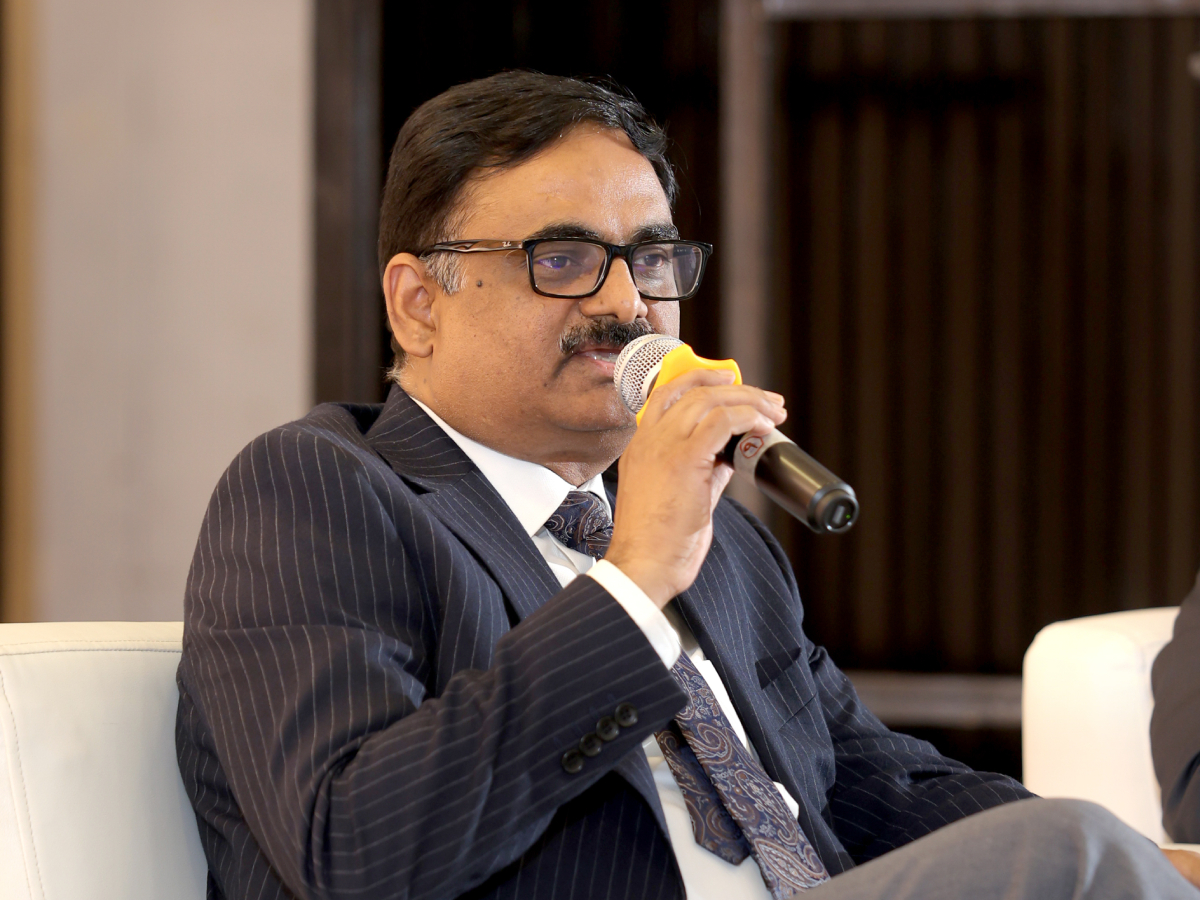
Regarding digitization, he highlighted advanced technological tools, stating, "The technologies available, number one, have very strong—not just keyword search capabilities—but concept search capabilities." These tools enable efficient data analysis, such as identifying financial statements or project delays without specific keywords, and support digital hearings, which have become prevalent post-COVID, allowing Indian experts to participate in international arbitrations remotely.
On the role of financial experts, Mr. Goyal stressed their early involvement, saying, "Maintaining independence and objectivity is another challenge. Experts must not appear as advocates for their clients." He explained that experts assist in assessing claims, critiquing opposing claims, and avoiding errors, but face challenges like maintaining independence, resolving conflicts, and working with incomplete documentation.
Mr. Sanjay Aggarwal, Divisional Head, Retail Assets, Edelweiss Asset Reconstruction
Mr. Sanjay Aggarwal addressed power imbalances, the role of arbitration in resolving non-performing assets (NPAs), and the need for digitized arbitral frameworks. He criticized unilateral arbitrator appointments, stating, "Every loan agreement has a clause where the lender can unilaterally appoint an arbitrator. The moment you say ‘unilaterally,’ it loses its credibility completely." He advocated for independent arbitrator appointments through institutions like the Indian Dispute Resolution Center (IDRC) or mutual agreements to ensure fairness and credibility.
On NPAs, he noted the overburdened state of Debt Recovery Tribunals (DRTs) and proposed arbitration as a solution, saying, "Arbitration is probably the only way to address this large mass of NPAs generated by lending." He highlighted its suitability for unsecured loans and affordable housing disputes, emphasizing online dispute resolution as a softer alternative.
Regarding arbitral institutions, Mr. Aggarwal suggested, "When the entire lending ecosystem is digitized, arbitration, recovery, or any other system should also be digitized." He recommended that institutions like IDRC develop rules integrating regulator guidelines, judicial precedents, and their own database of loan agreement trends to create effective, digitized arbitration frameworks for financial disputes.
Mr. Aseem Chaturvedi, Partner, Dispute Resolution, Khaitan & Co.
Mr. Aseem Chaturvedi provided a broad perspective on the arbitrability of financial disputes and their interconnectedness with the Insolvency and Bankruptcy Code (IBC). On arbitrability, he referenced the Supreme Court’s Vidya Drolia judgment, stating, "The issue of arbitrability of insolvency and bankruptcy claims is, in terms of [Vidya Drolia], not arbitrable."
He explained the distinction between rights in rem (non-arbitrable, affecting the public) and rights in personam (arbitrable, between parties), noting that insolvency disputes remain non-arbitrable, creating uncertainty in banking disputes. Comparing IBC and arbitration, Mr. Chaturvedi clarified, "In cases of conflict, the IBC will prevail. But merely because there's an arbitration clause in a financing document does not by itself constitute a pre-existing dispute." He emphasized that arbitration is preferable for recovery-focused disputes, while IBC suits restructuring or liquidation.
To address overlaps with specialized tribunals, he urged legislative clarity, saying, "For better clarity, if the Act, including the 2024 or 2025 amendments, specifies which financial disputes are arbitrable, it would be a step toward bolstering arbitration as the preferred choice for financial disputes." He stressed the need for clear arbitration clauses to prevent awards being set aside due to non-arbitrability after prolonged proceedings.
Dr. Shashwat Bajpai (Moderator): Let us kick-start today’s discussion with the most basic query, and I’ll put this to Mr. Aseem Chaturvedi. Aseem, how have courts in India looked at the arbitrability of banking and finance disputes, especially concerning debt and recovery matters?
Mr. Aseem Chaturvedi: So, the question — I wish I could answer it in a yes or no — but the way we see it, it's really a conundrum. The Supreme Court, in a recent judgment in Vidya Drolia, has in fact tried to resolve this conflict of polar extremes. The issue of arbitrability of insolvency and bankruptcy claims is, in terms of this judgment, not arbitrable. They’ve distinguished two sets of rights: rights in rem and rights in personam. As long as it’s a right in rem, which is affecting the world at large or has a general application, it’s non-arbitrable. When it’s in personam, i.e., between two parties, it is arbitrable. But it’s still a grey area as of now. Vidya Drolia has shed some light and said that insolvency and bankruptcy disputes, per se, will not be arbitrable.
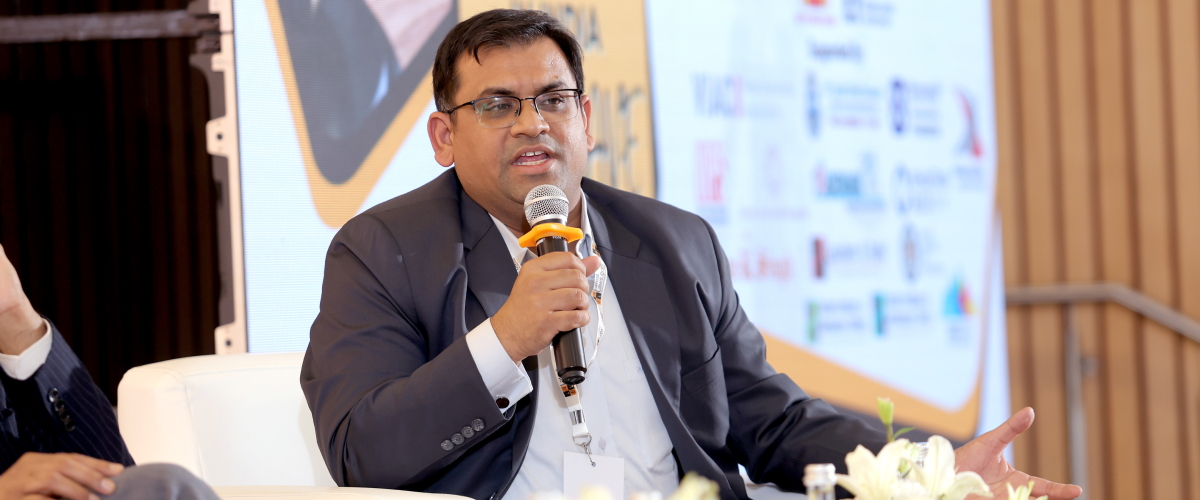
Dr. Shashwat Bajpai (Moderator): I'll put this to Mr. Agrawal now. Mr. Agrawal, tell me, how can arbitration frameworks address the power imbalances that exist between large financial institutions and smaller borrowers?
Mr. Sanjay Agarwal: You know, I spent a long time both as a lender and in the asset reconstruction business, acquiring NPA loans. Somehow, I feel that arbitration as a means to settle disputes between borrowers and lenders has never attained the graceful place or respectability that it rightly deserves. One of the reasons for that is the power imbalances you’ve asked about. Every loan agreement has a clause where the lender can unilaterally appoint an arbitrator. The moment you say ‘unilaterally,’ it loses its credibility completely.
If an institution or a process that is about dispensing justice is not credible, it loses the reason to exist. Not only should the appointment of an independent arbitrator be ensured, but the arbitrator should also be seen as independent, which means it should be devoid of any power imbalances. Now, I’m sitting here at this forum where the Indian Dispute Resolution Center is present, organized by you guys. One of the ways out, as proposed by you, is the appointment of arbitrators by a distinct institution, which is neither the lender nor the borrower.
This adds credibility and independence to the appointment. Nobody can challenge and say that the arbitrator is biased towards one particular party. It also takes away the power that the lender holds. Having said that, I also feel there should be the ability to appoint an arbitrator mutually agreed upon by both parties. We can’t necessarily impose that they go through a particular institution for the appointment.
So, maybe institutions like us, or any bank, can have a couple of institutions like IDRC on the panel, which appoints the arbitrator. And just in case the borrower or the other party says they are willing to appoint an arbitrator by mutual consent, we should be open to that as well. That’s my view on removing the power imbalances here.
Dr. Shashwat Bajpai (Moderator): In the last decade, we’ve seen arbitration become the norm in construction disputes, especially in big-ticket matters between public sector undertakings (PSUs) and private infrastructure companies. I’ll put this to Mr. Mishra, who’s been involved in hundreds of such arbitrations himself, sometimes as the perpetrator litigator and sometimes on the receiving end for private infrastructure companies. Given the topic today, could you please provide some insights and compare or distinguish arbitration as a dispute resolution mechanism between construction disputes and banking disputes?
Mr. Ajit Kumar Mishra: I mainly deal with construction disputes, either as a representative or as an adjudicator or arbitrator. Nonetheless, arbitration as a method of dispute resolution, notwithstanding the June 3rd Ministry of Finance guideline, is now being widely used.
Whether there is any difference between construction arbitration and banking sector arbitration, my first and simplest answer is that if the dispute is arbitrable, as Mr. Aseem has pointed out, and if there is an arbitration agreement between the parties, then the Act doesn’t differentiate between the two. Be it a banking sector dispute or a commercial construction dispute, it will be handled the same way.
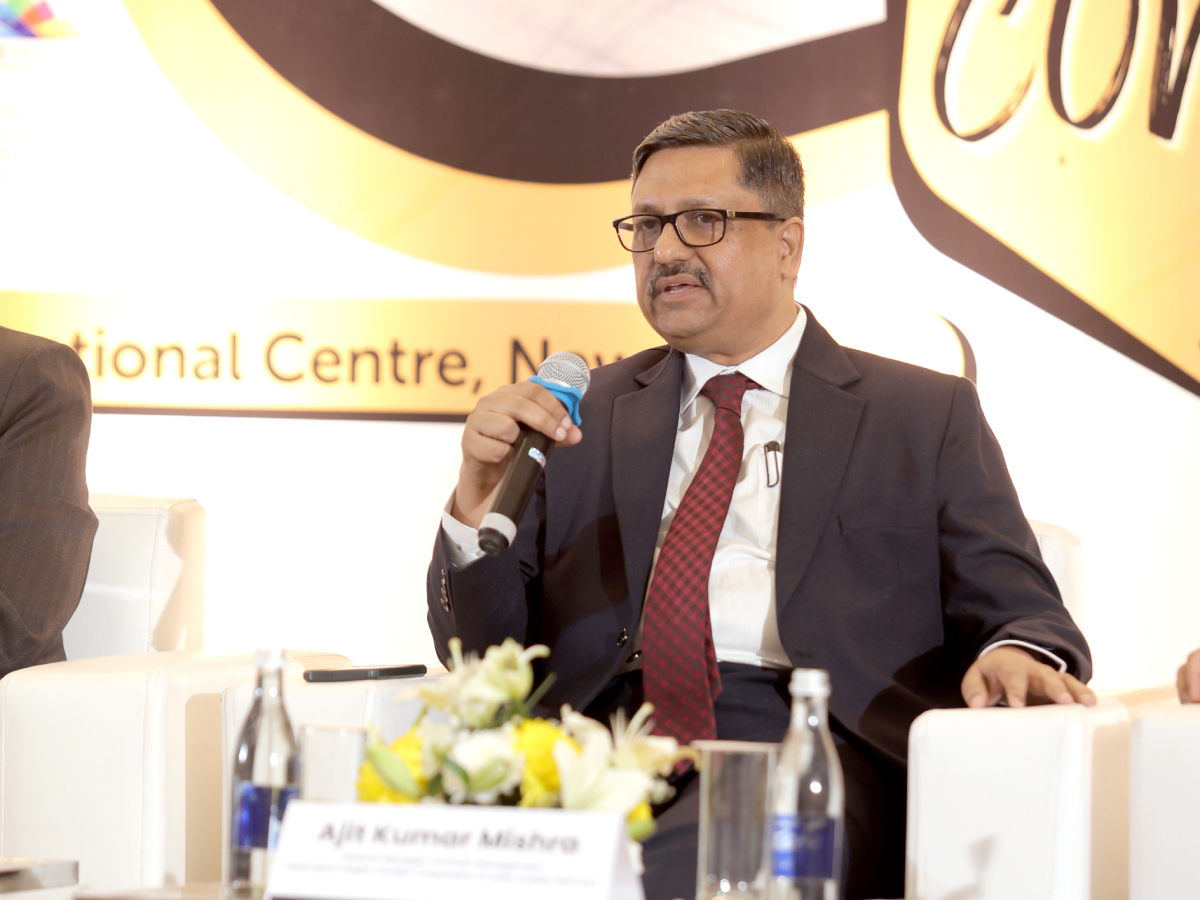
But yes, the process of handling these disputes by the parties and putting them before the tribunal will be very different. Why? Because construction disputes are largely dependent on the technical nature of the dispute, where a lot of technical interpretation, much beyond legal interpretation, is involved. And as you know, there is no specific construction law in India, unlike in some other countries. The area is wide open for the arbitrators to understand and explain those disputes.
On the other hand, banking sector disputes are largely financial in nature, arising out of financial regulations and banking laws, which are more straightforward compared to construction disputes in terms of understanding and adjudicating upon.
Dr. Shashwat Bajpai (Moderator): I think, while asking that query, I consciously chose not to refer to the finance ministry circular because there are several panel discussions on that, and I'll be touching on some raw nerves if we start discussing that now. I'll put this next question to Mr. Goyal. Mr. Goyal, I must say that one of the hallmarks of arbitration is confidentiality. How do you address privacy concerns that may arise in arbitration, especially when sensitive data is involved, such as in financial matters, where such privacy concerns could get amplified given the sensitive nature of the data?
Mr. Amit Goyal: Yeah, I think it's a very valid concern. I've been doing forensic work for the last 14 years, and confidentiality has always been a central point of our work. Now, after a lot of laws and regulations, we first learned about GDPR, and in India, we have the DPDP Act, so it has become more crucial for professionals like us to reemphasize the need for maintaining confidentiality.
Now, if I talk about how we practice confidentiality in our day-to-day jobs, again, we are in a people business, and we do a lot of teamwork. So, the very first thing for us, and which we practice, is training our people on confidentiality. The very important aspect is training your people on what is expected from them. I'll give you an example: at our organizations and in many leading organizations, regular training on confidentiality is conducted, and these are mandatory. In fact, it's part of the regular appraisal mechanism. If you haven't attended this training, it will impact your appraisals.
That's one. Many organizations are very innovative about confidentiality. Given that cyberattacks are happening nowadays, every 7 to 10 days, simulated emails are sent as phishing attacks. It seems like a phishing attack, and if someone acts and tries to open the attachment, we say, 'Hey, you kind of misjudged this email. If this had been a real attack, it would have been a problem.' But if you identify the red flags in the email, it says, 'Congrats, you identified the phishing.' So, that's number one: training.
When we execute client engagements, at the very start, we sign confidentiality agreements with our clients as well as within the team. Every team member has to sign a confidentiality agreement, which is binding. Then, when it comes to implementing confidentiality mechanisms, there are lots of access controls and secure portals in use. We avoid using informal channels like pen drives, WhatsApp, or personal email IDs. We use secure channels, such as data rooms, and implement access controls. Only specified people with the level of access they need are allowed to access the data.
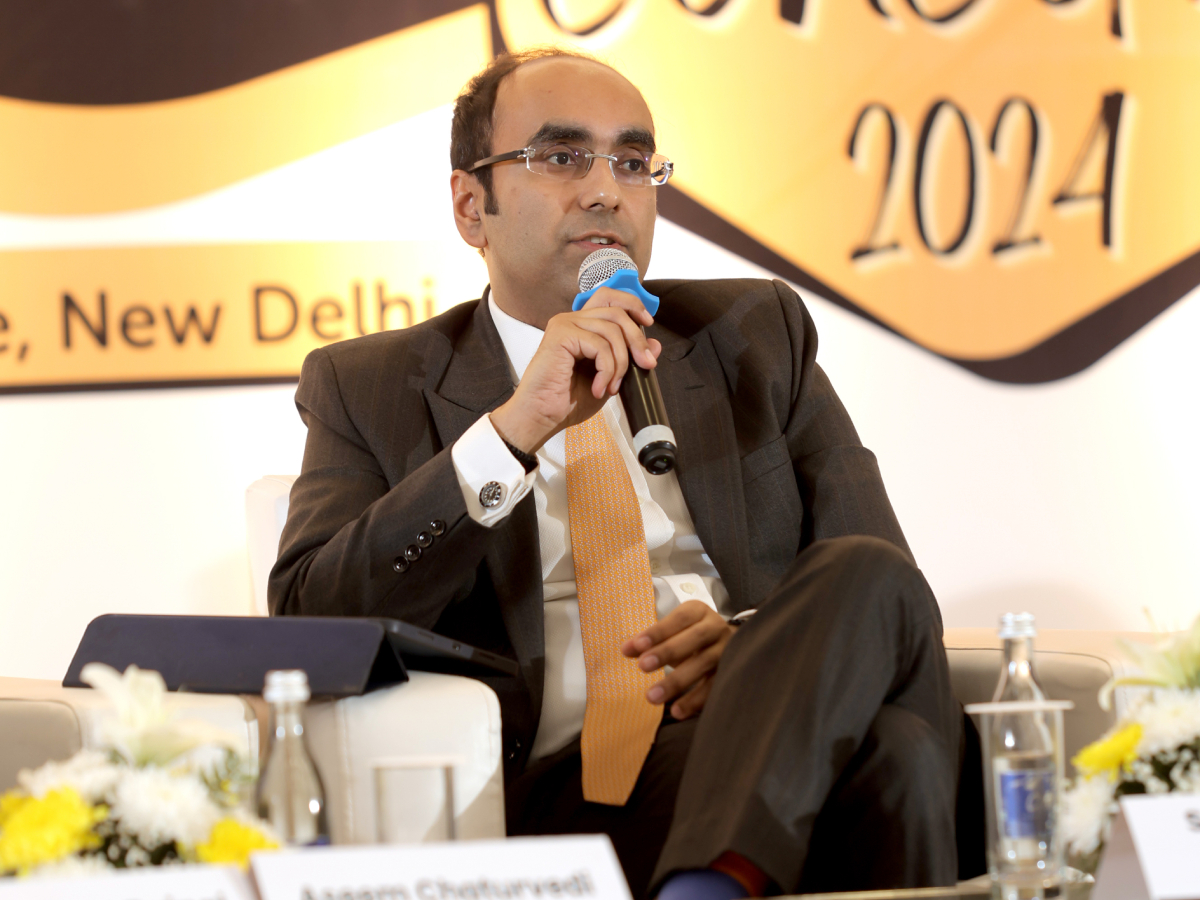
In banking-related arbitrations or forensic engagements, there is a lot of personal data we receive during investigations, for example, employee details or customer details that include personally identifiable information. First, we try to minimize the collection of such data if it is not required. We ask to either redact or remove it. If we do receive it, we make sure that it doesn't come to evidence. We work with clients to minimize the exchange of that information, and if we do get it, we ensure it is redacted, used, and disposed of properly, and documented.
I think these are some of the protocols we practice, and we also have incident response plans, among other things. So, I think these practices are very important, and we implement them on a day-to-day basis.
Dr. Shashwat Bajpai (Moderator): I think you mentioned a very important point regarding the non-disclosure agreements, which should be made mandatory in financial arbitrations among all stakeholders involved in that arbitration. Thank you. Now, if you see my friend sitting on my left, Mr. Chaturvedi, now, we play a lot of cricket together, and we've always had this tug-of-war between us about who's going to bat first. Now, we've got a similar tug-of-war between arbitration and the IBC Code, and it's been ongoing since the IBC's inception in 2016. What do you think are the implications of the IBC on arbitrations, especially from a financial arbitration perspective?
Mr. Aseem Chaturvedi: It's interesting because both arbitration and the IBC are specialized legislations. It's not a generic law where the specialized legislation will prevail, but when we have a tussle between both specialized legislations, which one takes precedence? While IBC is later in time (2016) and the Arbitration Act was in 1996, the IBC has Section 238, which states that in case of any conflict, the IBC will prevail.
What’s interesting here is that lawyers, like us, come up with ingenuous arguments and interpretations. For example, in an arbitration clause contained in a financial document, it states that in case of disputes, the parties are being referred to arbitration. However, the IBC itself states that if it’s an operational creditor filing a Section 9 petition, the pre-existence of a dispute is grounds to dismiss the petition. Lawyers have tried to argue that because there’s an arbitration clause in the financial document, it’s a pre-existing dispute, so Section 9 is not maintainable. The Supreme Court has interpreted this and put the issue to rest: in cases of conflict, the IBC will prevail. But merely because there's an arbitration clause in a financing document does not by itself constitute a pre-existing dispute.
In practical terms, when clients approach us, they often prefer to try their luck with an IBC proceeding. The IBC is perceived as a quicker solution, and parties hope for a settlement before arbitration begins. However, we advise clients that the IBC is not a recovery proceeding; its purpose is either to restructure the company or take it into liquidation, and then distribute assets as per the Act.
So, while there is overlap, the scope of both arbitration and the IBC should be considered separately — whether the goal is recovery or insolvency restructuring. That distinction is crucial when advising clients on whether to go for IBC or arbitration. That would be my take on this.
Dr. Shashwat Bajpai (Moderator): I'll put this next one to Ajit sir. Sir, there's a never-ending debate regarding the costs of arbitration that has been ongoing for the last two decades. Do you feel, sir, that the cost of arbitration may or will act as a barrier for small individuals or small businesses if they come up for arbitration in banking and finance disputes?
Mr. Ajit Kumar Mishra: Yes, my simplest answer is yes. The cost of arbitration is astronomically increasing — it's much higher than the Sensex now. In the previous panel, almost everyone spoke about the arbitrator's fee, but that is only one component.
The cost of arbitration, if I can divide it into five categories, includes: the institution cost where you file your arbitration request, the arbitrator's fees, your legal fees, fees if you're engaging experts or other specialists, and then all other miscellaneous expenses such as travel, hotel, etc. The first two, the institutional fee and the arbitrator's fee, are generally ad valorem as per the institutional rules, so they depend on the value of your dispute and there's not much flexibility.
But the other two — the lawyer's fee and the expert's fee — are mind-boggling, with no benchmarks. There’s competition between the parties to engage not only the best lawyer, which is acceptable, but also the costliest lawyers and experts. This drives up the entire cost.
I don't know if the results are commensurate with those input costs or not, but yes, it’s a deterrent for smaller players who see arbitration as an easy, cost-effective, and time-efficient dispute resolution mechanism. This cost is a big deterrent.
Mr. Aseem Chaturvedi: I'd like to add one anecdote. We happened to do an international arbitration about five years ago. At that time, live transcription was not as frequently used as it is now. There was only one entity providing it, based out of Singapore, and the cost of live transcription was more than the arbitrator’s fee and the arbitration fee put together. That's the new norm for international arbitrations now, with live transcription, and it is phenomenally expensive.
Mr. Ajit Kumar Mishra: Yes, those costs have been significantly reduced nowadays. There’s competition between case counsel and bars, with both demanding higher fees.
Dr. Shashwat Bajpai (Moderator): When Ajit sir was answering his question regarding costs, I could almost hear him complaining to us lawyers, "Please reduce your fees now!"
Mr. Ajit Kumar Mishra: No, no, especially not that. The reason for my response is that your question was slightly different — whether the cost is a deterrent or not. Yes, it is. But once we’re in the dispute and want to resolve it through arbitration, both parties will obviously put their best foot forward. And as Ratan Singh said, "If you throw peanuts, you'll only get monkeys." You have to pay good money to engage a good lawyer. I hope this clarifies.
Dr. Shashwat Bajpai (Moderator): Yes, this clarifies because I am one of his lawyers, so thank you. I think I'll jump to a different area and piggyback on what was said about live transcription. Now, live transcription for VC hearings — we've seen this in the last four or five years, post-COVID, with digitization. I'll put this to Mr. Goyal. Mr. Goyal, what opportunities do you see in digitization? We've already seen that arbitration has picked up significantly in a better scenario when we talk about digitization, VC, etc. Do you think this will also help in arbitration for financial disputes?
Mr. Amit Goyal: Of course, it will help a lot. I won't talk about the usual stuff around artificial intelligence or how you would digitize your entire legal documentation and save time. I want to share real-world examples that we are practicing nowadays. There are technologies and platforms available, and their power is enormous.
The technologies available, number one, have very strong—not just keyword search capabilities—but concept search capabilities. To give an example, if you are digitally analyzing a person's data, such as their computer system or phone, and you want to identify whether the person has any financial statements, you don't have to input a keyword like 'financial statement.' Instead, you can ask the tool to identify any document resembling a financial statement, and the tools are so advanced that they will list all such documents.
Another example of the capabilities: in the good old days, people used to do keyword searches, limited to a set of 20 or 30 keywords. If you weren't smart enough, you wouldn't get the desired results. But now, the capability exists where the tool itself will analyze whether you are getting the desired result with your initial keywords or should it suggest better keywords based on your objectives.
Let me give you another example. Let's say you are working on a construction case, and you have the entire documentation digitized and fed into the tool. If you only have four or five days to perform a preliminary assessment, such as identifying delays in the project, the tool can analyze the data and identify delays, providing you with a list of 10 factors that led to these delays. It could be issues like land acquisition, right of way, approvals, etc. The tool won't just give you a basic answer; it will also provide the documents that led to that conclusion and create an index.
Imagine how much easier it is for lawyers or forensic professionals like us to determine preliminary facts without spending months sifting through huge amounts of data. Of course, you still need your intelligence, but the tools are available. Technologies are advancing globally, and I think India is catching up. Many law firms are adopting these technologies.
The second aspect I want to mention briefly is digital hearings. In the old days, digital hearings weren’t common, but post-COVID, they have risen and continue to happen. In many international matters, such as US cases, Indian experts are now able to participate in cross-examinations and provide expert testimonies without traveling to the US or needing a visa. That's another advancement. Additionally, other technological tools and analytical tools are available and used on a day-to-day basis.
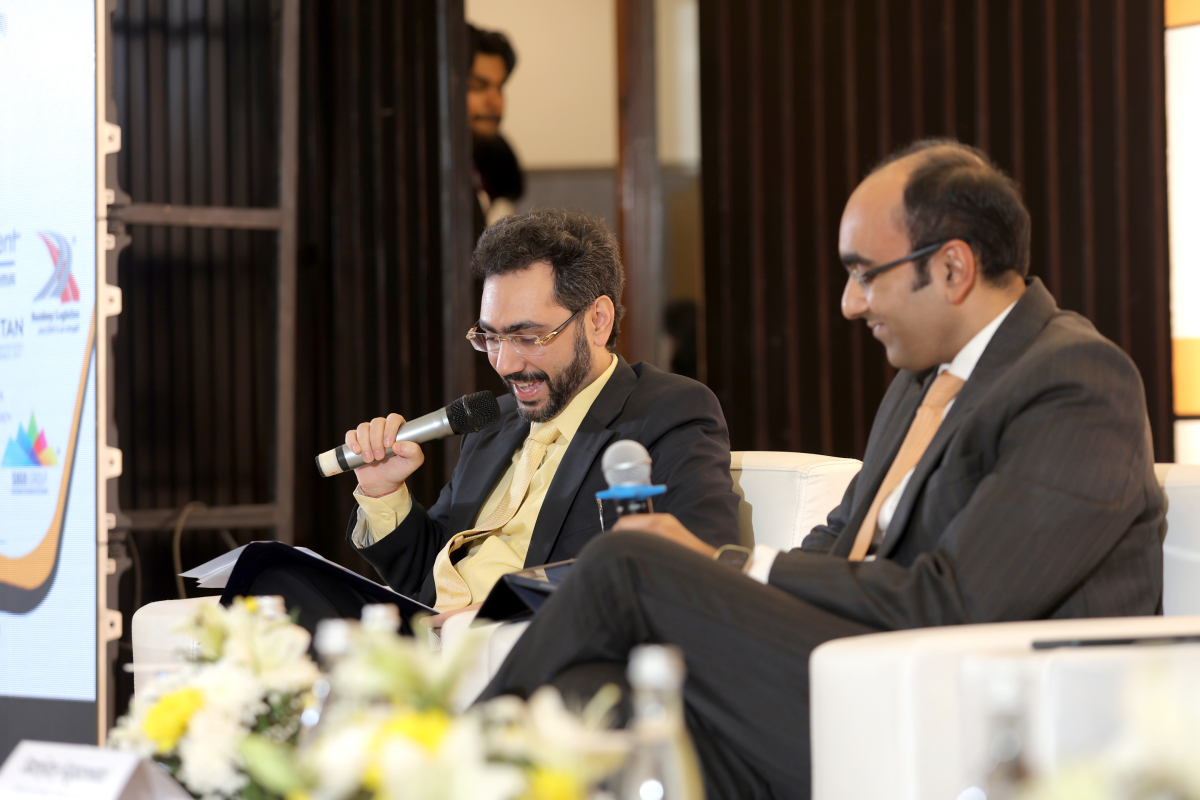
Dr. Shashwat Bajpai (Moderator): If I may ask Mr. Agarwal the next question. We all know there is a mountain of non-performing assets (NPAs) in India. How do you feel the arbitration mechanism can assist in resolving disputes arising from these NPAs, without relying solely on the debt recovery tribunals?
Mr. Sanjay Agarwal: To start with, I would like to say that the DRTs and the SARFAESI Act have done a very good job for the financial sector. We rely a lot on the SARFAESI Act as well as the DRT. There are, of course, challenges, and some issues are developing, but that doesn’t take away from the success of these two tools.
However, offline, a trend is emerging where the DRTs are getting overburdened. There are cases where the Presiding Officers (POs) are unavailable. So, we feel that the DRTs have reached capacity at many locations. If any mechanism can lower the workload of the DRTs, it should be appreciated.
Regarding the second part of the question, about how arbitration can help in dispute resolution: Today, all the newspapers are full of two critical segments where NPAs are growing rapidly. One is unsecured loans—RBI has been warning banks for a long time, and in the last quarterly results, we see that unsecured NPAs have ballooned. The second segment showing signs of stress is affordable housing, which is also a focus area for improving the housing situation in the country.
Both of these segments fall outside the purview of DRTs, and even if you go to the DRTs for affordable housing, you may not get a proper response. Arbitration is probably the only way to address this large mass of NPAs generated by lending. If we consider the situation where younger borrowers are becoming more aware of their credit history and are more concerned about borrowing in the future, they don't want to spoil their credit records.
This means they don’t need a law-based solution; they need something between the DRT and pure legal action, such as arbitration, which is softer. Online dispute resolution, which is now available, could be a good way to address a large volume of smaller unsecured loans. Even business loans, for example, loans of 50 lakhs, are now being given unsecured. In such cases, arbitration can play a significant role.
We feel that arbitration, as a tool, is underexplored. If we can put the process in order, it will do a great service to the ecosystem, benefiting lenders, borrowers, and entities like ours.
Question from Audience: You know the distinction between IBC and arbitration, what is the meaning of arbitration as the assertion of a right by one party and denial by the other? Does the IBC have the powers to decide the suit? That's one.
The other contradiction is that the whole purpose and object of this discussion was to understand whether institutional arbitration should be the talk of the day. I mean, is it important that the Government of India must encourage arbitration clauses to be inserted in banking and non-banking finance companies’ agreements? Even if there is no such clause by agreement between both parties, they can agree to refer a dispute.
If you are in control of your borrower—and I've been in this field for many years—you can bring the party to a settlement. This mediation in Delhi High Courts and mediation by the trial courts: the mediators are not well-versed with the arbitration or mediation laws. It should be institutional arbitration. If you have to go under Section 11, let the courts refer the disputes to arbitration, and I think there’ll be faster disposal of banking disputes.
DRTs are overloaded. You know, it’s very strange. I mean, you go for a two-crore debt recovery, and they say we have no time for two crore matters. They keep pending it. Two crore doesn’t matter; they’re looking at 200 crores. Even in public sector entities, even if there’s arbitration, and you have all the relays, you’ve got Section 9, you’ve got Section 7, why do you need Section 9A emergency?
Do we even use Section 9? How many people are using Section 9? How many are using Section 17 of the Arbitration and Conciliation Act? It’s a highly undermined Act. We are all going to IBC, winding up all the corporates in India. There will be no investment in India, and the companies will be wound up.
Mr. Aseem Chaturvedi: I completely echo your sentiment. It’s my personal view that DRT as an institution, maybe because of the lack of will to put in more infrastructure—I don’t know if you’ve appeared recently in DRTs—I think it was one of the last tribunals to get VC facilities. Our focus right now has shifted from DRT to IBC. It’s a newer legislation. It’s had so many amendments. It’s got all the teeth. Let’s focus on something new. Whatever is new, let’s focus on it, forgetting about the earlier legislations.
But personally, what I’ve seen is that if you're looking from a lender’s perspective, DRT is still one of the most sought-after remedies because of the immediate attachment provisions under the SARFAESI Act. Immediate possession can be taken. Another advantage in DRT is that the moment you get a recovery certificate, the appeal to DRT is at a pre-deposit, which is missing in IBC. IBC is a different ball game altogether. One needs to really decide whether you're going after recovery or restructuring insolvency, as I suggested earlier.
But I completely agree with you. There are three different regimes, and we must give more teeth to DRT. DRT must get better infrastructure and more officers. The laws are in place, but the abundance of litigation is what is bringing us down. IBC will see the same fate. We are seeing arbitration facing the same fate, with amendments after amendments.
In the earlier panel, they were saying there are certain arbitrators with a hundred arbitrations. They have a cost list of arbitrations. That’s not what arbitration was for. Arbitrators were not supposed to have cost lists. The whole purpose of arbitration was an alternate dispute resolution mechanism to provide a quicker remedy.
But even now, if you look at a timeline, arbitration still has a timeline of 18 months, 24 months, or at best 36 months, which is even worse than IBC, which was supposed to resolve in 330 days. No resolution happened in 330 days. DRT? Forget about it. DRT has a backlog.
You’re absolutely right, and I echo your sentiment. IBC arbitration should be explored more for lender-borrower disputes. And we’ll be happy to chat offline. I don’t want to eat into others' time or our dinner time. We can take this offline. Thank you.
Dr. Shashwat Bajpai (Moderator): I’m certainly going to use the phrase “cost list of arbitrations” in the next panel discussion, hopefully. In fact, the gentleman asking the question pointed out an important aspect about mediation, and that brings me to my next question to Mr. Mishra. This is a question that’s often asked in panel discussions about arbitration: How do you perceive, sir, if we have a hybrid model of either ARB-Med or Med-ARB in complex financial disputes? Can we go ahead with such hybrid models of arbitration and mediation, or just mediation itself? What’s your take on that, sir?
Mr. Ajit Kumar Mishra: Yes, that’s a very interesting question, and it has lingered for many years in the legal fraternity. It has different understandings, but if you’re asking my personal opinion and experience, all I’ll say is that this hybrid model is always preferred because it allows you to harness the complete advantage of alternate dispute resolution.
What happens today is that if you only have an arbitration clause, if arbitration fails or you have an appeal against it, you again have to enter into litigation. But with a clause like ARB-MED, during arbitration, the arbitrator can offer the parties to try mediation. Although Section 30 provides for this, it’s a more formal approach where the arbitrators are obliged to refer or offer mediation to the parties. If there is a mediation settlement, it will be issued as a decree of court, like the arbitral award. Even if mediation fails, arbitration can resume.
It is always beneficial to have such a clause and refer disputes through this composite mode of dispute resolution. A pioneering institution in this regard is the SICC, where their clause includes both arbitration under SICC and mediation under SIMC in the same text. If arbitration fails, the parties will refer the dispute to mediation under SIMC rules. This hybrid model will always be beneficial.
Dr. Shashwat Bajpai (Moderator): Now, coming to another important issue, which has again been a bone of contention in several arbitrations, pertaining to experts and expert witness testimony. Who better to answer that than Mr. Goyal? Mr. Goyal, what I would ask you is: what role can a financial expert or forensic accountant play in arbitration proceedings, and what complexities may arise if they're treated as a witness or giving expert witness testimony in a complicated financial dispute arbitration?
Mr. Amit Goyal: Thanks a lot for bringing up this question. I would first start with the issue of exorbitant money spent on experts. I see that experts bring a lot of value and do a lot of hard work, just like lawyers. So, I think the cost is justified, and I'll explain why.
An expert’s role does not just involve providing an expert report, appearing in cross-examination, and providing testimony. The expert's role starts much earlier. If the claimant or respondent wants to start, an expert can be brought in before filing the SOC to help identify various claims and facts. The expert can also work with lawyers on the litigation strategy. Assessing the merits of the case, such as fact-finding, is important, and that's where experts add value based on sound analysis of financial data. They can tell you whether your claim, based on facts and evidence, is robust enough. Experts can also help avoid errors in calculations or assumptions. Clients often make silly mistakes when filing SOCs or preparing calculations, like using wrong interest rates or dates, which can change the value of the claim significantly. These errors can be avoided if experts are brought in early.
Also, if you are on the other side of the dispute, an expert can critique the claims based on facts and commercial logic. When arbitration proceedings begin, experts will typically be involved in cross-examinations or discovery processes. They can also assist lawyers by suggesting questions for other parties or their experts. This adds value by helping identify issues early. The challenge, however, is when experts are brought in at the last stage and given little time to analyze information and provide their opinion. This reduces their ability to add value.
Maintaining independence and objectivity is another challenge. Experts must not appear as advocates for their clients. Even though they are paid by the claimant or respondent, their duty is to the tribunal, not the client. This independence can be difficult to maintain, especially if the client is unhappy with the expert’s findings. Another challenge is resolving conflicts, as experts may be conflicted with the other parties as well. Additionally, experts often face a lack of quality information or documentation, which makes it difficult to form a strong opinion. Sometimes, experts have to rely on judgment and empirical research. Finally, experts also face the stress of cross-examination, but that's part of the job.
Mr. Ajit Kumar Mishra: My disclaimer applies to experts’ fees as well.
Dr. Shashwat Bajpai (Moderator): We appreciate that, sir. If I may ask you now, what do you feel are the inherent conflicts between specialized financial tribunals compared to the arbitration mechanism in India? How do you feel that the Arbitration and Conciliation Act, 1996, as amended, aligns with the specific requirements of such financial disputes we've been discussing?
Mr. Aseem Chaturvedi: So, Shashwat, I wouldn’t say there’s an inherent conflict; rather, there’s certainly an overlap. By overlap, I mean that it depends on whether you're looking at recovery or restructuring. If you're looking at recovery, there is no better legislation than the Arbitration and Conciliation Act. However, the conflict lies in the fact that the Act does not define what disputes are arbitrable.
We've had several judgments interpreting this, and they all end with the conclusion that it should be decided based on the facts of each case. For better clarity, if the Act, including the 2024 or 2025 amendments, specifies which financial disputes are arbitrable, it would be a step toward bolstering arbitration as the preferred choice for financial disputes. Even if an arbitration clause provides for insolvency or bankruptcy disputes, these disputes may not be arbitrable. That clause itself may not be challenged, but at the stage of Section 34, you may find that after two years of arbitration, the dispute is deemed non-arbitrable, and the award is set aside.
This creates conflicts, and clarity is needed when drafting lending agreements. Whether you're looking at recovery under the DRT Act or under the Arbitration and Conciliation Act or pursuing insolvency, clarity is necessary. What we’ve seen is that the biggest haircuts are taken by banks and financial institutions when a corporate debtor enters insolvency. A resolution plan often results in a substantial haircut for financial lenders, and no one else. So, the overlap needs to be addressed.
As lawyers, we would welcome clarity on whether financial disputes will be arbitrable or not, rather than waiting for judgments years down the line.
Dr. Shashwat Bajpai (Moderator): This brings me to ask Mr. Agarwal: How can arbitral institutions like IDRC and others mentioned in the Act — specifically Indian institutions — develop specific rules to cater to the complexities of such complicated banking and financial disputes?
Mr. Sanjay Agarwal: I know the question you have asked has some relevance to what is happening around us in the country today. The financial ecosystem, particularly for giving loans, is completely digitized. Now, nobody goes to the bank to take a loan or repay a loan; everything happens sitting at home. The entire process has been digitized beyond our expectations until a couple of years ago, and COVID has completely changed the scenario. So, when the entire lending ecosystem is digitized, arbitration, recovery, or any other system should also be digitized. Even the legal system is now getting digitized to a large extent.
That being the case, if we have to get digitized, then online dispute resolution by entities like IDRC is very important. Now, the question is how we can incorporate this into rules. The moment we talk about anything related to large numbers and volumes, rules will come into play by default, whether we like it or not. But there are three information streams that would be required to prepare those rules.
One information stream is the regulator itself. We are all guided by the Reserve Bank of India, and their guidelines keep getting changed every now and then. So, your dispute resolution mechanism must have direct information or awareness of the latest guidelines of the regulator, which are very important today.
Second, it is also impacted by later judicial orders in the law. You need to have domain experts, or your rule engine should have a compendium of all the latest judgments which impact decision-making.
Third is something which I would say very few people would mention in this kind of forum: the own database of IDRC. When I say own database, IDRC would ideally become an institution like an asset management company. We deal with all banks and acquire loans from all banks, so we see a trend that one bank has a very tight agreement, and another doesn’t; one bank has a good credit policy, and another doesn’t; one bank’s documentation is perfect, while another’s is not.
Once you have your own database, you can make your own rules. If a loan comes from a particular bank, we know the arbitration clause might not be there, so we may accept it. These particular data points would get generated from the own database. If you have three information streams coming together, I’m sure digitization, artificial intelligence, or analytics will help us in building rules. It won't be poor.
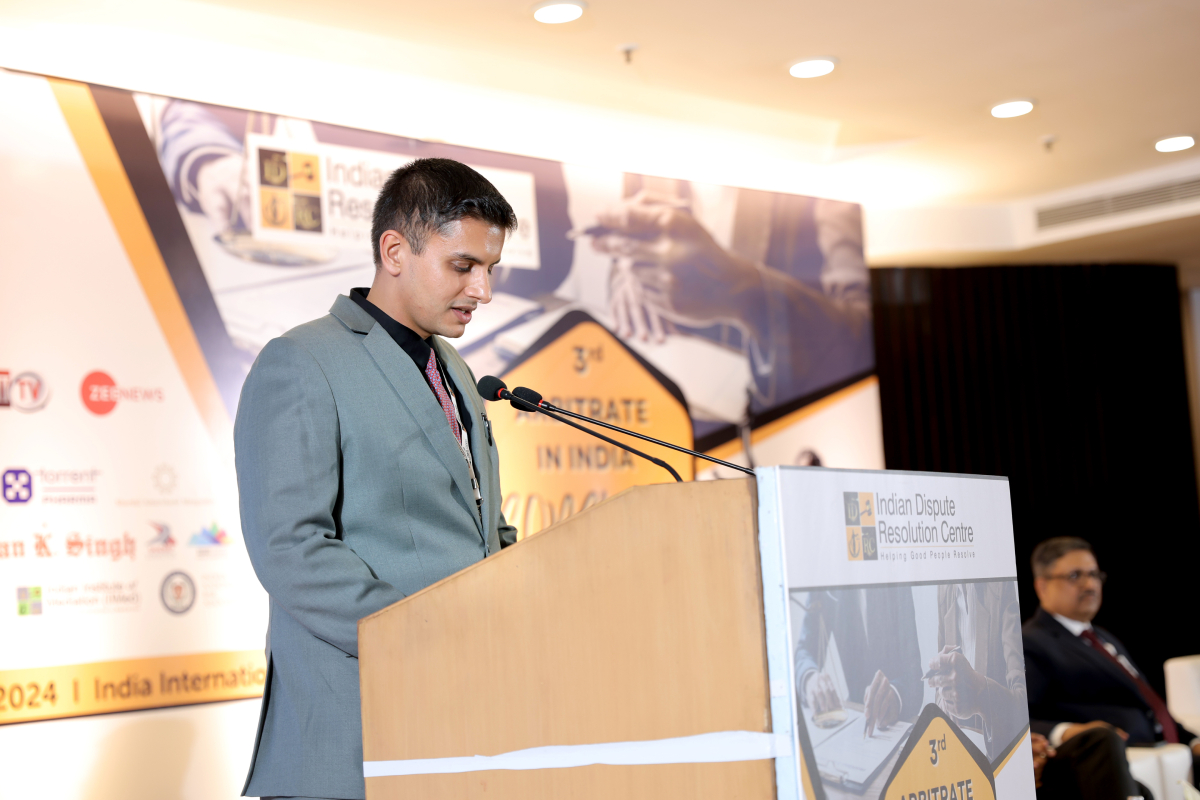
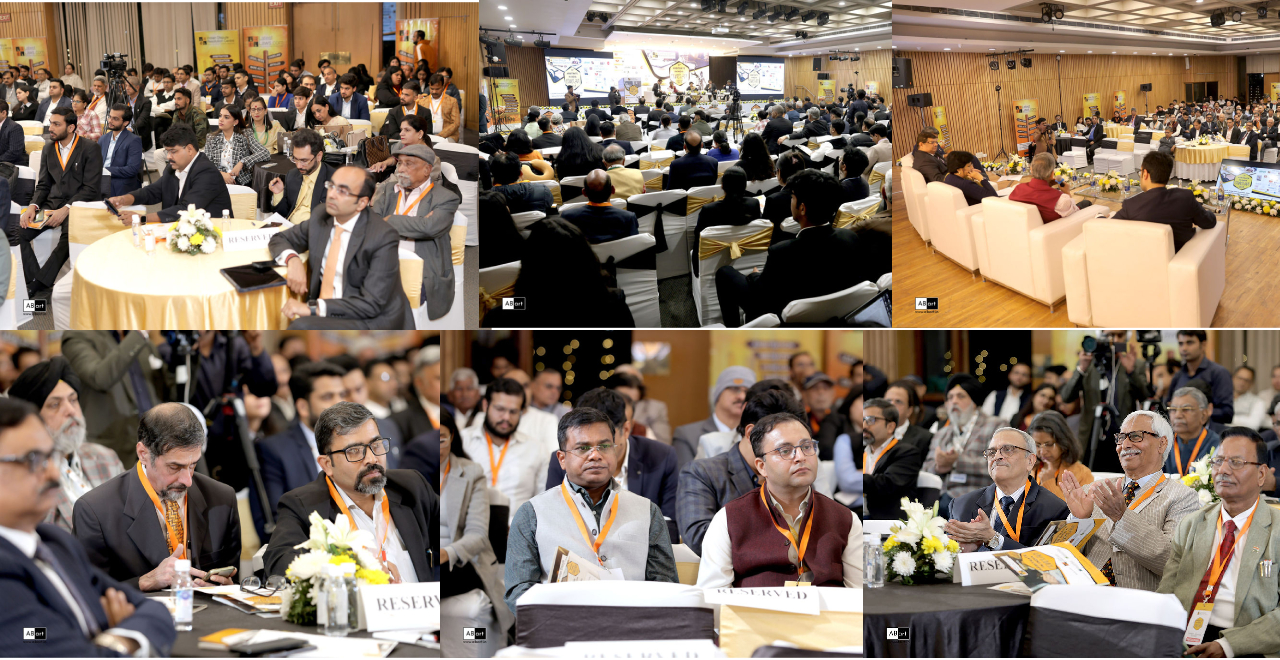
Key Takeaways from the 3rd Arbitrate in India Conclave,2024 :
- India’s Emergence as an Arbitration Hub
India’s arbitration framework has evolved significantly, backed by legislative reforms and institutional developments. The conclave emphasized the need for continued policy support, judicial backing, and institutional strengthening to establish India as a global arbitration hub.
- Legislative and Judicial Developments
The proposed Arbitration and Conciliation (Amendment) Bill, 2024 aims to enhance efficiency and transparency in arbitration. A landmark Supreme Court ruling in Central Organization for Railway Electrification reinforced fairness in arbitrator selection, setting an important precedent for arbitration agreements.
- Institutional Arbitration and Regulatory Advancements
Institutions like IDRC are key to promoting institutional arbitration and ensuring high professional standards. Panelists highlighted the need for robust institutional support to minimize delays and enhance credibility in arbitration proceedings.
- Arbitration in Banking, Finance, and Commercial Sectors
Arbitration offers faster and expert-driven dispute resolution in complex financial and commercial matters. Businesses and financial institutions were encouraged to integrate arbitration clauses in contracts to ensure efficiency and reduce litigation burdens.
- Education and Capacity Building in Arbitration
Institutions like IIULER, Goa are fostering arbitration education by offering specialized courses and training. The Bar Council of India emphasized the need for structured arbitration programs to develop a skilled pool of arbitration professionals.
- Adoption of Technology in Arbitration
Emerging technologies like AI-driven arbitrator selection, blockchain for document security, and digital arbitration platforms are transforming dispute resolution. Adoption of these innovations can enhance transparency, efficiency, and accessibility in arbitration.
- Reducing Judicial Intervention
Excessive court interference has historically slowed arbitration proceedings. Recent amendments and judicial pronouncements have reinforced the principle of minimal judicial intervention, ensuring arbitration remains a faster and more effective dispute resolution mechanism.
- Promoting International Commercial Arbitration
The conclave stressed the importance of making India a preferred seat for International Commercial Arbitration (ICA). By adopting international best practices, enforcing contracts efficiently, and ensuring judicial consistency, India can attract global businesses to choose Indian arbitration institutions.
- Government and Policy Support
The government’s role in promoting arbitration was widely acknowledged. Policies encouraging public sector enterprises to opt for arbitration over litigation, along with incentives for institutional arbitration, were recognized as crucial steps toward making arbitration the default dispute resolution mechanism in India.
- The Path Forward
While progress has been made, further efforts are needed to institutionalize arbitration, align with global best practices, and ensure consistency in judicial decisions. The conclave reinforced the importance of collaboration among stakeholders to make arbitration the preferred dispute resolution method in India.
Report on Arbitrate in India Conclave, 2024
Media Coverage








































































IDRC e-Arbitration
Business Friendly
Helps the parties resolve disputes without sacrificing the business relationship
Cost-efficient
By a speedy resolution the parties can focus on profitable business activities rather than spending time and money on litigation
Enforceable
The arbitral award is enforceable as a decree
Fast
A IDRC e-Arbitration is completed within prescribed time.
Paperless
The entire arbitration process is completed without a piece of paper being used.
IDRC e-Mediation
Business Friendly
Helps the parties resolve disputes without sacrificing the business relationship
Cost-efficient
By a speedy resolution the parties can focus on profitable business activities rather than spending time and money on dispute resolution
Fast
A IDRC e-Mediation is usually completed within a prescribed time.
Flexible
The parties are actively in control of the dispute resolution process.
Paperless
The entire mediation process is completed without a piece of paper being used.