4rd Arbitrate in India Conclave, 2025
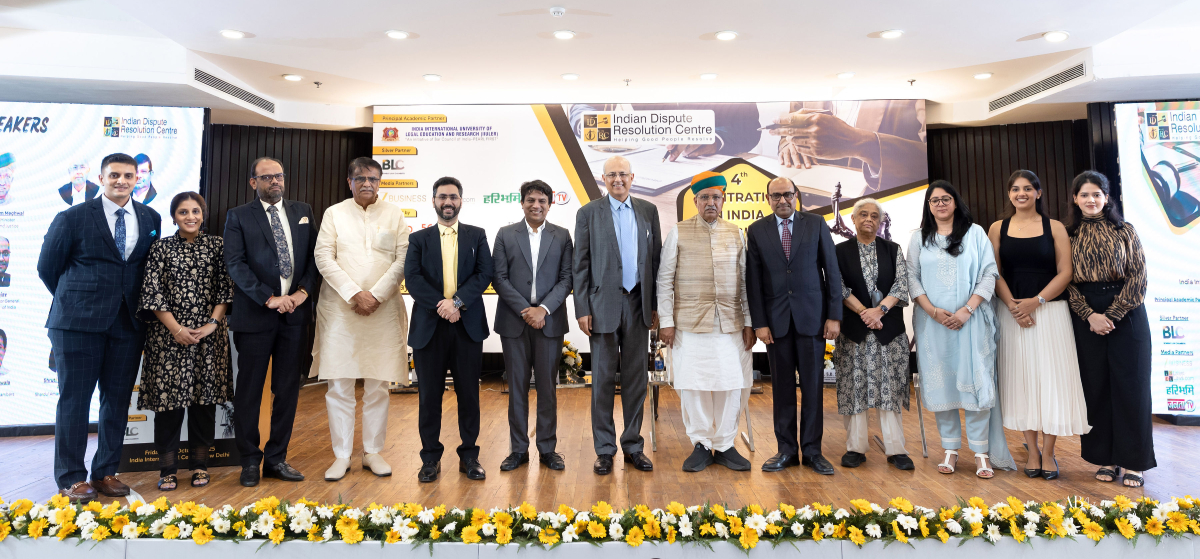
IDRC's 4th Arbitration in India Conclave 2025: Law Minister Meghwal and Justice Manmohan pitches for Strengthening Institutional Arbitration Framework in India
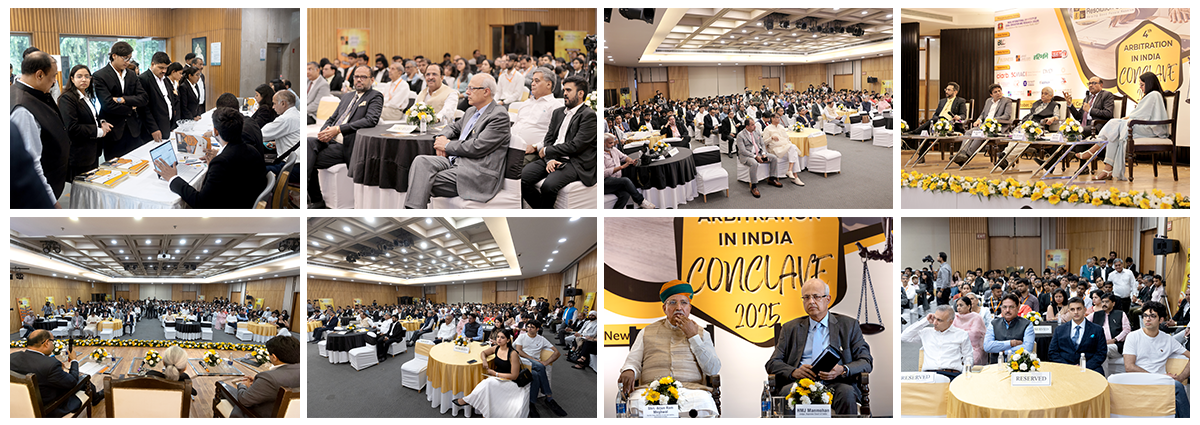
The Indian Dispute Resolution Centre (IDRC), in collaboration with Bar Council of India’s India International University of Legal Education and Research (IIULER), successfully hosted the “4th Arbitration in India Conclave 2025” at the India International Centre, New Delhi. The Conclave was supported by CIArb and Vienna International Arbitration Centre, Austria. The Conclave brought together judges, legal luminaries, policymakers, and senior practitioners to deliberate on the theme “Autonomy and Accountability in Arbitration: Institutional Arbitration is the Way Forward.”
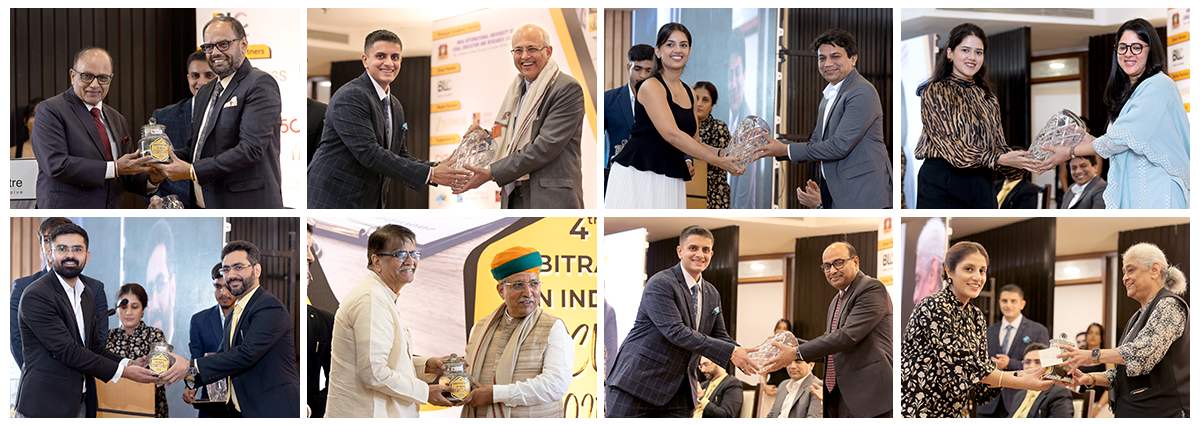
Hon’ble Union Minister for Law and Justice, Shri Arjun Ram Meghwal, delivered the keynote address, outlining the Government’s reform-oriented vision for alternative dispute resolution.
Shri Arjun Ram Meghwal, stated that “Arbitration, Mediation, and Conciliation are essential tools for strengthening India’s justice delivery and economic growth.”
Citing the Mediation Act, 2023 and the forthcoming amendments to the Arbitration and Conciliation Act, he said these initiatives would “make India a preferred seat for both domestic and international arbitration.”
Shri Meghwal emphasised that ADR mechanisms embody India’s cultural and legal heritage, remarking that “from Lord Krishna’s mediation in the Mahabharata to today’s institutional mechanisms, India has always valued resolution through dialogue and alternative modes.”
He further called upon arbitration institutions to ensure accessibility, affordability, and integrity, noting that “judicial intervention should be limited, and efficiency must define India’s dispute resolution landscape.”
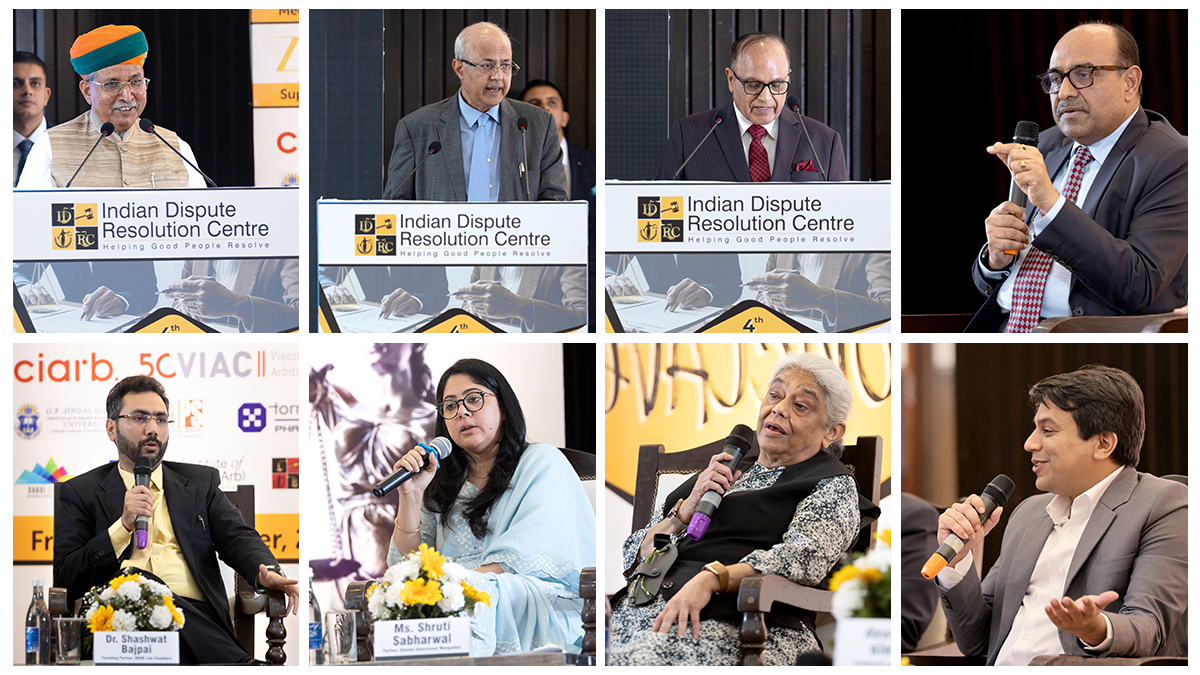
Hon’ble Justice Manmohan, Supreme Court, in his valedictory address, emphasised the critical need for institutional arbitration to evolve as a transparent and predictable system.
He praised IDRC’s achievements, noting that the Centre had conducted over 3,000 arbitrations in five years and has become a “symbol of India’s commitment to establish an efficient and credible ADR ecosystem.”
Justice Manmohan observed that, “Courts must act as facilitators, not barriers, to arbitration. Excessive judicial interference erodes the very purpose of alternative dispute resolution.”
While highlighting the benefits of Institutional Arbitrations ober Adhoc ones, he went on to suggest that a bar should be placed on all Adhoc Arbitrations for some time so that Institutional Arbitration gets strengthed. He quoted recommendations of Justice BN Shrikrishna Committee Report to highlight that India should promote Arbitration Institutions if it wishes to become a ADR Hub.
He advocated for strict timelines for enforcement under Sections 34 and 37 of the Act, and suggested that India “must move toward time-bound disposal of arbitration challenges and encourage institutional checks to avoid delays.”
The Hon’ble Judge also urged the Government to revisit the Finance Ministry’s circular restricting arbitration only to disputes valued less than Rs. 10 Crore, stating that “the Government must remain a part of the arbitration movement, not apart from it.”
Panel Discussion was on “Autonomy and Accountability in Arbitration: Institutional Arbitration is the way forward” moderated by Dr Shashwat Bajpai, Founder Partner, DSRB Law Chambers, with panellists:
- Mr S.D. Sanjay, Additional Solicitor General of India, Supreme Court
- Ms Anuradha Dutt, Senior Partner, DMD Advocates
- Mr Ayush Agarwala, Partner, Bombay Law Chambers
- Ms Shruti Sabharwal, Partner, Shardul Amarchand Mangaldas
Panellists unanimously agreed that institutional arbitration is the way ahead and ensures quality, neutrality, and procedural discipline, unlike ad hoc arbitrations that often face delays and cost overruns.
Ms Anuradha Dutt emphasised that “India can only become a true arbitration hub if it combines institutional discipline with a predictable judiciary.”
Mr S.D. Sanjay highlighted that “institutional systems help prevent arbitral fee abuse, avoid delays and promote fairness.”
Ms Shruti Sabharwal noted that “structured oversight, award scrutiny, and ethical accountability make institutional arbitration inherently superior to adhoc ones”
Mr Ayush Agarwala added that “efficiency, diversity among arbitrators, and digital adoption will determine the future success of arbitration in India.”
Delivering the Welcome Address, Ved Prakash Sharma, Advocate and Co-Chairman, Bar Council of India, applauded the rising prominence of arbitration as a cornerstone of modern dispute resolution. He also emphasised the collaboration between BCI and IDRC, stating that their joint efforts have been “instrumental in promoting awareness, education, and reforms that strengthen India’s arbitration ecosystem.”
Ms. Sumedha Sindhu Rathi, Head of Operations and Member Secretary, Advisory Board, Indian Dispute Resolution Centre welcomed the Panellists and distinguished guests and participants for the Conclave and shared the key aspects of functioning of IDRC and benefits of institutional arbitration through IDRC.
Mr Divyansh H. Rathi, Hony. Secretary of IDRC and Managing Partner, Lexidem and Rathi, expressed gratitude to all dignitaries, panellists, and participants for their insightful contributions. He reaffirmed that “IDRC remains committed to advancing institutional arbitration and making India a global hub for credible, efficient, and technology-driven dispute resolution.”
About IDRC:
The Indian Dispute Resolution Centre (IDRC) is a Not-for-profit ADR Institution registered with the Ministry of Corporate Affairs, NITI Aayog and empanelled with Ministry of Law and Justice, Govt. of India. Established in 2020, IDRC has successfully handled over 3,000 arbitration and mediation cases through both physical and virtual platforms. It continues to promote best practices, innovation, and accessibility in alternative dispute resolution. IDRC’s educational wings Indian Institute of Arbitration and Indian Institute of Mediation have been integral part of the Conclaves as Knowledge Partners. LatestLaws.com, India’s leading Legal Journalism website which is IDRC’s sister organization celebrated its 10th Anniversary at the 4th Arbitration in India Conclave.
Media Coverage







IDRC e-Arbitration
Business Friendly
Helps the parties resolve disputes without sacrificing the business relationship
Cost-efficient
By a speedy resolution the parties can focus on profitable business activities rather than spending time and money on litigation
Enforceable
The arbitral award is enforceable as a decree
Fast
A IDRC e-Arbitration is completed within prescribed time.
Paperless
The entire arbitration process is completed without a piece of paper being used.
IDRC e-Mediation
Business Friendly
Helps the parties resolve disputes without sacrificing the business relationship
Cost-efficient
By a speedy resolution the parties can focus on profitable business activities rather than spending time and money on dispute resolution
Fast
A IDRC e-Mediation is usually completed within a prescribed time.
Flexible
The parties are actively in control of the dispute resolution process.
Paperless
The entire mediation process is completed without a piece of paper being used.