Making India a hub of International Commercial Arbitration: Current Trends & Challenges in Arbitration in Lieu of allowing Foreign Law Firms in India
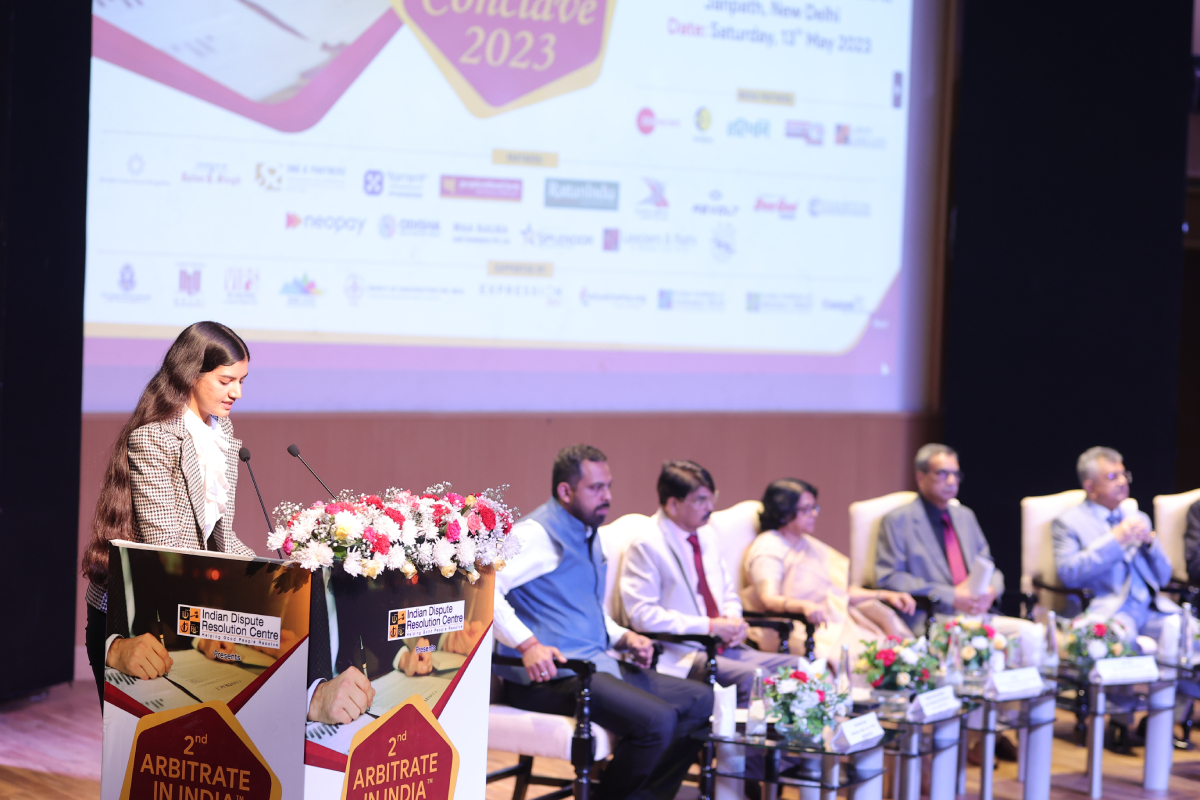
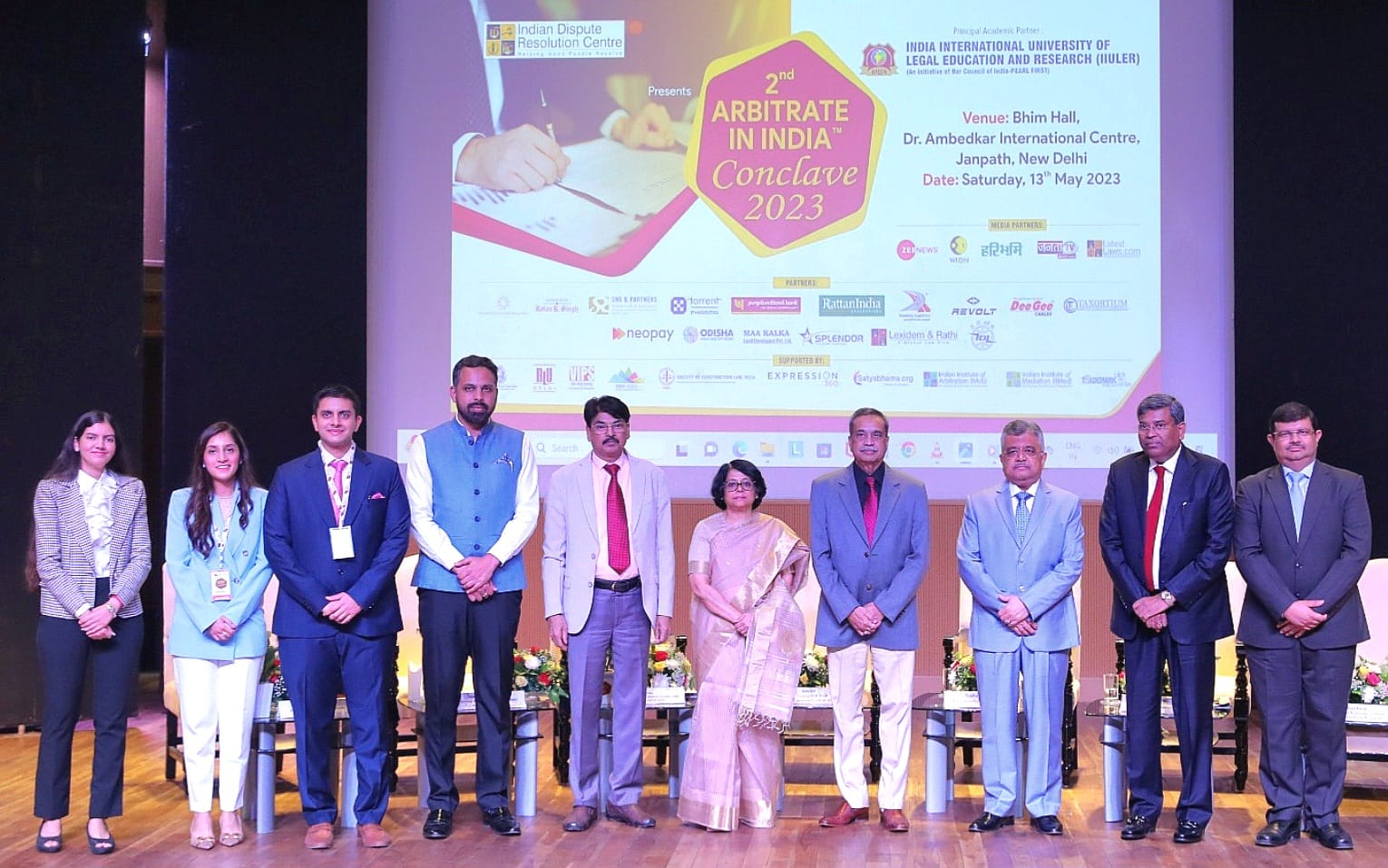 Chief Guest HMJ MR Shah (Judge, Supreme Court of India) with (R to L) Sh. Tejas Karia (Partner, SAM), Sh. Rattan K Singh (Senior Advocate), Sh. Tushar Mehta (Solicitor General of India), HMJ Indu Malhotra (Former Judge, Supreme Court), Sh. Manan Kumar Mishra (Chairman, Bar Council of India), Sh. Shashank Garg, Sh. Divyansh H Rathi (Hony. Secretary of IDRC), Ms. Sumedha Sindhu Rathi (Member Secratry Advisory Board), Ms. Riya Rathi (Co-Founder & Member Advisory Board)
Report on Arbitrate in India Conclave, 2023
Credible and Technology driven Institutions like IDRC making India a hub of International Commercial Arbitration, Justice M R Shah at 2nd Arbitrate in India Conclave, 2023
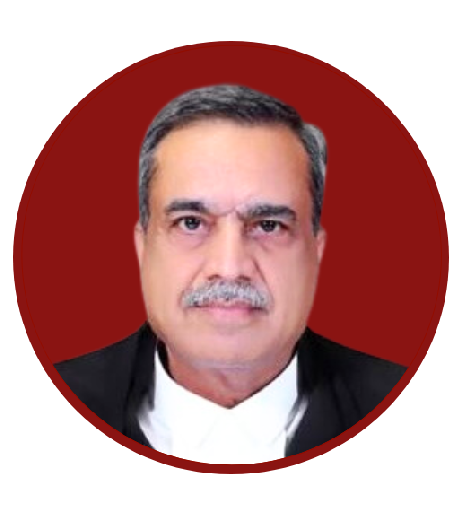
Hon’ble Mr. Justice M R Shah, Judge, Supreme Court of India stated that, “We have to repose the confidence in the mind of the foreign investors that in India there shall be speedy and timely resolution of the disputes. Minimal interference by the Courts against the Arbitral Awards would strengthen the speedy and timely disposal. I am sure that the credible and technology driven establishments like IDRC shall cater the need in achieving the goal of ‘Arbitrate in India.’
Justice Shah was speaking at the Indian Dispute Resolution Centre, ‘IDRC’s 2nd Arbitrate in India Conclave 2023’ which was organized in collaboration with the Bar Council of India’s India International University of Legal Research and Education, Goa (IIULER) on 13th May 2023 at Dr. Ambedkar International Centre, Janpath, New Delhi. The event marked the 3rd Anniversary of IDRC.
Justice M R Shah, Judge, Supreme Court of India, who was the Chief Guest at the event, delivered the Presidential Address. HMJ Shah appriciated the functioning of e-Arbitration and e-Mediation software developed inhouse by the IDRC. He stated, "IDRC is a Credible and Technology driven Arbitration Institution" It was followed by the panel discussion on “Making India a hub of International Commercial Arbitration: Current Trends & Challenges in Arbitration in Lieu of allowing Foreign Law Firms in India”.
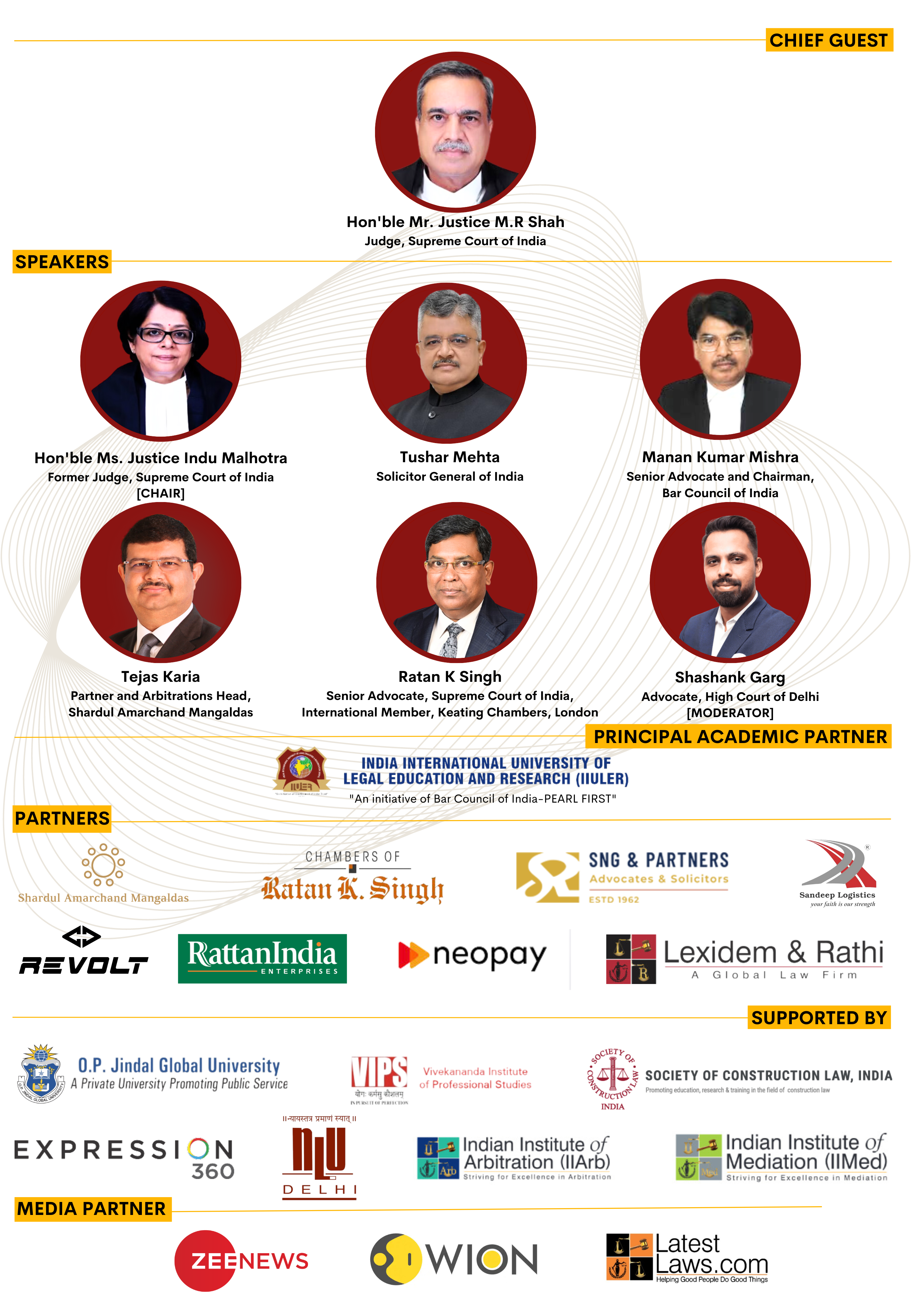
The panelists for the discussion were:
- Hon’ble Ms. Justice Indu Malhotra, Former Judge, Supreme Court of India [Chair]
- Sh. Tushar Mehta, Solicitor General of India
- Sh. Manan Kumar Mishra, Senior Advocate and Chairman, Bar Council of India
- Sh. Tejas Karia, Head Arbitration, Shardul Amarchand Mangaldas
- Sh. Ratan K. Singh, Senior Advocate, Supreme Court of India
- Sh. Shashank Garg, Advocate, High Court of Delhi [Moderator]
Justice Shah, in his presidential address, stated that, “Growth of global trade increases the importance of Alternative Dispute Resolution (“ADR”) as a mechanism of resolving disputes. A stable dispute resolution is necessary to attract foreign investment in India. Unless there is timely and cost-effective resolution of disputes, India cannot become the hub for international Arbitration. There is a need to understand the reasons due to which India is not being able to perform well in this domain and then work on these areas. Hon’ble Mr. Justice Shah concluded by saying that minimum court interference is imperative to achieve the goal of making India the hub of international arbitration”.
Justice M.R Shah further added that, “Timely resolution of the disputes more particularly the commercial disputes in a cost-effective manner is the need of the day. Various arbitration centers like the IDRC are catering the need of cost effective and speedy resolution of the disputes”.
“Within short time, the IDRC has earned the name and reputation in the field of dispute resolution. I am happy to note that IDRC has accomplished more than one thousand one hundred plus arbitration proceedings and thus have contributed in achieving the goal “Let’s make Resolution in India” a reality. Shri Divyansh H. Rathi, Founder Director, IDRC is a very enthusiastic and young. I wish all the success to the IDRC in helping the people to resolve the disputes, more particularly in the field of commercial disputes”, Justice Shah added.
Justice M.R Shah addressed, ‘When we talk about the arbitration in India, first of all we have to prepare ourselves to provide a platform in India. A time has how come to seriously think why in the case of international arbitration/disputes, the people go out of the country. What are the negative points and why India is not able to compete in the field of arbitration is a serious thing which is required to be considered. It is true that now so many arbitration centers have been established but still much is to be done.’
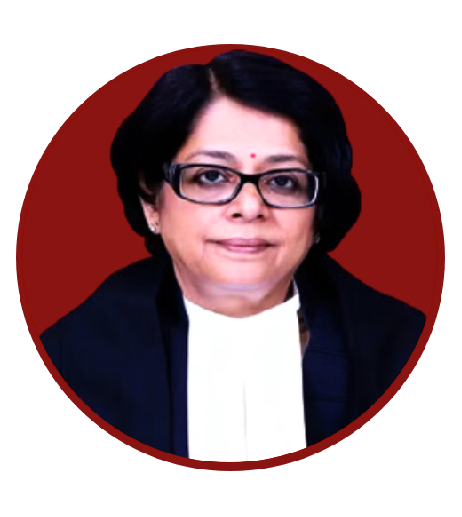
Hon’ble Ms. Justice Indu Malhotra, Former Judge, Supreme Court of India while chairing the panel discussion listed the key criteria that a party in an international arbitration looks into to decide the seat of Arbitration, which included – neutral place of arbitration, good arbitration regime of the place of arbitration, the pool of arbitrators available, and the infrastructure available to meet the requirements of international arbitration.
Hon’ble Ms. Justice Malhotra also stated that the issue of Section 34 of Arbitration and Conciliation Act, 1996 needs to be addressed in India, which can be tackled by creating specialized benches dealing expeditiously with Section 34 and Section 37 applications. Hon’ble Ms. Justice Malhotra also mentioned that enforcement of the awards is the place where India is lacking and that requires serious consideration.
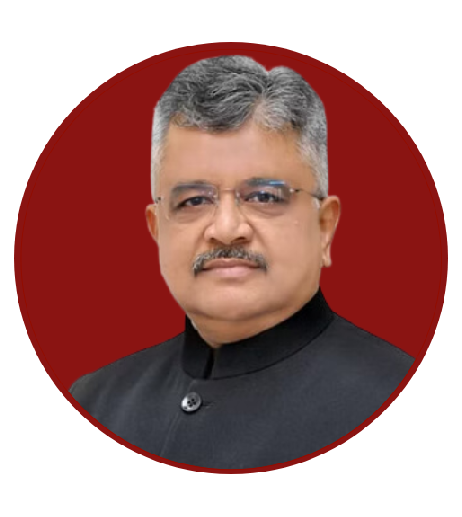
Sh. Tushar Mehta, Solicitor General of India stated that though it is true that the process of enforcement of the arbitral awards is slow, the first delay is in completing the arbitration process itself. He added that India needs specialized benches. However, he suggested that we shall have separate arbitration courts with specialized judges dealing specifically with S.34 and S.37. Even enforcement of the awards should be assigned to specialized arbitration courts rather than specialized benches in the regular Civil Courts. Sh. Mehta further added that when we talk of India being the hub of arbitration, we should focus on having an arbitration city in India that shall be the hub for international arbitration. This would help in speedy redressal of the disputes and go a long way in making India as the hub of International Commercial Arbitration.
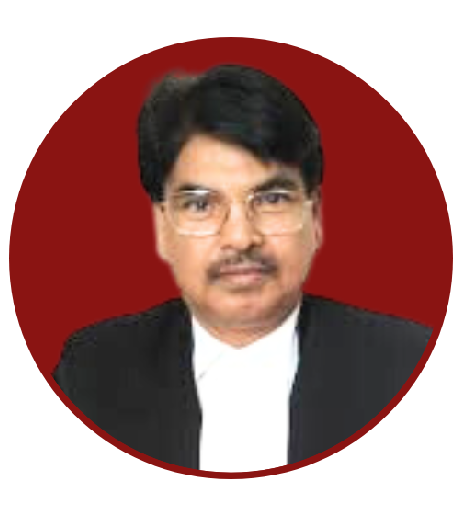
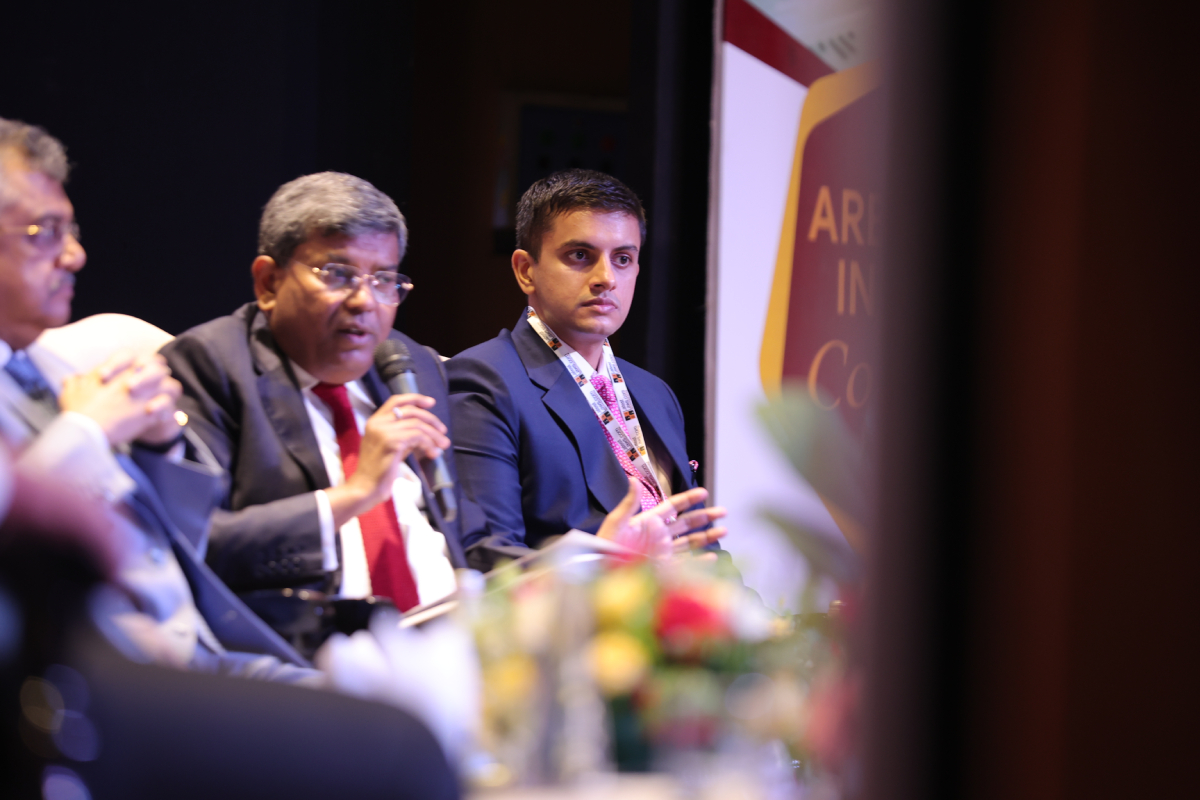
Sh. Manan Kumar Mishra, Senior Advocate and Chairman, Bar Council of India talked about the context in which BCI passed the decision of allowing the foreign firms to start their practices in India. This was done to help our Country in attracting foreign clients. He mentioned that one of the reasons why India has not become the hub of arbitration is that we are not allowing it to become the hub. There was no entry of foreign firms in this domain which prevented India from being the hub of arbitration. Sh. Mishra concluded by saying that unless the young lawyers are involved with foreign lawyers and law firms, we cannot become a hub of International Arbitration.
Sh. Manan Kumar Mishra further added that, “Under continuous Legal education like in foreign countries, Rules are being framed by Bar Council of India wherein in course of 5 years, every lawyer will have to undergo 40 days compulsory training, only then their Bar Licenses will be renewed. These rules will be enforced by the end of 2023. I Know the Bar Council of India and other State Bar Councils will have to face protests, but it is for the betterment of the lawyers, so under the able guidance of the Solicitor General of India, these rules will be implemented by the end of 2023”.
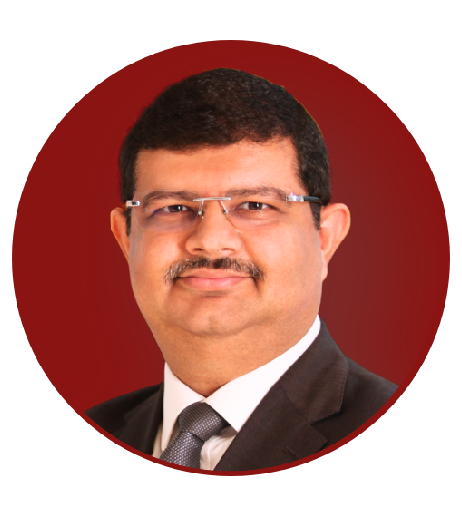
Sh. Tejas Karia, Partner and Head Arbitrations, Shardul Amarchand Mangaldas mentioned that Arbitration has always been ad-hoc and slowly we are moving towards institutional arbitration. But the problem is that we do not have one prominent institution which can be termed as the premier institute of international arbitration of India. There is difficulty in creating and maintaining consistency across all the centers of international arbitration. Sh. Karia firmly put forth the point that taking all the institutions together and making a diverse panel of arbitrators, increasing transparency, and relying on institutions such as the IDRC would help us in achieving the dream. He concluded by saying that the 2019 Amendment which included Section 11(6A) was a positive step as the enforcement of the same would lead to promoting institutional arbitration in India.
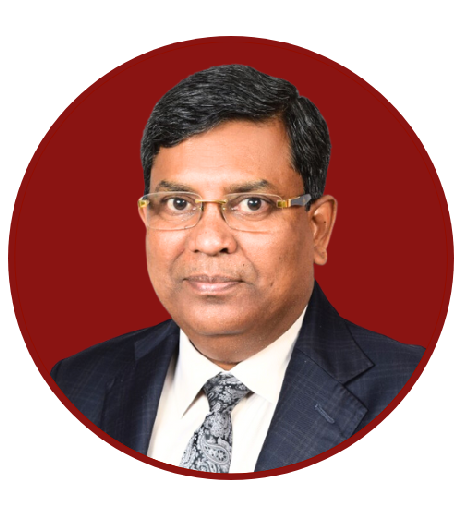
Lastly, to address the issue of delays in the enforcement of arbitral awards, Sh. Ratan K Singh, Senior Advocate and International Member, Keating Chambers, London suggested that only training of the judges can solve this problem. Training of judges is required at all levels. This also includes a mandatory continuing learning program for lawyers which will enhance the ability of practicing lawyers thereby leading to better judges which would eventually lead to better arbitrators.
While talking about the factors that are important to choose the seat of arbitration, Sh. Ratan Singh stated that, thinking from the perspective of a foreign party, we do not have any credible international arbitration center. Though we have good quality of arbitrators, the problem lies in the selection of the arbitrators by the institutes. Sh. Singh argued that due consideration shall be given to the expertise of the arbitrators chosen and presently we are far away from reaching that stage where the local institutions of arbitration are credible enough for the foreign parties.
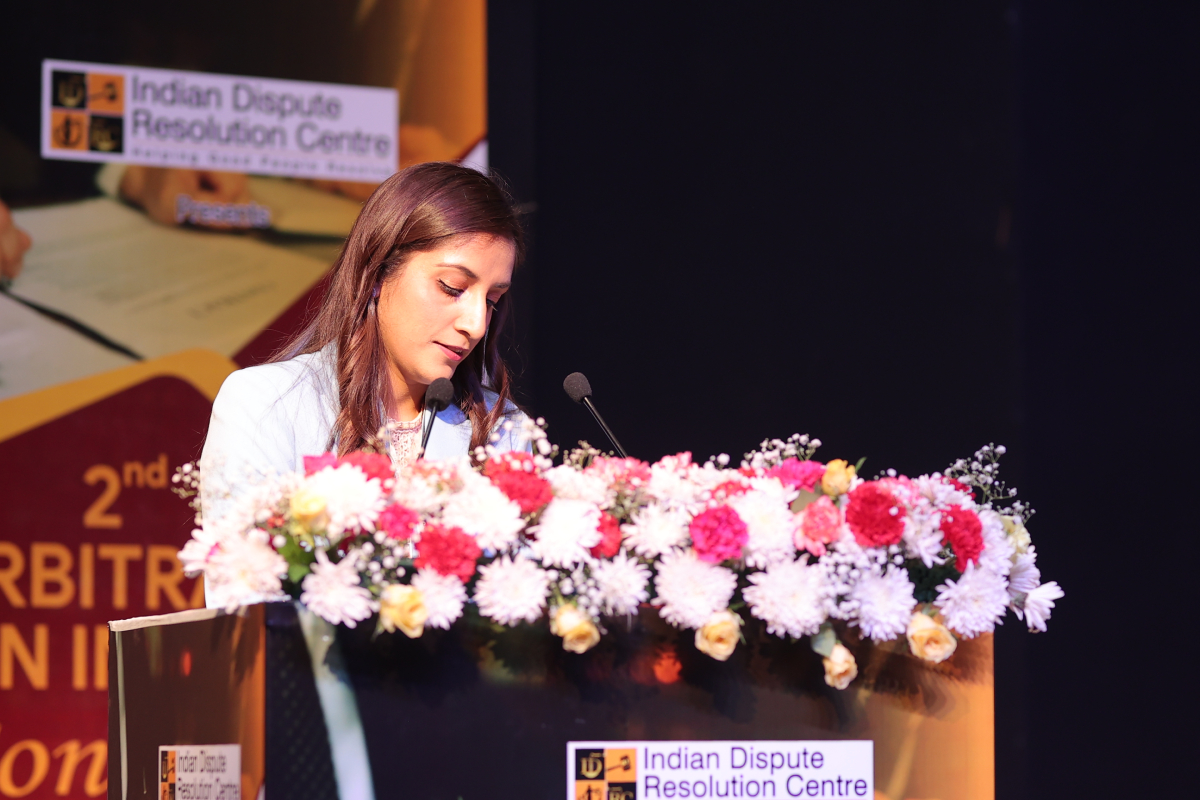
Ms. Sumedha Sindhu Rathi, Member-Secretary, Advisory Board, IDRC delivered the Vote of thanks.
The event was organized by Divyansh H Rathi, Hony. Secretary of IDRC along with Members of Advisory Board Sumedha Sindhu Rathi, Riya Rathi, Satish Dahiya, Chitragupt Dagar, Priyanshi Aggarwal and other Team Members of IDRC.
Apart from Former judges of Supreme Court, High Courts and Senior Advocates, the IDRC panel arbitrators, leading law firms, the PSUs, members of the Bar association and Law Students attended the conclave.
IDRC is an institutional dispute resolution Center established by not-for-profit organization “International Dispute Resolution Council”. IDRC is registered with Niti Aayog and empaneled with the Ministry of Law and Justice.
IDRC which is headquartered in Delhi provides state-of-the-art institutional environment for the online and offline resolution of dispute through arbitration, mediation and conciliation as well as expert determination and early neutral evaluation from its cloud-based in-house digital platform and through its affiliates in all major cities in India.
In a short span of time, IDRC has accomplished more than 1000 arbitration proceedings and assisted in numerous International and National Arbitrations presided by retired judges of the Supreme Court and High Courts despite pandemic conditions.
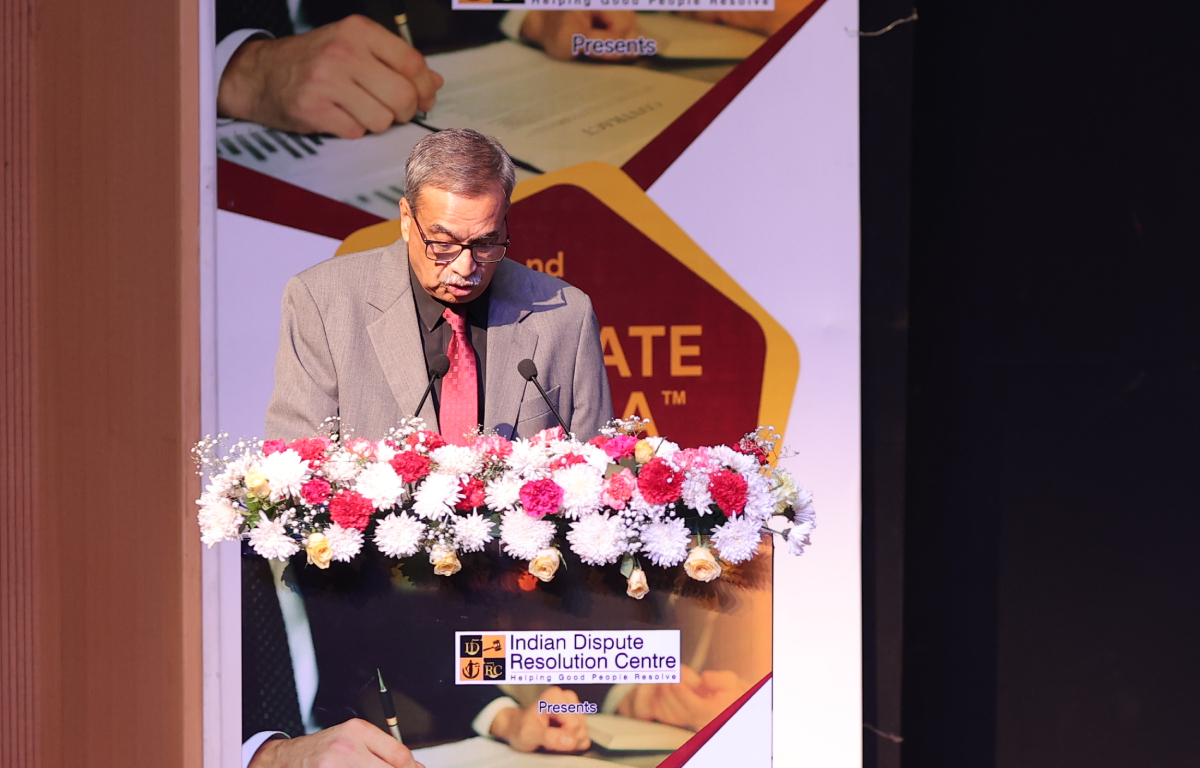 Chief Guest HMJ MR Shah (Judge Supreme Court of India)
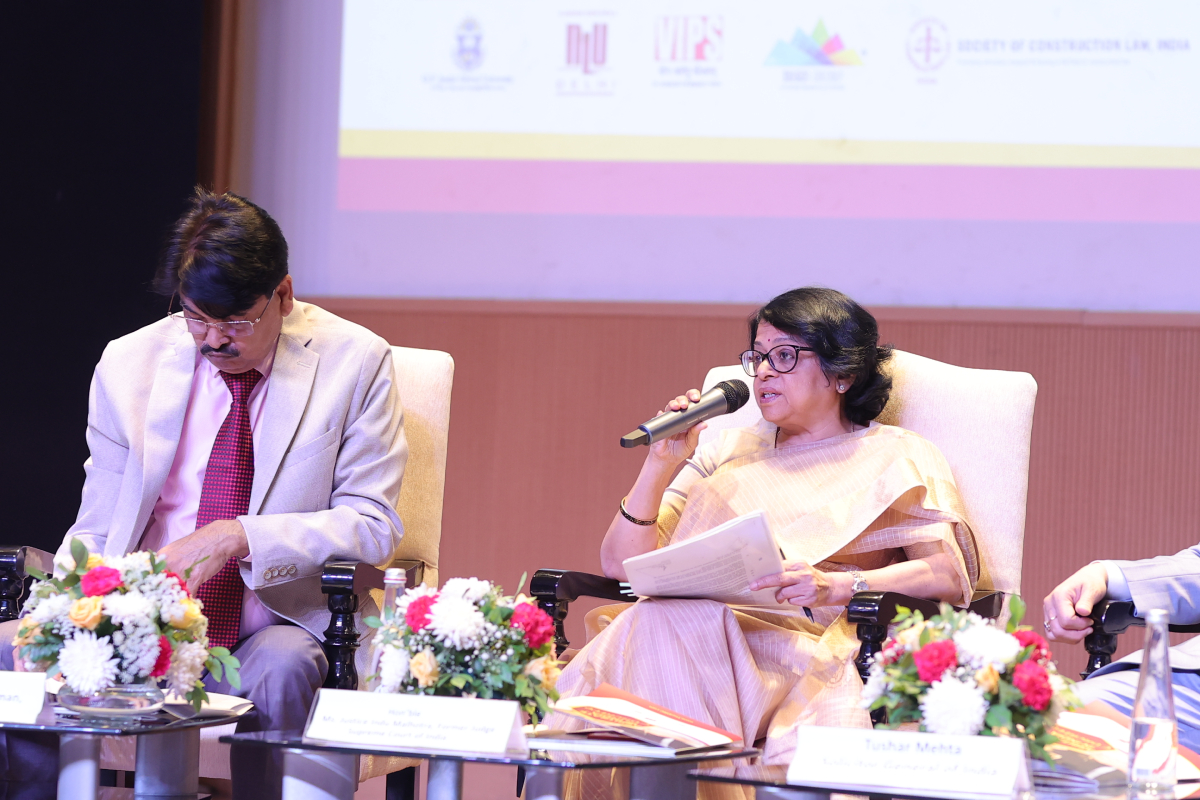 HMJ Indu Malhotra (Former Judge Supreme Court)
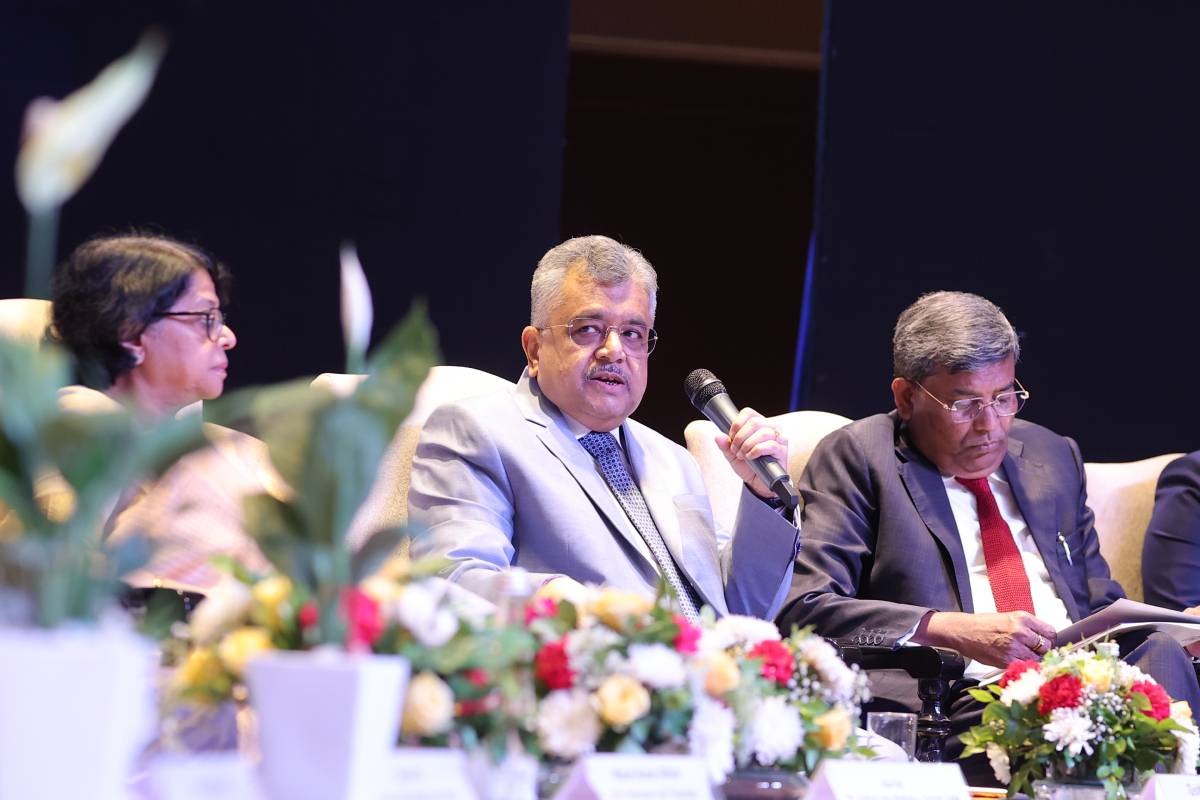 Sh. Tushar Mehta (Solicitor General of India)
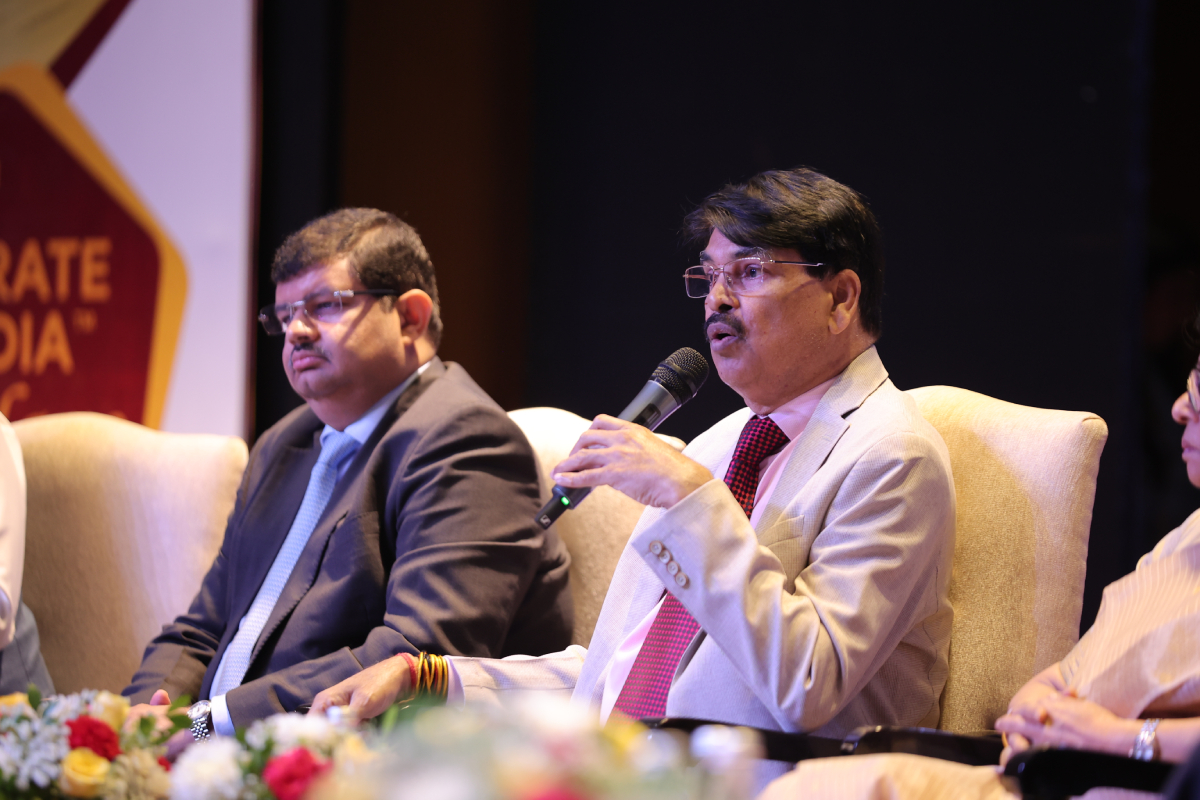 Sh. Manan Kumar Mishra (Chairman Bar Council of India)
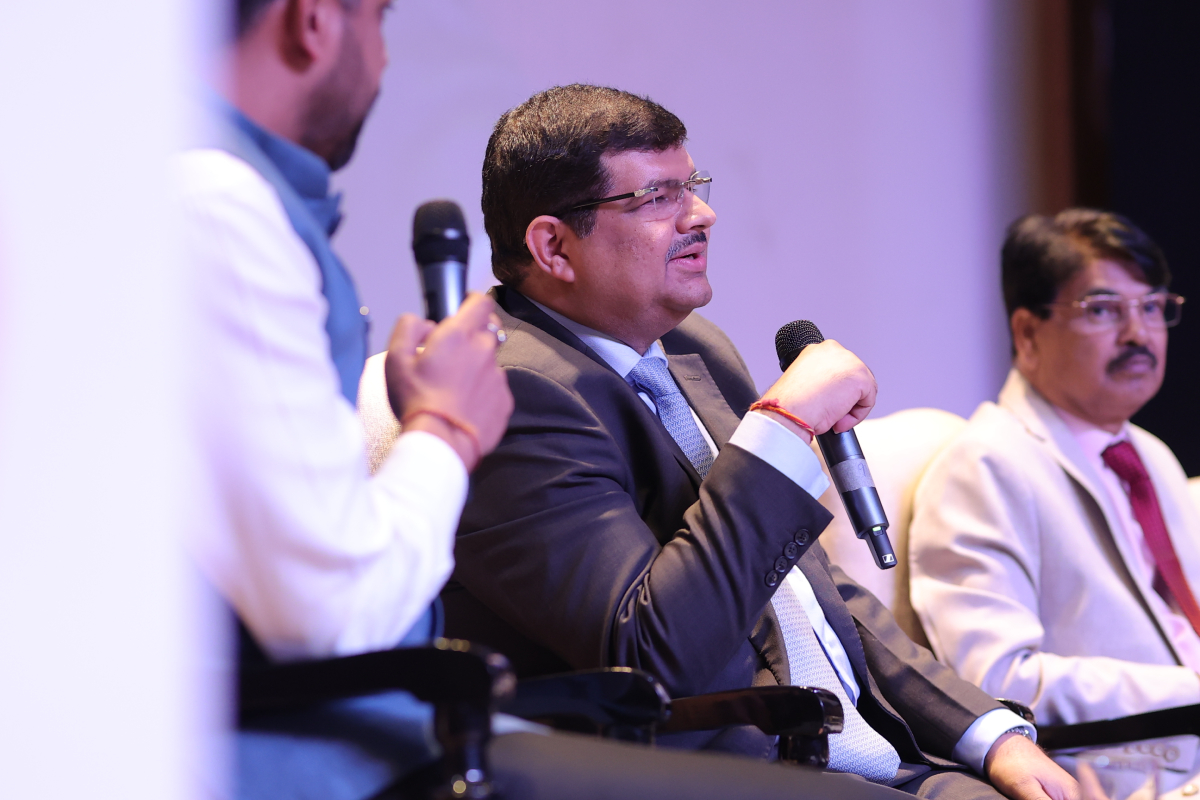 Sh. Tejas Karia (Partner SAM)
 Sh. Rattan K Singh (Senior Advocate)
 Ms. Sumedha Sindhu Rathi (Member Secratry Advisory Board)
 Ms. Riya Rathi (Co-Founder, Member Advisory Board)
Conclave 2023 Media Coverage






Advocate Shashank Garg (Moderator): Many of us who are in the field of arbitration have been hearing about making India a hub of International Commercial Arbitration as a common topic of discussion for the last 10 years, but in the last 10 years, the journey of the Indian arbitration ecosystem has been like a roller coaster, lots of up, a very few down and all the stakeholders coming together to actually make this dream come true. So, we cannot say that this is only a dream and only an idea, which 10 years ago would only be a conversation. So, this is the time to ideate further and to ensure that what we have achieved is not lost. Let me, therefore, begin by asking the question to the chairperson of the panel discussion today, Hon’ble Justice Indu Malhotra, Ma’am what are the key factors that parties consider when choosing a preferred seat for arbitration and how does India fare in meeting these criteria as compared to other successful jurisdictions around us?
Justice (Retd.) Indu Malhotra: In international commercial arbitration, the criteria which a party looks at are that:
One of the factors which really has affected the image of India is that, as Justice MR Shah pointed out, there is delay not only in the appointment process but also the enforcement aspect. It's at Section 34 that proceedings get really stalled and take a long-long time. India certainly needs to address this issue and my suggestion has always been that we make specialized ventures in every Court disposing of these matters expeditiously if we have to make India a hub of arbitration.
Apart from that, availability of provisional remedies for preserving the status quo, a pool of competent arbitrators and infrastructure - a good centre which will conduct arbitral proceedings in accordance with international norms, with transcription facilities, interpreters, etc. – It’s not difficult to put it in place.
India is certainly moving towards that with the Indian International Arbitration Centre having been made operational. So, these are broadly the contours which one looks at while choosing a seat of arbitration. India has, since 2015, made significant strides but where we seem to be lacking is the delay in enforcement. Courts in 90% cases have refused enforcement – the only thing is that it takes a long time for the entire process to get concluded.
Advocate Shashank Garg (Moderator): Taking a cue from what you have said, my next question is for the learned Solicitor General of India, being the Top Law Officer of the Country. Sir, there is a perception globally, or rather misconception globally about the reputation of Indian Courts even in the commercial sphere to be extremely slow, whether it comes to appointment of arbitrators or it comes to setting aside proceedings or the enforcement proceedings as pointed out by ladyship (Indu Malhotra), what do you think (to Sh. Tushar Mehta) we have done right and what you think should be done immediately by the stakeholders to completely clear the air and get rid of this misconception about India?
Shri Tushar Mehta (Ld. Solicitor General of India): It’s not a misconception fully. It is true that there is a slow pace in so far as the challenge to the arbitral awards are concerned. There are two aspects to it: firstly, if the parties who are of other jurisdiction or parties within India choose Indian arbitrators as the panel of arbitrators, getting dates of the arbitrators become very difficult, leading to delay in completing the process itself. This problem has sought to be resolved by the 2015 Amendment, which has prescribed a time limit and the extension can’t be granted with the free will of the parties and the number of arbitrations an arbitrator can accept is one of the factors which has started to show results.
Secondly, so far as post-arbitration proceedings are concerned, there is a need for a separate arbitration court with specialized judges to deal with Section 34 and 37 proceedings, as we have separate tribunals for insolvency, GST regimes etc.; then the execution proceedings can be handled by specialized courts as against the specialized benches. The Government is also very serious about giving boost to Arbitration as an immediate and quick redressal mechanism and looking at arbitration as a key factor for creating an incentivised atmosphere for attracting foreign investments. When the right time comes, the executive and legislature will take active steps. It’s fulfilling to see that scenario from the past 3-4 years has completely changed. However, there are certain road-breakers which go into the decision-making of foreign investors that need to be addressed by India.
Advocate Shashank Garg (Moderator): With respect to making India a hub, we have been concentrating more or at least all the good deeds that have been done have made Delhi certainly a ‘hub of arbitration but there is a lack of consistency when we see across the country with the High Courts. Do you think this is a reason for worry and do you think there should be some steps that should be taken to ensure that ultimately the result should not be that Delhi becomes the hub of international arbitration and all other seats are not preferred at all because the High Courts do not seem to be consistent with their speed and views?
Justice (Retd.) Indu Malhotra: There have been centres which are set up. There is a Centre in Madras, the Nani Palkhivala Centre, a Centre in Hyderabad and all over the country, the states are taking a very progressive role so that in those regions good Centres are set up and which are functioning pretty well. It is not really only Delhi, in Mumbai also there is a Commercial Centre with very good facilities and now, even the other states are developing it. Now, even with Court annexed mediation centres, if it fails, then they refer it to arbitration, is working very well. Most of the States now have Court annexed Mediation Centres swiftly referring matters on their failure. But as Justice M R Shah said, we cannot run away from the truth. Section-11 issue is pending. There have been orders passed by the Supreme Court asking to get the act together and directing no further delay as the Arbitration process cannot get off ground without making substitute appointments. I think the message is being sent through very effectively to all courts in the country.
Shri Tushar Mehta (Ld. Solicitor General of India): I fully agree with her ladyship (Hon’ble Justice Indu Malhotra) that there are other cities and institutions where Arbitration is taking place but essentially they are concentrated in some megacities. One of the major factors for this is because of equipped judges to deal with Sec. 34 and 37 proceedings. When we talk about India being the hub of Arbitration, rather than thinking in terms of the major cities, an obviously long shot and ambitious idea is to have an ‘Arbitration City’ with its own infrastructure, adjudicatory mechanism ancillary facilities to function as a hub for arbitration for both domestic and international arbitrations. There can be separate courts in that city itself to deal with Sec. 34 and 37 applications. There can be appointment of expert judges who can be imparted with training to run the courts with the aim to expeditiously conduct the proceedings. This can really make India a hub of arbitration. It will be like a small Singapore within India, if possible, with its own Curial Law and will give an edge for becoming a preferred and natural choice for the world to come and arbitrate..
Advocate Shashank Garg (Moderator): It’s (SG Mehta’s idea) a very innovative idea. Something on a similar line is in Dubai with DIFC and we can take guidance from such set-ups across the world. I will now move on to another milestone which is recently achieved in previous 10 years apart from 2015, 2019 amendments and other judicial pronouncements etc., which is BCI’s new Rules for Registration and Regulation of Foreign Lawyers and Foreign Law Firms in India. I would like Mr. Manan Kumar Mishra, Chairman BCI to give his views as to how it will impact arbitration practice in India. I feel that your view originally is that this is going to enhance and augment what we already have and there is no reason to worry for anybody if you could share your views on this.
Manan Kumar Mishra (Chairman, Bar Council of India): For the last 10 years, this was under discussion of the Bar Council of India. Earlier it was very strongly opposed by the common lawyers and even the SILF (Society of Indian Law Firms) people were opposing it. They were telling the Bar Council of India that still the situation is not very cordial or suitable for us because our lawyers and law firms will be lagging behind, they won't be able to compete with the foreign law firms. But we studied the things and we found (other factors). See what is the purpose of this (institutions like) IDRC? It is to attract foreign lawyers to attract foreign clients. So, we thought that unless we open up the doors, as per our information, about 200 international law firms are registered in the UK. The UK is the country which influenced us more because even several Indian law firms are also operating there, we thought that unless we open up the door, we have opened up to a very limited extent up till now. They can't practice Indian laws because we are not allowed to practice their laws in their country. The budding law firms of our country, the young lawyers, the Five-Year law courses products are very good and they are very much in demand in the UK or U.S in very developed countries. So, we thought that one of the reasons for India not becoming a hub of arbitration is that we are not allowing them. Singapore or other countries like London allow foreign law firms. In our rules, Reciprocity is the main thing to be considered before allowing any foreign Law Firm, to be registered in India by the Bar Council of India. We have to learn many things from expert foreign lawyers and law firms. Unless we involve these young lawyers with these experts, foreign lawyers or foreign law firms, we can't think that India will become an arbitration hub in the near future. So, the Bar Council of India has come out with these rules. There may be certain demerits. In the course of time and with experience, we will see, if any changes will be needed/ required, and we'll do it. There have been many queries from foreign law firms to the Bar Council of India about how they can get registered here. We have involved the government also in order to ensure complete reciprocity so that our law firms or our lawyers may not be put to any loss. We have involved the Ministry, in order to ensure that our lawyers and law firms are also treated in a similar fashion in their respective countries. So, let’s hope for the good. In the near future, I think that our Rules will help make India an arbitration hub.
Advocate Shashank Garg (Moderator): There have been so many institutions in India, who have been providing institutional arbitration services, right from DIAC, MCI in the Mumbai High Court, IDRC now. There is another institute that has been set up with the help of Govt. of India, IIAC. Most of these credible institutions have state-of-the-art infrastructure. They have been able to make best possible rules, which are comparable to any international institution in the world and of course a very credible pool of arbitrators. Now, do you think all of these institutions being set up in the last 10-15 years, and now the recent example of IIAC which is starting with a very ambitious project, because when the Govt. of India has shown faith and interest in an institution of course, it has to become a success story in due course. Do you think all of this is going to impact the mind of foreign users of arbitration? Would they be interested in using India not just as a seat but these institutions (as well) even if they do not initially want India as a seat do you see this is going to happen anytime soon where IIAC or IDRC Rules will be applied even if India is not the seat?
Shri Ratan Singh: The question has somewhat been addressed by Justice Malhotra and Solicitor General. What constitutes a ‘safe seat’ or ‘efficient seat'? Chartered Institute of Arbitrators (CIArb), in its centenary year, in 2015 at London Conference came out with principles for an efficient and effective seat of arbitration (also known as 10 commandments). These are firstly, law i.e., quality of law, secondly, judiciary i.e., an independent and quality judiciary, thirdly, legal expertise available in that seat, which will improve after coming of foreign firm in India, fourthly holistic education, fifthly, right of representation i.e., clear right for the parties to be represented at arbitration by party representatives including, but not limited, to legal counsel of their choice whether from inside or outside the seat. It is again, now available for India because of new BCI Rules, sixthly, accessibility and safety; seventhly, facility; eighthly, ethics; ninthly, enforceability and finally, immunity of arbitrators from civil liabilities.
Justice Kumaraswamy of Singapore High Court told him that High Court in Singapore gives accreditation to specialised lawyers such as to construction lawyers; and when it comes to appointment of judges, they are also chosen from those particular specialisations and these people go on to become Arbitrators. So, this is one of the roadmaps which takes care of quality of judgements for specialized subjects such as Construction Arbitration, which constitutes approximately 60% of the arbitration in India. As far as Arbitral Institutions in India are concerned, let’s be honest, if you are talking from an international perspective, we do not have any credible International Arbitration Institution from the viewpoint of the foreign Arbitration Community. Yes, things are moving in the right direction from 2015 onwards. All stakeholders are taking steps in the right direction but we don’t have any credible International Arbitration Centre so far. In fact, I am happy with IDRC’s emergence. When it was inaugurated in 2020, I had the occasion to give a speech in the inaugural ceremony, even Justice Sikri was there. I am happy to note that it has done so many arbitrations. So, we are very optimistic about our institutions. Delhi High Court has got its Court Annexed Arbitration Institution and the caseload it has is phenomenal.
However, I have a concern. We have an amazing pool of Retired Judges who are world-class decision-makers. But we have to be honest with ourselves, when it comes to the appointment of Arbitrators by the Institutions, a problem exists. Selection of an Arbitrator is an important aspect because Arbitration historically was chosen for people having domain knowledge. So, therefore if our Institutions are appointing arbitrators from the pool of existing, retired judges, lawyers and other judges, they should give due consideration to the expertise of the Arbitrators that have been chosen. So far as IIAC is concerned, one particular suggestion, to make it more credible, you need to have diversity in the governing body. You need to have Arbitrators from different jurisdictions so that cross-culturalism can help India to become an arbitration hub.
Advocate Shashank Garg (Moderator): I wanted to know if Mr Tejas Karia shares the same view insofar as the present Indian institutions proving arbitration services are concerned. Would you also agree with Mr. Singh that we do not have any existing credible institutions and we are still far away from achieving that?
Shri Tejas Karia: I have a slightly different view with respect to Mr Singh in terms of the institutionalization of arbitration in India. As far as arbitration in India is concerned, it has always been ad-hoc till very recent times. Slowly and steadily, we are moving towards institutionalization of arbitration. 2019 amendments were made only to promote institutional arbitration. We have a number of institutions across India. The only problem is that we do not have any one prominent institution which we can call an institution of eminence and that’s why the ICADR, which was originally there in Vasant Kunj in Delhi, was taken over by Hon’ble Supreme Court when Justice Thakur was the Chief Justice and Niti Aayog conference was organized during this tenure. Subsequently, there was a statute that was passed for New Delhi International Arbitration Centre. That was passed at the same time when the 2015 amendments came in on the same day. Then it was renamed as India International Arbitration Centre.
The problem with India is that we are competing with London, Singapore or Paris whereas, given the diversity in India and the kind of talent pool we have, it is very difficult to have consistency. So, what we need to do is that without competing, we need to set up a pool of Indian Arbitral institutions which can have a common goal or purpose to have institutional arbitration and that is where once 2019 amendments will be notified, we will have an Arbitration Council of India.
Personally, I do not agree with controlling arbitration because party autonomy is very important for arbitration for it will streamline the whole process of at least the appointment of arbitration because the best part in that amendment is that the appointment of arbitration will be taken away from the High Court or Supreme Court for international commercial arbitrations, and given to the arbitral institutions. We have heard from Justice Indu Malhotra that too many Section 11 petitions are pending. With the recent judgement on stamping, it will delay the appointment further because unless the documents are stamped, the arbitrator cannot be appointed - those are some hurdles we are facing.
Once we have arbitral institutions appointing arbitrators, they can have their own time-tested rules. Emergency Arbitrators can be appointed within two days and the emergency award can come within 14 days of such appointment. They have the fund-holding facilities and competing infrastructure, they scrutinize the awards and ensure that timelines are met. In many institutions, when we are appointed as an Arbitrator, we have to give our calendar for two years to show our availability, which is in itself another issue other than expertise. Some institutions like SIAC have a reserved panel of arbitrators for the arbitrators who want to specialize in sitting as arbitrators. Those are the advantages of institutional arbitrations. We have a number of institutions in India and what I have personally known from Justice Hemant Gupta who is chairing the IIAC is that he is trying to take everybody together. He has made a very diverse panel for selecting the arbitrators. Everything is notified and there is transparency in the institution. They have also called lawyers, law firms and stakeholders to give their views on the rules so I am very sure that this institution along with other institutions will take our dream of making India the institutionalized arbitration hub further and automatically it will be the hub of international arbitration so IIAC is a step in the right direction. The name itself indicates that it is a credible institution with the backing of the Government of India. We have to move forward and see that we have more institutionalized arbitration and we have to change the mindset of the people who are drafting the arbitration agreement to put at least the name of one of these Arbitration Institutions. We have to work together to make them better and be part of all of them rather than one of them. Capacity building is also very crucial. Mr Ratan Singh and I are part of Chartered Institution of Arbitrators and they give the accreditation of membership and fellowship that comes after rigorous training as an arbitrator. We have to have more expert arbitrators in India irrespective of their background. It could be law, accountancy, or engineering, all these arbitrators have been proven to be excellent arbitrators with minimalistic judicial interference. Court have also changed their approach towards Arbitral Awards and they are not setting aside them for asking. Many courts like Delhi High Court have started deciding Section 34 in the first hearing itself without even issuing notice because there is an advance copy served on the other side when the other side is present. These are very positive developments and we have lot more to achieve but we have come a long way in the last 7 to 8 years.
Advocate Shashank Garg (Moderator): When so many things have been done in the last 5-7 years, like the Arbitration and Conciliation Act of 1996 went through an overhaul in 2015 and 2019. Several things were achieved but, many of them are really on paper because there are no consequences of not following that. So, what are the key misses of the Arbitration and Conciliation Act of 2015 and further amended in 2019 which require immediate attention?
Justice (Retd.) Indu Malhotra: In my view, another set of amendments is now necessary particularly with respect to the period of limitation in Sections 11, 37 and 47 as there is no prescribed limitation period. It is by judicial interpretation that a period has been now pronounced for each of these but it requires a legislative amendment. Secondly, under Section 13, if there is a challenge with respect to impartiality and independence of an arbitrator, the tribunal decides that it has no merit. It goes for judicial scrutiny only after the final award is passed which is incorrect and it should be done then and there and this is what the UNCITRAL Model law and the English Arbitration Act contemplates. Because if it turns out to be correct at the time of judicial scrutiny that there was lack of independence and impartiality, you have dragged the parties through very costly proceedings financially and in terms of time and then you find at the end of the day that they lacked independence and the entire proceedings fall through. We should not postpone it till the final award is passed. Another aspect is that even though we have accepted the IBA Rules on conflict of interest which has helped, there is no sequitur to it; that is if a person does not follow it, I remember while I was in office, there was an arbitrator who had done some 50 or 70 arbitrations of a particular party, so I said you are conflicted out. The counsel for that party asked us to not remove the arbitrator because many awards had been passed already. I said you cannot have these awards passed; he’s conflicted out. These kinds of awards cannot be passed; it is straightaway conflicted. Now the problem is another case where the arbitrator refused to give his declaration claiming that the Act does not attach any consequences.
There are certain provisions which need to be incorporated to give effect with respect to disclosure of interest because in arbitration the most important aspect is integrity of the arbitrator otherwise the process is a meaningless one. Similarly, there is even Section 21, on commencement of arbitral proceedings, it should be when the arbitrator enters upon reference and not really when there is a mere issuance of notice.
A fresh set of amendments should be gone into but let me put the positives. The most positive aspect of our Act (Arbitration and Conciliation Act) came in 2015 when a timeline was framed and that has really helped. When proceedings get concluded within a period of 2 years or 2.5 years at best if there are extensions given. So, proceedings and matters get concluded soon. This is the most salutary principle which has been incorporated into our Act. Apart from this, IBA guidelines, Schedule V, VII which have statutory flavour in our act which is not so in other countries, is another aspect which I think is very salutary.
Advocate Shashank Garg (Moderator): There is an inherent perception of bias when the state entity gets involved internationally, so, for example, China and Russia are popularly or I would say are infamous for their sovereign intervention in the arbitration process we have somehow managed a clean reputation so far and with these amendments and all the necessary steps being taken by all the stakeholders I hope that our image will be sustained as clean but what do you think are the steps that should be taken by the government or by the Judiciary to ensure that there is no perception of bias in the way we arbitrate in India especially when public sector undertaking or government of India is a party?
Shri Tushar Mehta (Ld. Solicitor General of India): Firstly, let’s not compare India with China because nobody in the world does. I don’t personally feel that there is any perception, so far as India (as an arbitration hub) is concerned, that there is any institutional bias or any sovereign interference. If you go by the number of Arbitral Awards which go in favour of either the Government of India or PSUs and awards going against them, it itself withstands the test that there is no interference and no institutional bias so to say. We can legislatively do nothing to remove that doubt, I think our credentials in these aspects can be proved only by the results which we get in the Arbitration proceedings. There cannot be any straight-jacket formula which can be employed, either by the executive or by the legislature to ensure that there would not be any misconception of any bias. You cannot deal with any misconception with legislative provisions or by an executive action also. It is always the things that speak for themselves.
*Mr. Manan Kumar Mishra agreed with the Solicitor General when asked about his views on the same*
Advocate Shashank Garg (Moderator): Regarding the aspect of delay in execution and enforcement of proceedings, which remains one of the key hurdles in making India a preferred seat, what do you think (Shri Ratan Singh) can be done immediately to remove the delay that is being seen in courts for various reasons. Ultimately the perception because of our track record in execution of proceedings in the last 10-15 years has not been so heartening, what steps can be taken collectively to ensure that the enforcement proceedings can be expedited and this perception can be changed?
Shri Ratan Singh: I will take one step backwards and share thoughts on ways in which efficiency and arbitral delays can be taken care of because it is directly linked with delays in enforcement proceedings or annulment proceedings. Two things if we are in a position to do during arbitral proceedings that will immensely help the whole ecosystem. Firstly, hearing i.e., opening submission, cross-examination and closing submission should be done in one or at most two stretches with a very limited number of days of gap. Secondly, to streamline the process we should follow the chess clock method i.e., both parties are assigned the limited no. of hours and they can divide it accordingly.
Further, we should adopt the institutional best practices i.e.; we should promote written advocacy ads against oral advocacy. Thirdly, the arbitrators should be aware of the facts of the case from the beginning so that they control the proceedings and it shall not happen that they get aware of the facts at the date of final arguments.
So far as delay in courts is concerned; my answer is training, training and training of our judges, and their sensitization. Delhi, Mumbai, Kolkata, and Madras are exceptions, in all other jurisdictions, all matters go to district courts. There, all these annulment proceedings are treated as any other civil suit. They issue notices in a routine manner. So, training our judges, at all levels. I am doing many international arbitration disputes in High Courts in India and I can say we need to have more education and training for our judges.
*SG Tushar Mehta, in a lighter vein, says using the word ‘training’ would invoke an inbuilt resistance to training, instead undergo ‘orientation’ .*
Justice (Retd.) Indu Malhotra: I would agree with Mr Ratan Singh and I am also of the view that refresher courses, if that is a more palatable term, must be done, particularly in view of the investment-treaty claims that are being made against the Republic of India. The judges need to understand the impact of various cases which come before them because judicial delays have also been the cause for an investment treaty award being passed against the Government of India, in the White Industries Case so I am certainly of the same view, I am not averse to any training. We do so many construction arbitrations that we require some training in that. We should have these courses, in fact in 2017, I went to London for the Chartered Institute of Arbitrators’ course and eventually became a fellow so I also sat down and took exams which was just before one year of my elevation. So, I am really not averse to it and I would also recommend it highly that training is required particularly in district courts that they should not treat Section 34 as an ordinary civil matter. They should understand the confines within which it is to be decided.
Shri Tejas Karia: Just to add to what learned Solicitor General said is that ‘orientation’ is the right word and when we go to National Judicial Academy, we are called ‘resource persons’ so it is something good that we are having judges coming to this judicial academy and the kind of questions we face as resource persons, we feel it is good that there is this kind of round table discussion happening where we can share their issues very frankly because many times from the practitioners’ perspective we think differently, and from the judges’ perspective there is a completely different perspective. So, there is an ongoing process which we need to do more but with this orientation and continuous learning process and unlearning process, we should be able to achieve our goal in terms of having consistency across India in terms of judicial pronouncements.
Shri Ratan Singh: Since Mr Mishra is here, I have one suggestion to make about mandatory continuing learning programmes in India. Professor Madhav Menon had initiated this process and had told me that he was in touch with the Bar Council of India, with the Government of India. He has started under the umbrella of M K Nambyar Trust for Continuing Learning Programme for lawyers. He has requested me to design a 5-Day Course on Arbitration for that programme. We used to go to Kochi to train Lawyers. Mr Mishra, I urge you to take this up with all seriousness you have in your command because you have taken such a bold step. This will really enhance the ability of practising lawyers which in turn will give you better judges, which in turn will give you better arbitrators.
Manan Kumar Mishra (Chairman, Bar Council of India): For the kind information of hon’ble panellists and the gathering, under the Continuous Learning Programme of Bar Council of India, like some other foreign countries, we are going to frame the rules that in course of five years, at least 40 days, every lawyer will have to undergo some compulsory training only then their licenses will be renewed. I know the Bar Council of India and other State Bar Councils will have to face a lot of protests and agitations. But since it is for the betterment of our legal fraternity and profession, under the guidance of our Hon'ble Solicitor General of India we are going to frame the Rules and in the year 2003 itself, this will be implemented.
KEY TAKEAWAYS:
Conduct more conferences and conclaves:
We need to conduct more such conclaves where successes and issues can be discussed more frankly and provide a conduit of continuous learning to help us achieve our goal of creating India as a hub of arbitration.
Securing integrity, independence and impartiality of arbitrators:
A challenge to the impartiality and independence of arbitrators, under Section 13, should go for judicial scrutiny then and there only, instead of after the passing of the final award to save time and money of the concerned parties. Moreover, provisions need to be inserted regarding disclosure of interest to ensure the integrity of arbitrators.
Mandatory Orientation of Judges:
A proper refresher course is required, sensitizing the judges especially in the district courts so that they do not treat Section 34 as an ordinary civil matter and understand the impact of various cases that come before them
Increase diverse and expert arbitrators:
Increase expert arbitrators in India, irrespective of their background, allowing cross- culturalism, who can excel in their field with minimalistic judicial interference to help make India as an arbitration hub.
Separate courts instead of specialised benches:
Separate courts with specialised judges ought to be established to handle the execution proceedings instead of specialised benches
Follow the chess clock method:
To streamline the process, we must follow the chess-clock method wherein both parties are assigned only a limited number of hours and they can divide it according to their needs.
Materialise the idea of an Arbitration City:
There can be an Arbitration City with its own infrastructure and all ancillary facilities along with special courts which will make India a preferred and natural choice for arbitration.
Justice (Retd.) Indu Malhotra:
Justice Indu Malhotra eloquently discussed about the criteria for selecting a seat of arbitration, including a neutral venue overseen by the Courts and strong legal frameworks for recognizing arbitration agreements and enforcing awards. To improve India's image, specialized ventures and set periods of limitation must be implemented to quickly resolve matters. India has seen significant advances in arbitration since 2015, leading to the establishment of arbitration centres in major states
Reflecting upon the impact on India’s image of inordinate delays in the appointment process, enforcement and Section 34 applications, she said, “My suggestion has always been that we make specialized ventures in every Court disposing of these matters expeditiously if we have to make India a hub of arbitration.”
She observed that many major states are taking progressive strides towards developing arbitration centres and even India as a whole has made significant advancements in arbitration since 2015. A message to all courts in the country is to be sent that they cannot delay it (arbitration) anymore.
Most importantly, she remarked that besides determining the arbitrator’s impartiality and independence as soon as challenged, there ought to be proper disclosure of interest so the integrity of arbitrators can be ascertained.
Mr Manan Kumar Mishra:
He justified the decision of BCI to allow foreign firms and foreign lawyers to register despite strong opposition, as one based on rationality, the need of the hour and keeping in mind the principle of reciprocity. Despite potential demerits, this Rule will help India to become an arbitration hub and bring the best practices to India.
Regarding BCI’s decision to register foreign lawyers and law firms, he observed that the purpose of institutions like IDRC is to attract foreign lawyers and foreign clients. The reason India is not becoming a hub of arbitration is that we are not allowing them entry. He held, “We have to learn many things from the expert foreign lawyers and the law firms. Unless we involve these young lawyers with these experts, foreign lawyers or foreign law firms, we can't think that India will become an arbitration hub in the near future.”
Reiterating his resolve to secure expertise and efficiency in the legal fraternity, he proclaimed, “We are going to frame the rules that in the course of five years, at least 40 days, every lawyer will have to undergo some compulsory training only then their licenses will be renewed.”
Mr Tushar Mehta:
He suggested setting up special courts with specialised judges to speed up the arbitration process in India. He proposed that creating a Specialised Arbitration City with dedicated
infrastructure would become a preferable option for domestic and international disputes. Indian arbitration decisions have been made against State institutions, unlike in China, showing that India does not inherently favour state entities in international arbitration.
He observed that there should be accessibility and availability of arbitrators to reduce delay and for that ensuring that arbitrators are allowed to take a certain number of arbitrations is essential. He remarked, “It’s fulfilling to see that scenario from the past 3-4 years has completely changed. However, there are certain road-breakers which go into the decision- making of foreign investors that need to be addressed by India.”
Talking about India being a neutral seat of arbitration, he commented that “…the number of Arbitral Awards which go in favour of either the Government of India or PSUs and awards going against them, itself withstands the test that there is no interference and no institutional bias.”
Finally, he propounded an ambitious idea of a Specialised Arbitration City saying “It will be like a small Singapore within India, if possible, with its own Curial Law and will give an edge for becoming a preferred and natural choice for the world to come and arbitrate.”
Mr Tejas Karia:
He praised the recent changes undertaken by India, claiming, the 2019 amendments to be a significant milestone towards institutionalisation. Lauding the benefits that institutional arbitration offers like transparency, timely appointment of emergency arbitrators, modern facilities, and adherence to deadlines, he claimed that, institutions like IDRC will pave the way in fulfilling the dream of making India an institutionalised arbitration hub.
He also emphasised the need to create a unified pool of arbitration institutions and arbitrators with a focus on party autonomy, transparency, and efficiency. He observed, “The problem with India is that we are competing ourselves with London, Singapore or Paris whereas, given the diversity in India and the kind of talent pool we have, it is very difficult to have consistency.”
He emphasised that conclaves like IDRC’s help in sharing different perspectives which judges or lawyers might not be able to see otherwise and such round table discussions allow for issues to be shared frankly.
Agreeing with the suggestion of orientation of judges, he said, “…there is an ongoing process which we need to do more but with this orientation and continuous learning process and unlearning process, we should be able to achieve our goal”
Mr Ratan Singh:
He highlighted the essential principles which make for an efficient seat of arbitration which include the presence of an independent judiciary, availability of legal expertise, clear right of representation, immunity of arbitrators from civil liabilities, and conducive facilities, among
other things. He observed that we lack a credible international arbitral institution, though all stakeholders are taking steps in the right direction.
Sharing his experience in Singapore, he asserted the need for specialisation of Arbitrators by saying, “You need to have Arbitrators from different jurisdictions so that cross-culturalism can help India to become an arbitration hub.”
He observed that efficiency in arbitral proceedings is directly linked with delay in the enforcement of annulment proceedings. He, therefore, suggested that “to streamline the process we should follow the chess-clock method i.e., both parties are assigned a limited number of hours and they can divide it accordingly”
He emphatically remarked, “So far as delay in courts is concerned; my answer is training, training and training of our judges, and their sensitization.” And finally suggested that BCI should make Continuous Learning Programmes mandatory in India to “enhance the ability of practising lawyers which in turn will give you better judges, which in turn will give you better arbitrators.”
Combined conclave declaration statement.
- To fully materialise the goal of making India into a hub of International Commercial Arbitration, we need to create more credible, neutral and technology-driven arbitration institutions like IDRC for timely and efficient resolution of disputes.

IDRC e-Arbitration
Business Friendly
Helps the parties resolve disputes without sacrificing the business relationship
Cost-efficient
By a speedy resolution the parties can focus on profitable business activities rather than spending time and money on litigation
Enforceable
The arbitral award is enforceable as a decree
Fast
A IDRC e-Arbitration is completed within prescribed time.
Paperless
The entire arbitration process is completed without a piece of paper being used.
IDRC e-Mediation
Business Friendly
Helps the parties resolve disputes without sacrificing the business relationship
Cost-efficient
By a speedy resolution the parties can focus on profitable business activities rather than spending time and money on dispute resolution
Fast
A IDRC e-Mediation is usually completed within a prescribed time.
Flexible
The parties are actively in control of the dispute resolution process.
Paperless
The entire mediation process is completed without a piece of paper being used.